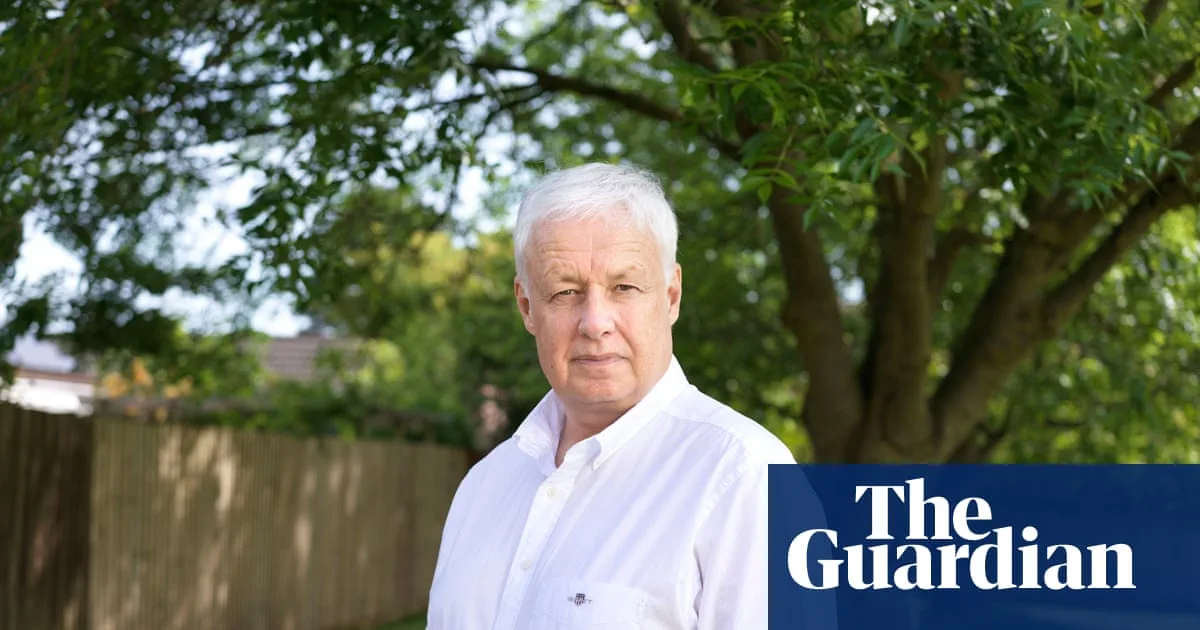
When Dave Grimstead left the police after more than 30 years, he knew just what he wanted to do: solve some of its most intractable mysteries. The founder of Locate International explains why the country needs him and his volunteers.
When it comes to cold cases, crime dramas get a lot wrong. “In reality, you’d never reach the end in nine neat episodes, all wrapped up, with a timeline that moved nicely along, building tension,” says Grimstead. Real cold cases are rollercoasters of false leads, rabbit holes and dead ends. “They’re never solved by one heroic detective, either,” he adds. “It requires a much bigger team than you see on TV.” But one cliche does ring true – the detective who can’t give up. Most will have at least one unsolved case that stays with them long after the spotlight has moved elsewhere.
One of these cases, for Grimstead, was the disappearance of Melanie Hall in June 1996. Hall was 25 and never came home from Cadillacs, a nightclub in Bath where she was last seen arguing with her boyfriend. Grimstead was a detective constable in Avon and Somerset’s major crime team at that time, and what began as a missing person investigation soon began to resemble a murder inquiry. Hundreds of hours of interviews and CCTV footage, searches, reconstructions and TV appeals failed to reveal what had happened to Hall. In 2009, one of Grimstead’s supervisors, Mike Britton, was still investigating it, fitting it round his caseload, when her body was found in a bin liner beside the M5. Although this happened just days before Britton’s retirement, he cancelled his plans so he could work on the case as a civilian investigator. It is still unsolved.

In 2012, Grimstead retired, too, but cold cases such as Melanie Hall’s, and their impact on families, as well as colleagues, stayed with him. “Investigations move on really quickly,” he says. “There’s the next case and the one after, but these families are still in that place, frozen in time. Time doesn’t move on in the same way for them.” On holiday in Cornwall, sitting in St Ives harbour, watching a crew go out on the lifeboat of the Royal National Lifeboat Institution (RNLI), Grimstead had the beginnings of an idea. “The RNLI are specialist-trained people drawn from the community who respond when they’re needed for people lost at sea,” he says. Would a search-and-rescue service work for people lost on land, too?
This was the starting point for Locate International (LI), which Grimstead founded in 2019. Volunteers are carefully trained, organised into online teams and allocated cases that involve a long-term missing person or someone who has died and never been identified. These, says Grimstead, are the two types of case most likely to fall down the “slippery slope” of resource constraints and attention spans. Grimstead’s book Someone Must Know tells the stories of some of them. One is that of Karen Milsom, a Bristol-born care worker, who, aged 52, went missing from her home in south-west France in August 2019. Another is “Sligo Man”, a man in late middle age who checked into a hotel on Ireland’s west coast in June 2009, using a false name and address, and was found dead on a nearby beach four days later. He still hasn’t been identified. There’s “Wembley Point Woman”, who jumped from the 21st floor of an office block in north-west London more than 20 years ago. So many are steeped in sadness and mystery, and seem utterly unsolvable; yet each now has a team of people, aged from 18 to 77 – lawyers, librarians, social workers, mental health professionals, project managers, coroner’s officers and former detectives – all trying to find an answer. LI’s last application window for volunteers, which closed in May, brought 200 more potential recruits. There are no paid staff.