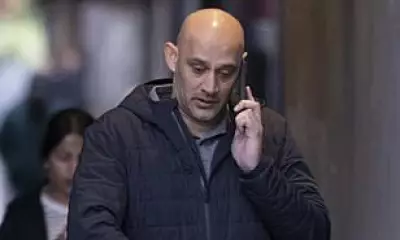
E-bike rider avoids prison after fatal pavement collision kills 91-year-old great-grandfather
A man who killed a 91-year-old great-grandfather by crashing into him on an electric bicycle while the elderly victim was putting out his bins has avoided immediate imprisonment. Clifford Cage, 50, from Rochester in Kent, was handed a two-year suspended sentence at Maidstone Crown Court on Wednesday for the manslaughter of Jim Blackwood.
The emotional courtroom saw Cage and Mr Blackwood's daughter, Christine White, embrace following the sentencing, which she characterized as a 'historic judgement' that should resonate across the nation.
Tragic incident and legal precedent
The veteran had been taking his bins out on City Way in Rochester when he was struck down on July 6, 2023. Although initially hospitalized, his health declined, and he died three months later on October 13. Medical evidence confirmed that despite his age and frailty, Mr Blackwood would not have died in that manner had he not been hit by Cage.

This led to the 50-year-old being charged with manslaughter, a case prosecutors have described as a 'legal first' for a conviction connected to cycling on the pavement. Sentencing Cage, Judge Julian Smith noted the veteran 'suffered significantly' in his final months, stating: 'That is no measure of a man's life but is of Mr Cage's culpability. No doubt he should not have been riding on that path in that way.'
Family's anguish and calls for reform
Following the sentencing, Ms White emphasized that the judgement should impact every cyclist in the country, hoping it influences wider societal attitudes. 'No longer can cyclists decide that they can leave the road and ride on our pavements, endangering pedestrians with impunity, and the message needs to get out there and into the public consciousness,' she declared.
The 68-year-old, who has been caring for her mother full-time since her father's death, urged the Government to reconsider minimum age requirements for e-bikes. She advocates that riders without a driver's licence should receive training or obtain a licence, while also pushing for the minimum age to be raised from 14 to 16.
Ms White appealed directly to 'unsafe cyclists', saying: 'Please make our streets safer for everyone, and do not cycle or ride e-scooters on pavements or in pedestrian areas.' She highlighted the dangers posed by electric bikes, noting: 'With the introduction of electric bikes, walking on our pavements and through our public spaces has become dangerous to the point of becoming a lottery.'
Defence and prosecution perspectives
In a voluntary police interview in July, Cage explained he began riding on the pavement after two near misses with cars on the road. He estimated his speed at around 12mph and claimed he did not see Mr Blackwood, who he said stepped out from behind an overgrown bush, leaving no time to stop. The family had previously complained about the bush's condition.
Cage remained at the scene, called emergency services, and expressed 'genuine remorse'. He later told Ms White he sweeps the pavement weekly and offered to trim the bush himself. Initially denying manslaughter, he pleaded guilty in October last year.
Defence barrister Danny Moore KC described Cage as a 'decent human being' who stayed to help and will carry the knowledge of causing a death for life. The judge also ordered Cage to complete 15 days of rehabilitative activity and 180 hours of unpaid work.
Legal gaps and public safety implications
The Crown Prosecution Service believes this is the first manslaughter conviction linked to pavement cycling. District crown prosecutor Matt Beard noted Cage's e-bike was not powerful enough for standard driving offence laws to apply, creating a legal gap between Victorian-era legislation and manslaughter charges.
Mr Beard emphasized: 'Our view was that yes, in this case, it really did meet that threshold to pass the public interest test to make sure that we do charge manslaughter.' He added that by choosing to cycle on the pavement, Cage 'took himself away from one danger and effectively move that danger to somebody else'.

The takeaway, according to prosecutors, is that cyclists must be aware of risks to others, with this incident described not as an 'unfortunate accident' but an illegal act that was wholly avoidable by using the road.