Police arrested one suspect every 35 minutes during a live facial recognition trial in Croydon, South London. The pilot, which ran from October 2025 to March 2026, resulted in 173 arrests for crimes including kidnap, rape, and serious sexual assault. For the first time, static cameras were used instead of vans.
Crime Reduction and Arrests
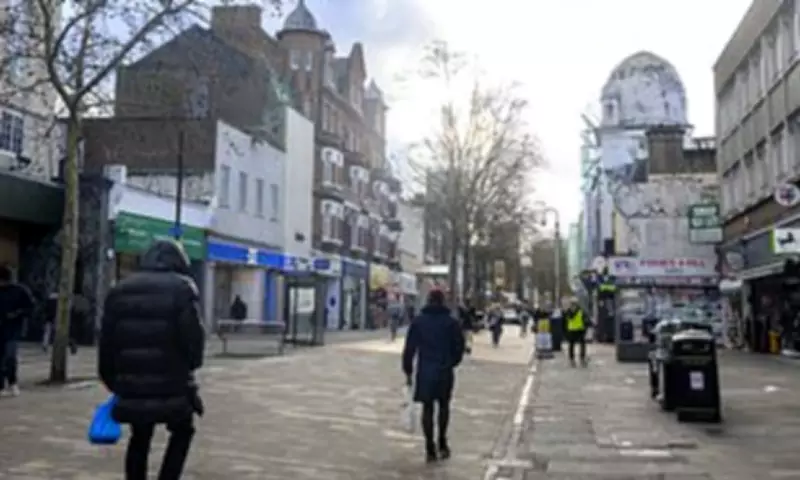
The Metropolitan Police reported a 10.5% reduction in crime in the area during the trial, including a 21% decrease in violence against women and girls. The static cameras, positioned on Croydon High Street, were deployed in 24 operations, yielding an average of one arrest every 35 minutes when active.
Among those arrested were a 36-year-old woman wanted for failing to appear in court for a 2004 assault, a 31-year-old man wanted for voyeurism for over six months, and a 41-year-old man wanted in connection with a rape in Croydon in November.

Legal and Privacy Challenges
Last month, the Met won a landmark High Court challenge regarding the use of facial recognition technology. Judges rejected claims that police breached human rights and privacy laws by scanning faces in public. The cameras, installed on lampposts at the entrance and exit of Croydon High Street, are periodically switched on to scan faces and hunt for criminals.
Shaun Thompson, a 39-year-old community worker, was wrongly flagged as a criminal after being filmed at London Bridge station and detained for 30 minutes. Silkie Carlo, director of Big Brother Watch, brought a High Court case on his behalf, arguing that the deployment breached Article 8 of the European Convention on Human Rights. However, Scotland Yard Commissioner Sir Mark Rowley said the judgment provided a mandate to expand use of the technology.
How the Technology Works
The cameras capture digital images of pedestrians, which are processed by biometric software to measure facial features. These images are compared against a watchlist of wanted individuals. If a match is found, an alert is sent to officers for review. If no match is found, biometric data is immediately deleted. During the Croydon pilot, over 470,000 people passed the cameras, with only one false alert, where the individual was spoken to and released.
Public Reaction
Lindsey Chiswick, national and Met lead for live facial recognition, stated: 'These results show why live facial recognition is such a powerful tool when used carefully, openly, and in the right places. Crime in this area is down by more than 10%, and the public can see the difference.'
Croydon has one of London's highest crime rates, with violent offences at 110% of the national average and anti-social behaviour at 159-165% of the national average. Public opinion is mixed. John, 81, a local shopper, called it an 'excellent idea,' saying, 'If you haven't been involved in any crime, why should you worry?' He noted that crime was 'rife' before the cameras and felt safer. However, Amy, 33, a stay-at-home mother, expressed concern that the cameras might simply displace crime to other parts of the borough.