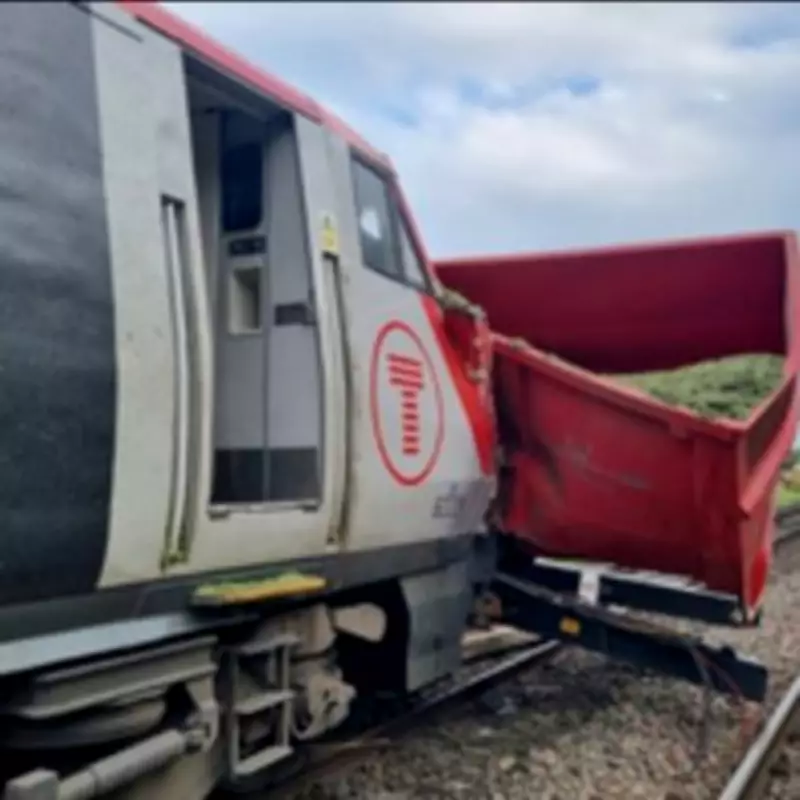
A collision between a passenger train and an agricultural trailer at a level crossing in Herefordshire was caused by human error, according to a new report from the Rail Accident Investigation Branch (RAIB). The incident occurred on May 22, 2025, at around 10:37 AM at Nordan Farm user worked crossing, near Leominster.
Details of the Incident
The passenger train, travelling from Manchester to Cardiff at approximately 80 mph (129 km/h), struck an agricultural trailer being towed across the railway on the Down Main line between Ludlow and Leominster. The train carried 66 passengers, of whom six sustained minor injuries, along with one member of staff. The train did not derail, but the leading vehicle and the trailer suffered significant damage.
Cause of the Collision
The RAIB investigation determined that the signaller granted permission to the tractor driver to use the crossing despite the proximity of the oncoming train. The signaller had forgotten about the train and failed to check signal box equipment indicating its presence, as per their training. Factors contributing to the error included an interruption to the signaller's routine, increased workload, distraction, and fatigue. Since Nordan Farm crossing is a passive user worked crossing, it lacks engineered safeguards, relying entirely on the signaller's judgement for safe operation.

Underlying Factors
The RAIB found that Network Rail's risk assessment process did not adequately address the higher risk at crossings during periods of intensive seasonal use. Additionally, Network Rail lacked a coherent method for determining whether vehicles using user worked crossings should be classified as large, low, or slow-moving, which may have been an underlying factor.
Recommendations
The RAIB issued two recommendations to Network Rail. The first aims to improve risk management at crossings with highly variable usage throughout the year. The second asks Network Rail to review its response to a previous RAIB recommendation, focusing on helping signallers and crossing users decide if a vehicle should be treated as large, low, or slow-moving.
A Network Rail spokesperson stated: "Safety remains our highest priority for both passengers and our colleagues, and we have fully supported the independent investigation. Our thoughts remain with everyone affected by this incident. While incidents of this nature are rare, it's vital we understand exactly what happened and where we can do better. We are carefully considering the report's findings and recommendations."
The Mirror has contacted Network Rail for further comment.