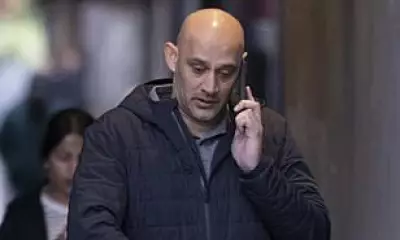
In a flash outside Barclays in Croydon town centre, a digital trap snapped shut around one of Britain's thousands of wanted criminals. Within little more than a minute, a combination of high-definition cameras, automated AI face scanning, and half a dozen police officers had run a wanted man to ground. After the handcuffs clicked shut, the Metropolitan Police's controversial live facial recognition (LFR) cameras had chalked up another arrest: the fifth in 45 minutes on a regular Thursday morning.
The Pilot and Its Impact
This arrest was one of hundreds made during a six-month Met Police pilot of LFR cameras mounted on vans and fixed to lamp-posts, a technology also seen across cities in China, the UAE, India, and Israel. Critics have called the technology invasive, unregulated, and anti-democratic, citing studies suggesting racial bias and calling for its scrapping. However, Met Police Commissioner Mark Rowley has described it as "gamechanging" and essential for public safety.
The trap was set at 10am when surveillance cameras mounted high on pillars at the junction of Church Street and North End were switched on. Standing nearby was Kevin Brown, a plain-clothes police sergeant. When the wanted man unwittingly walked past a camera, Brown's handheld device beeped furiously, displaying the suspect's live photo alongside a previous custody image, his name, the suspected crime, and warnings of any weapons or drug risks.

How the System Works
Every face passing the cameras—up to 5,000 an hour—was scanned, and its biometric data streamed live to a police operations room five miles away in Sydenham. There, an AI-powered system supplied by Japanese tech company NEC checked it instantly against photos of wanted suspects and individuals under court orders. Uniformed officers across the road received the same alert and converged on the suspect, who made a vain run for it and then fought hard. Officers subdued him, emptied his pockets, and took him away in a police van.
Street signs warned that the system was scanning every pedestrian's face, but the suspect was one of many passersby oblivious to the digital dragnet. Within minutes, Brown's device buzzed again with matches at the other end of the street. On this weekday morning, the AI-enabled system triggered 19 alerts, resulting in nine arrests for crimes including rape, shoplifting, and breach of court orders. Another man was stopped to check adherence to a court order, and another was held because he had a criminal record and was on probation. He remarked, "This is a bit over the top, isn't it?" as officers crowded him against a wall. He had no idea LFR was in operation, adding, "I'm not coming to Croydon again. It's mad. I am all registered."
Effectiveness and Controversy
Scotland Yard has trumpeted the technology's effectiveness at catching people wanted for violence against women and girls, with 2,100 such arrests since the start of 2024, as well as over 100 sex offenders. In one case, LFR cameras detected a registered sex offender, who was required not to be around children, alone with a six-year-old girl. He was arrested and jailed for two years.
A widespread public concern is the risk of racial bias, after early models showed concerning results. However, the Met has stated that independent testing by the National Physical Laboratory found that, at the threshold Scotland Yard sets to determine a match, the system was accurate and balanced with regard to ethnicity and gender. The Met reported that in 2025, there were just 12 false alerts out of more than 3 million faces captured.
Public Opinion in Croydon
Public opinion in Croydon town centre ranged from strong opposition to strong support. Maleek Ife, 36, a delivery driver, said, "It's not good to have your face scanned. It's a violation of privacy. To scan everyone? I'm not happy with that. It's not what I believe the UK is about. You should respect people's privacy. You should be able to walk around freely. I don't think we should become a surveillance state. We are going to become like the countries we criticise."

In contrast, Sam Mensah, 53, a supermarket worker, said, "It's good. If someone is doing something bad you can catch that person immediately. I am not worried about being scanned. I have no issue to hide." Owen Brown, 63, a carer, saw the cameras as just another part of a wider slide into digital tracking. "The way life is moving now, they track you through your phone anyway. There's nowhere you can go without being scanned or looked at. It's invasive, but what can you do about it? It's part of life now."