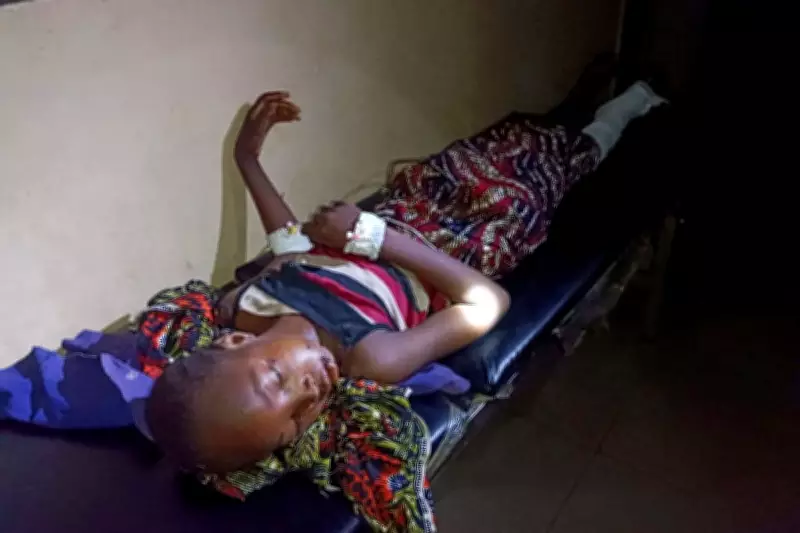
Nigeria's military has once again killed a large number of civilians in an airstrike intended for militants, a recurring mistake that raises serious questions about the capabilities of a key U.S. security partner in Africa.
Latest Airstrike in Zamfara
On Sunday, at least 100 civilians, including children, were killed at a market in Tumfa town, northwestern Zamfara state, according to Amnesty International's Nigeria office. A Red Cross official confirmed the airstrike and reported multiple civilian deaths. However, the Nigerian military denied these claims. Major General Michael Onoja acknowledged the airstrike but stated there was no verifiable evidence of civilian casualties, adding that military operations continued in the area.
History of Civilian Deaths
Such strikes are common in Nigeria's conflict-ridden north, where the military relies heavily on aerial bombardments to target hideouts of dozens of armed groups. Since 2017, the military has killed over 500 civilians in airstrikes, according to SBM Intelligence, a Lagos-based research firm. The Trump administration recently deployed troops and drones for intelligence and logistics support, though it remains unclear if U.S.-provided intelligence was used in the latest strike.

Armed Groups and Human Shields
Beyond the well-known Boko Haram insurgency, dozens of armed groups operate across Nigeria. These groups, often composed of former herdsmen in conflict with farming communities, carry out mass killings, kidnappings for ransom, and extortion. They frequently use civilians as human shields, complicating military operations. Former President Muhammadu Buhari once noted that bandits and terrorists do not respect rules of engagement and may kill hostages if attacked.
Challenges in Avoiding Civilian Casualties
Analysts attribute the frequent civilian deaths to intelligence gaps and poor coordination among ground troops, air assets, and stakeholders. Senator Iroegbu, a security analyst, highlighted these loopholes. The government often promises investigations, but improvements are rare. In 2024, the military prosecuted two personnel for an airstrike that killed over 80 civilians in Kaduna state but has yet to release the investigation report.
Calls for Better Training and Trust
Oluwole Ojewale of the Institute for Security Studies emphasized the need for better pilot training, aircraft upgrades, and targeting systems. He also stressed the importance of building trust with local communities, whose intelligence is crucial for accurately targeting armed groups and preventing civilian deaths.