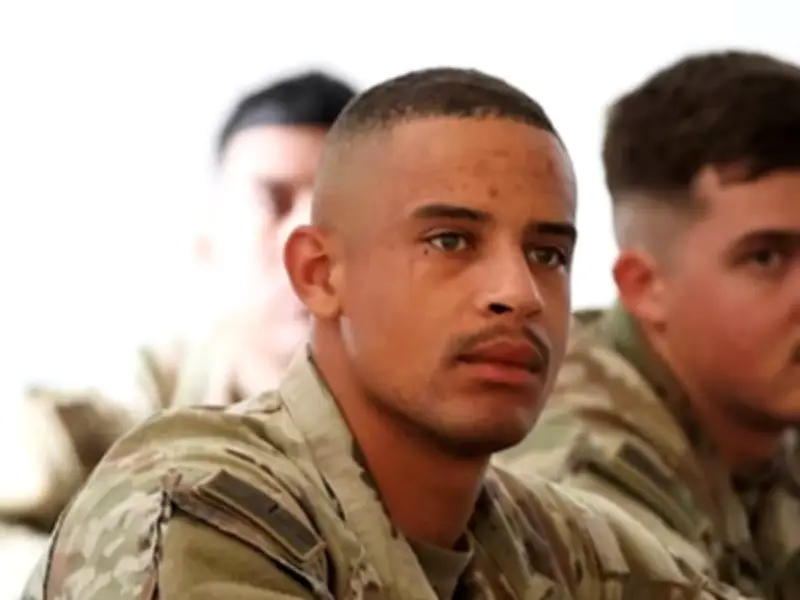
A US soldier has died after being crushed by a 27-ton M2 Bradley fighting vehicle during a large-scale training exercise in California's Mojave Desert. Combat engineer Adrian Bonsey, 29, was on foot when the incident occurred at approximately 4:30 a.m. on June 10 during hours of limited visibility, according to an army spokesperson.
Details of the Incident
Specialist Bonsey, assigned to the 3rd Infantry Division at Fort Stewart, Georgia, was participating in a month-long exercise at the National Training Center designed to simulate war conditions. Such training is typically the final stage before army units are considered ready for potential combat deployments abroad. The M2 Bradley, operated by a three-man crew and capable of carrying a six-man rifle team, is armed with a 25mm chain gun, an M240C 7.62mm machine gun, and TOW anti-tank missiles.
Maj. Gen. John Lubas, the 3rd Infantry Division commander, expressed the division's grief: "This is a devastating loss for our entire division. Adrian was an exceptional soldier who was committed to our mission and proudly serving our nation. We are heartbroken and will wrap our arms around his family, loved ones and fellow Soldiers during this difficult time."

Soldier's Background
Specialist Bonsey, originally from New York, joined the army in 2023 and had been stationed at Fort Stewart for two months. He previously served at Fort Carson, Colorado, and deployed to Poland in 2024. The incident remains under investigation.
Broader Context of Training Accidents
According to Pentagon figures, 31 soldiers were killed in army training accidents in 2025, with fatalities split between aircraft crashes and ground incidents. Most ground deaths involved military vehicles, many in rollover incidents. The service has averaged roughly two vehicle-related fatalities each month since 2020, a decline from the mid-2000s when deaths were triple that amid the Iraq war surge. Repeated army investigations have highlighted factors such as sleep deprivation, inadequate training, and inexperienced leaders supervising high-risk exercises as contributing to such accidents.