Eight Miners Jailed After Derailing Flying Scotsman in 1926 General Strike
During the General Strike of May 1926, union man William Golightly, grandfather of actor Robson Green, stood before a packed meeting of Cramlington miners and urged: “Stop everything on wheels.” Rumours had spread through the tiny Northumberland village that a coal train was on its way. Golightly believed it should be stopped, setting off a chain of events that playwright Ed Waugh calls “the most notorious incident of the whole General Strike.”
The miners were living in brutal conditions, plunged into poverty and struggling to feed their families. The strike was called after mine owners demanded a 40% wage cut. William Muckle, one of eight miners jailed over what happened next, later told the BBC: “We were slaves. We were getting starvation wages.”
False Rumours Led to a Dangerous Act of Desperation
The rumour of an approaching coal train proved false. Ed Waugh explains: “It was nonsense, but these young miners took it literally. They went down and lifted a rail.” Around 40 miners were involved because the work demanded it. Each rail was solid steel, 15 yards long, 45 feet, and weighed 103 stone. Their intention was to slow the train down. They waved a red handkerchief as a flag, but the train did not stop.

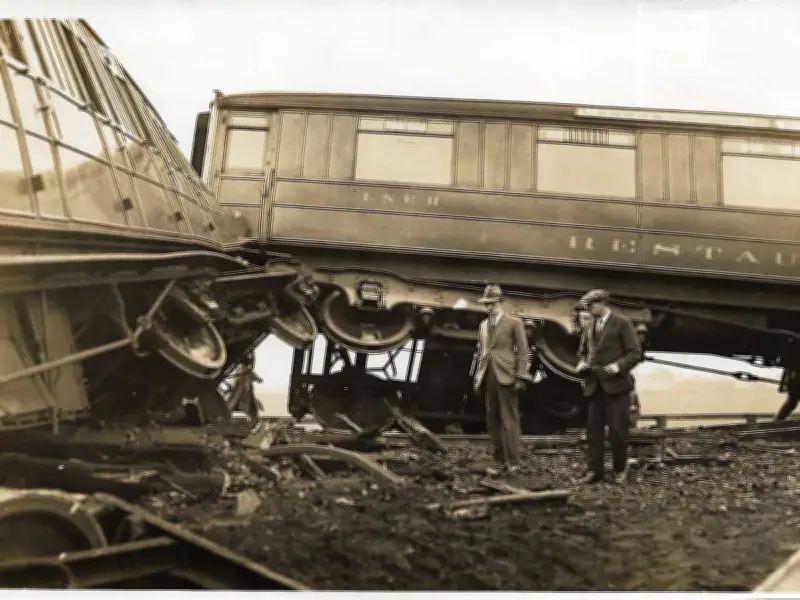
It was not a coal train. It was The Flying Scotsman bound for London, carrying 281 passengers. Waugh says: “The miners never, ever intended to do anything to any of the passengers. It was to stop a coal train. This could have been carnage.” Fortunately, only one person was injured—a man whose foot was struck by a falling case. Women from the village ran to the scene with towels and sheets to give first aid. One survivor told them: “Go home and wash your dirty selves and your dirty homes, we don't want help from the likes of you.”
Arrests, Trial, and Harsh Sentences
The Daily Graphic front page the next morning screamed: “London express wrecked: dastardly outrage in North.” The story made international headlines and was raised in Parliament. Police sent undercover agents but got nowhere. Everybody in Cramlington knew what had happened and who was involved, but nobody would talk. Eventually, in June, six men turned King’s evidence. Waugh notes: “In the BBC film you see how heartbroken the miners were, because these were their best friends.”
On June 30, 1926, a trial took place at Newcastle Moot Hall. Eight miners were convicted: Robert Harbottle (21), Thomas Roberts (25), and Arthur Wilson (26) each received eight years; James Ellison (29) and William Stephenson (22) got six; William Baker (28), William Muckle (25), and Oliver Sanderson (25) received four. Ellison died just six months after his release. They were sent to Maidstone Prison in Kent, 330 miles from Cramlington, and were not treated as political prisoners. Waugh says: “They were in with murderers and people who had committed incest. That sentencing was part of a carnival of reaction. The ruling class saying, ‘you will not do this again, this is what happens.’”
Campaign for Release and Posthumous Pardon
The men were allowed one visit a year from their families, hundreds of miles away. A campaign by the trade union rank and file and the Labour Party eventually forced the government to relent, allowing two visits a year for half an hour each. The women of the Cramlington Labour Party held rabbit pie and peas evenings to raise money. Even sections of the judiciary said the sentences were too harsh. The International Class War Prisoners Aid society paid families’ travel costs and fought for the men’s release.
Muckle, Baker, and Sanderson were released in September 1928 after just over two years. When they returned north, 3,000 people were waiting at Newcastle Central Station with a band. Stephenson and Ellison followed in July 1929, released early and quietly. The last three—Roberts, Harbottle, and Wilson—came out on December 23, 1928, without their families being informed. They simply knocked on their doors the day before Christmas Eve.

Legacy and Call for Justice
Arthur Heayns, who was 10 at the time, recalled the crash scene and his grandfather’s rare punishment. Thomas Roberts, interviewed by the BBC in 1969, said: “We were respected by everyone, because it was took as a political crime.” Ed Waugh’s play The Cramlington Train Wreckers is currently touring Northern Ireland and will be at Newcastle Theatre Royal on July 12. He says: “Taking up the rail was a stupid thing to do, because it could have led to people dying. But in this particular era a miner was killed every 15 minutes down a pit … and not one coal owner was ever sent to prison.”
Ian Lavery, MP for Blyth and Ashington, has raised the case in Parliament and is calling for a posthumous pardon for all eight men. He said: “Granting these men posthumous pardons would correct the historical record and honour their courage. They lived in abject poverty, but there was no malice intended and none caused. Daft, yes. Naive, yes. Violent criminals, no.”