Inside America's Most Secure Prison: The Final View of Freedom
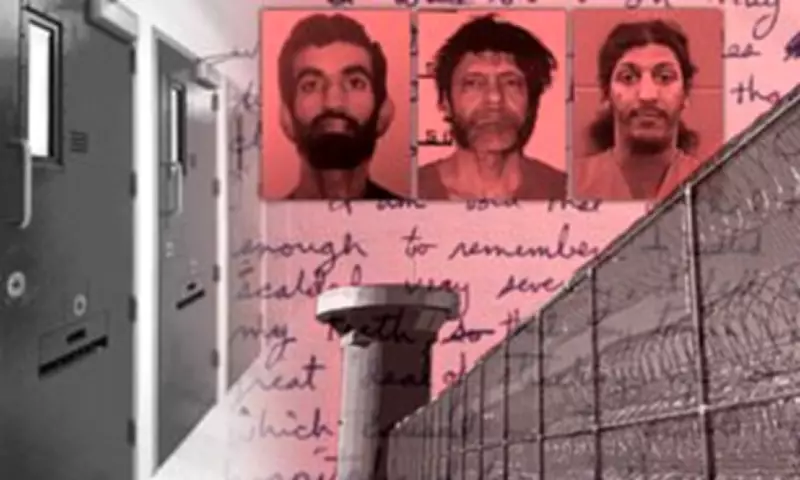
When prisoners arrive at America's highest security prison, they are granted one final, breathtaking panorama before their confinement begins. "As they're pulling up, they see the beauty of the Rocky Mountains. It is absolutely beautiful," revealed Bob Hood, the former warden of the Supermax facility located outside Florence, Colorado. "That's the last time they're going to see freedom."
Walking Among the 'Worst of the Worst'
Between 2002 and 2005, Hood walked the corridors daily, checking on each inmate personally. His charges included notorious figures such as the Unabomber Ted Kaczynski, 'Shoe bomber' Richard Reid, and World Trade Center bomber Ramzi Yousef, alongside numerous serial killers. These individuals represented the "worst of the worst" in the penal system, with no prospect of ever being released. Many became emotional wrecks under the strain of perpetual isolation.
"I would say that 97 percent to 98 percent of all inmates at the Supermax, I could see the impact of it," Hood observed. "I'd see guys in tears sometimes during Christmas, you know, talking about their kids, and yet they're doing multiple life sentences."

Ted Kaczynski: Beating the System Through Intellect
One inmate who handled the solitude better than most was Ted Kaczynski. Initially, he refused to speak to Hood for months before eventually opening up. "He was able to handle the Supermax almost to a point of surprising the staff," Hood noted. "He beat the system in one sense because it never seemed like it ever got to him."
Kaczynski maintained his sanity through intellectual pursuits, always surrounded by books in six or seven different languages. After his prolonged silence, Hood employed tactics reminiscent of TV detective Columbo to engage him. "I said, Kaczynski, over the weekend, I was reading some stuff, and again very distant, he said, that's good, what was it? I said, the manifesto that you wrote," Hood recounted. "And that's the first time, after like six months or seven months, that he finally really connected with me. I could tell that I hit a nerve."
Their conversation evolved, with Kaczynski boasting that everyone knew the Unabomber, but Hood countered that time had eroded his notoriety. "I said the average person now, the average kid growing up, no one knows about the manifesto," Hood told him. "They're not reading your manifesto. I told him that. I said, you know, you killed several people, couldn't you just have put the damn thing in a book?"
Kaczynski's response was chilling: "No, I had to kill somebody to get the attention." Hood reflected, "Well, you have to look at that, you're sitting in the Supermax for the rest of your life, you die here, and he did. So, we had those kind of conversations."
Strange Habits and Psychological Coping Mechanisms
Kaczynski developed peculiar habits to cope with confinement. He would run in circles in the dog cage where he was occasionally placed, mentally calculating the distance he would have traveled in a straight line. During a visit from then-FBI Director Robert Mueller, Kaczynski repeatedly announced, "Hey, warden, I just want you to know I'm in Walla Walla, Washington, right now," as he ran. Hood understood he was mentally tracking the distance to his brother's home on the West Coast.
Richard Reid: From 'Street Punk' to Diploma Holder
In contrast, Richard Reid, the British 'shoe bomber,' was described by Hood as a "street punk." Their first meeting was tense. "I walk up to him. He's in the cell. The door opens up. The officers are standing there with batons left and right of me, and he stands up from his bed, and I say, Good morning, and he's a punk type of guy," Hood recalled. "He goes, Oh, who are you? He doesn't know. I said, Well, I'm the warden. And I said, so who are you? And he says I'm Richard Reid. And, I go, oh yeah, you're the guy who couldn't even blow up his shoe."

Hood challenged Reid to earn his GED high school diploma and keep his cell clean, including neatly lining up his shoes. "He goes, Why would I want to get a GED? I said, well you're not getting out of here, you're going to basically die here. Sometimes you do it for others, do it for your mother in England," Hood persuaded him. Reid succeeded, and his behavior improved, eventually allowing a brief, monitored visit with his mother where he shared his academic achievement.
Other Notorious Inmates: Silence and Isolation
Ramzi Yousef, the mastermind of the 1993 World Trade Center bombing, was largely uncommunicative, focused on prayer. "Yusuf was looking at getting up on the hour, praying," said Hood. "He hardly ever talked to me. He was just like, Good morning, warden."
Serial killer Michael Swango, a former Marine and doctor who poisoned patients, took isolation to an extreme. After being attacked in another facility, he was transferred to Supermax and "never came out for recreation" during Hood's tenure. "Here's a medical doctor who can come out one hour a day and see the sunshine above you. You can't see the mountains, you can't see the beauty, it's all intentionally built so you don't see all that beautiful stuff, but you can see the sky," Hood explained. "He stays in 24 hours a day. He's the only one I've ever met that it's in the Supermax and said, No, I don't want to come out."
The Supermax facility, with its state-of-the-art isolation design, minimizes suicide risks and external views, reinforcing its role as a permanent home for society's most dangerous individuals. Through Hood's insights, the complex psychology of its inhabitants—from intellectual defiance to resigned compliance—reveals the profound human impact of ultimate confinement.