The Court of Appeal has ruled that the decision to ban Palestine Action as a terror group was lawful, overturning a previous High Court judgment. Five appeal judges delivered their decision after the Home Office challenged the earlier ruling that the ban was unlawful.
Background of the Case
In February, three High Court judges declared that then-Home Secretary Yvette Cooper's decision to proscribe Palestine Action under the Terrorism Act 2000 was unlawful. This followed a legal challenge from the group's co-founder, Huda Ammori. The ban, effective from July 5 last year, made membership of or support for the direct action group a criminal offence punishable by up to 14 years in prison. It remained in force while the Home Office appealed.
Court of Appeal Decision
On Monday, five judges at the Court of Appeal stated that the ban was a "justified and proportionate" interference with freedom of expression rights. In a summary of the decision, Lady Chief Justice Baroness Carr said the High Court had "materially understated the position" regarding the Home Secretary's discretion in proscription decisions. She also noted that comparisons to groups such as the suffragettes were "seriously flawed."

Baroness Carr, sitting with Sir Geoffrey Vos, Lord Justice Edis, Lord Justice Lewis, and Lady Justice Whipple, emphasized: "There is a distinction between the expression of an opinion or belief that is supportive of the objective of an organisation… and an expression of an opinion or belief that is supportive of an organisation itself."
Arguments from Both Sides
In written submissions for the Home Office, Sir James Eadie KC argued that "the line between criminality, sometimes violent criminality, and terrorism is not a bright one," and that criminal law had "demonstrably failed" to prevent the escalation of the group's activities. Conversely, Raza Husain KC, representing Ms Ammori, contended that the High Court was correct in finding that the ban did not properly balance human rights and that it had created a "culture of fear" among Palestinian rights campaigners.
Impact on Activists
Hundreds of people have been arrested during demonstrations for displaying placards, badges, or t-shirts supporting Palestine Action. The Chief Magistrate has paused progress on criminal cases for those charged, with a review hearing scheduled for June 30.
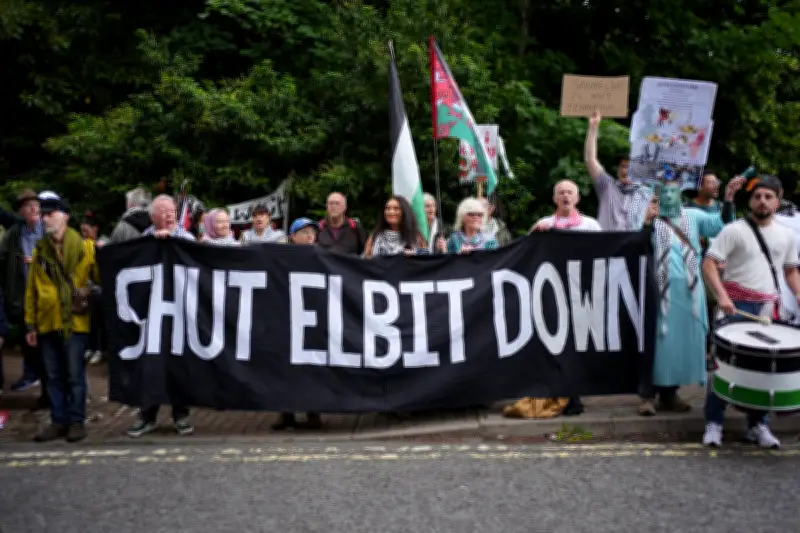
The Court of Appeal's decision follows the sentencing of four Palestine Action activists who conducted a "terrorist" raid on Elbit Systems' UK factory, an Israel-based defence firm. Charlotte Head, 30, Samuel Corner, 23, Leona Kamio, 30, and Fatema Rajwani, 21, used sledgehammers and crowbars to destroy computers, drones, and other equipment before police intervened. Corner struck a police officer with a sledgehammer, fracturing her spine. Mr Justice Johnson sentenced them to between four years and eight months and seven years and eight months in prison, plus an extra year on licence. He ruled that the raid constituted an "act of terrorism" aimed at influencing the UK Government and intimidating the public.