Australia's Most Decorated Soldier Charged with War Crimes After Years-Long Investigation
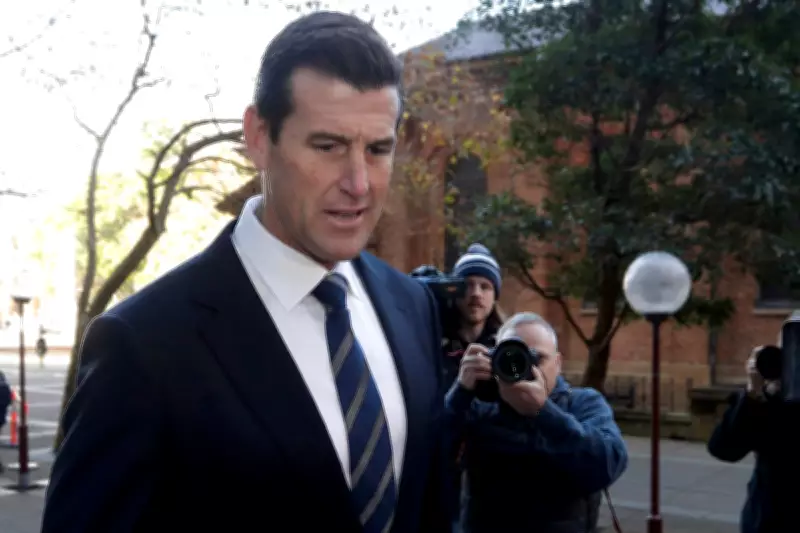
Ben Roberts-Smith, Australia's most decorated living soldier, has been arrested and charged with five counts of the war crime of murder following a lengthy joint investigation between Australian Federal Police and the Office of the Special Investigator. The 47-year-old former soldier was arrested at Sydney airport after arriving from Brisbane and has appeared in a New South Wales court.
The Long Path to Prosecution
Roberts-Smith is only the second Australian to face such charges, making this a particularly high-profile case in Australian legal and military history. The allegations against him first emerged in 2017 through media reports by Australian journalists Nick McKenzie, Chris Masters and David Wroe, who alleged he had murdered Afghan personnel during operations in Afghanistan.
In 2018, Roberts-Smith sued the journalists and Fairfax Media for defamation, leading to a civil trial where the journalists successfully defended themselves by proving their reporting was accurate. The 2023 court decision found sufficient evidence that Roberts-Smith had murdered two Afghan personnel and ordered or pressured a subordinate to murder another.

However, the civil case operated under a different standard of proof than criminal proceedings. While the journalists only needed to prove their allegations were true on the balance of probabilities, criminal courts require proof beyond reasonable doubt for conviction.
Broader Investigation Context
The allegations against Roberts-Smith form part of a much larger investigation into Australian military conduct in Afghanistan. In 2016, the Australian military began investigating war crimes allegations, leading to the 2020 Brereton report that outlined 39 murders of civilians and prisoners by Australian soldiers.
This report prompted the Australian government to establish the Office of the Special Investigator to further examine war crimes and recommend prosecutions. Progress has been slow despite considerable evidence of wrongdoing, with only one other Australian, Oliver Schulz, previously charged with war crimes related to Afghanistan.
Challenges in War Crimes Investigations
Investigating war crimes presents significant challenges, particularly in Roberts-Smith's case. Ross Barnett, director of investigations at the Office of the Special Investigator, noted that the political situation in Afghanistan has complicated the work, effectively barring Australian investigators from operating on the ground.
The prominence of Roberts-Smith as both a decorated soldier and public figure has likely made investigators particularly cautious. A failed prosecution could undermine public trust in the entire investigation program, especially given that many Australians celebrate military service and expect careful consideration of charges against former soldiers.
Legal Framework and International Obligations
Australia's pursuit of these allegations stems from its 2002 membership in the International Criminal Court, which requires member states to domestically legislate war crimes laws and investigate allegations. If a government fails to investigate or prosecute war crimes, the International Criminal Court can intervene.
Due to the seriousness of the alleged crimes, Roberts-Smith will likely be tried in a state supreme court, similar to Schulz's case. The trial will proceed like any other criminal trial, with war crimes having been incorporated into Australian criminal law through international legal obligations.
International Implications
The decision to prosecute Roberts-Smith represents both an expected outcome and a surprising commitment to international law. While his failed defamation case made criminal charges seem inevitable given the detailed evidence presented, the prosecution occurs against a backdrop of declining international respect for war crimes law among some of Australia's allies.
By prosecuting its most highly decorated soldier, who once served as the public face of the Australian military, Australia demonstrates a commitment to international legal standards that contrasts with some global trends. The maximum penalty for the war crime of murder is life imprisonment, underscoring the gravity of the charges.