Oxfordshire Centenarian Reveals Forced Labour Building Hitler's Bunker
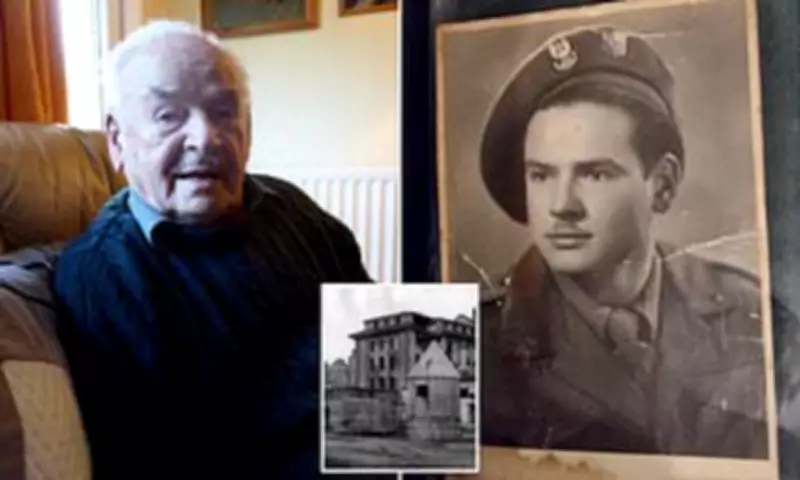
A remarkable story has emerged from the Chiltern Hills in Oxfordshire, where a 100-year-old villager has disclosed his shocking wartime ordeal of being kidnapped by the Nazis and compelled to work on Adolf Hitler's infamous bunker during the Second World War. Ches Black, now a centenarian, was forcibly taken to Berlin in 1944 due to a severe shortage of manual labour in Germany, completely unaware that his efforts would directly serve the dictator.
Forced into Nazi Construction Efforts
In 1944, Mr. Black, then a 19-year-old Polish-born man, was seized by German forces and transported to Berlin to support Organization Todt, a Nazi entity responsible for construction projects using forced labour. Alongside hundreds of other slaves, German soldiers, and prisoners, he was ordered to dig a deep excavation near the Berlin Reich Chancery. "I didn't know what it was for - only afterwards," Mr. Black recalled. "We had no idea what it was for and no interest what it was for. We were just made to work there."
The labour was gruelling and primitive. "It was sandy and we just had a wheelbarrow and shovels and worked only by hand," he described. "It was quite a deep dug hole into the ground - as a person in the hole, you looked up and up. There were lots of people, maybe hundreds, slaves, all kinds of German soldiers all working there." The purpose of this excavation remained a closely guarded secret from the workers, who were kept in the dark about their role in constructing what would become known as the Führerbunker.

Discovery of the Bunker's True Purpose
It was only after the war concluded that Mr. Black realised the significance of his labour. The deep hole he helped dig was part of Hitler's subterranean bunker complex, constructed in two phases in 1936 and 1944. This bunker served as the final Führer Headquarters during WWII, where Hitler took up residence on 16 January 1945. It was within these walls that he married Eva Braun on 29 April 1945, and less than 40 hours later, both committed suicide on 30 April 1945.
"I am amazed I was digging for Hitler," Mr. Black expressed. "But we were given orders by the Germans - we were forced labour. We didn't want to know. So we never understood it was intended for Hitler himself. I was just forced to dig a hole for the Germans in Berlin. Organisation Todt kept the secret completely from us." By the time Hitler moved into the completed bunker, Mr. Black had already escaped in Italy and joined the free Polish forces fighting against the Germans.
Kidnapping and Wartime Journey
Born as Czeslaw Blachucki on 10 December 1925 in the Polish village of Gnezdzysk, Mr. Black's life took a dramatic turn after Christmas in 1944. The Nazis began rounding up young men and women in Vilnius, where his family had moved, to address labour shortages in Germany. When they arrived at his home, he hid in nearby woods, but the Nazis took his mother hostage to force his surrender. "My father came to tell me, 'If you come to give yourself up then they will let your mother out'," he said. "I knew I had to go."
He was forced into a cattle wagon with about 40 others and transported to Berlin, a journey that marked the last time he ever saw his mother, who later died in 1947. "The Germans shut us in the cattle wagons, just like animals, and sent us to Germany," he remembered. Despite opportunities to escape, he chose to stay, wary of both German and Russian forces.
Escape and Post-War Life
After his forced labour in Berlin, Mr. Black was deployed to Italy, where he worked transporting timber to the frontline. Upon learning that a Polish division had taken Monte Cassino, he deserted the Germans and joined resistance fighters. He eventually served with the Polish 5th division as part of the British Forces. Post-war, the Yalta Agreement placed Poland under Soviet influence, prompting him to settle in the UK instead of returning home.

He underwent engineering training in Italy before relocating to Glasgow and later settling in Highmoor, Oxfordshire. In England, he changed his name to Ches Black for simplicity. He met his wife June at a dance in Stoke Row village hall in 1947, and they were married that same year, sharing 72 years together until her passing. Mr. Black has worked various jobs, including as a gardener and for 29 years in a car factory in Cowley, Oxford. He now has four children, seven grandchildren, and nine great-grandchildren, with another due in May 2026.
Preserving History and Legacy
Today, Mr. Black is sharing his story with the assistance of friend and history enthusiast Graham Drucker, director of Commonwealth Family History Research. He is actively involved with the Friends of Checkendon, Nettlebed, and Kingwood camps, aiming to preserve the memory and heritage of Polish soldiers and refugees. "I now write love stories to keep people together and happy - romance, really," he added, reflecting on his creative pursuits since his wife's death.
This account sheds light on the harrowing experiences of forced labourers during WWII and underscores the importance of remembering such historical events. Mr. Black's resilience and subsequent life in Oxfordshire serve as a testament to survival and adaptation in the face of unimaginable adversity.