The Dyatlov Pass Incident: A Cold Case That Defies Explanation
More than six decades after the tragic deaths of nine university students on a remote Russian mountain pass, the Dyatlov Pass incident continues to confound investigators and captivate the public imagination. The bizarre injuries sustained by the victims—including missing eyes and tongues—combined with evidence pointing toward possible military involvement have transformed this 1959 tragedy into one of history's most enduring mysteries.
The Fatal Expedition
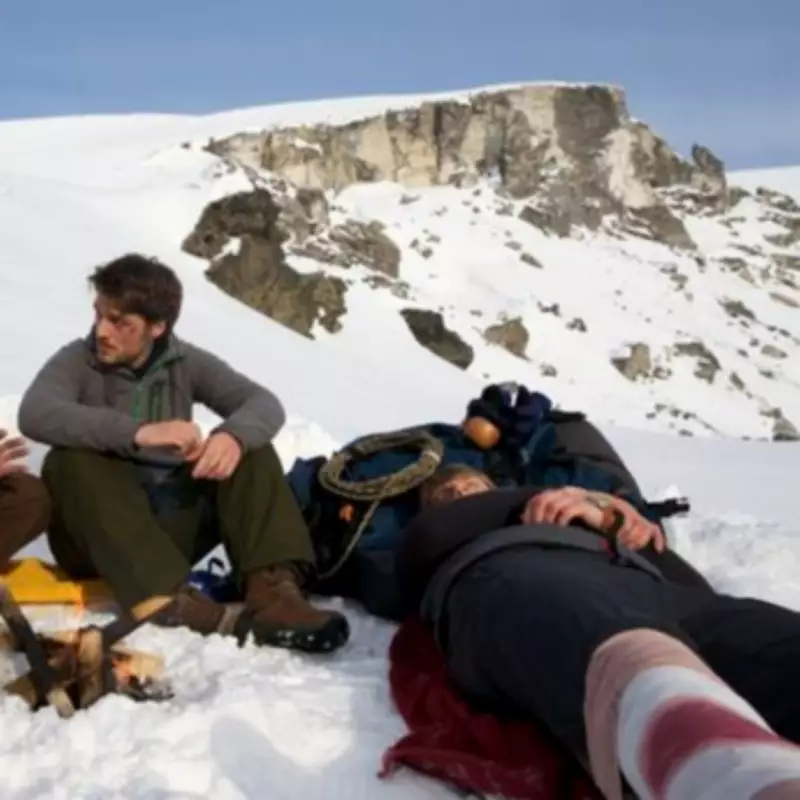
In January 1959, ten experienced skiers from Yekaterinburg's Urals Polytechnic Institute embarked on what should have been a routine skiing trek through the Ural Mountains. Led by 23-year-old Igor Dyatlov, the group included both men and women ranging in age from 20 to 38. One member, Yuri Yudin, left the expedition early due to health issues, becoming the sole survivor of what would become a nightmare scenario.
Before departing, Igor had promised to send a message to their sports club in Sverdlovsk upon their safe return. When no communication arrived by February 12, there was minimal concern—delays were common in such expeditions. However, by February 20, with still no word from the students, worried families raised the alarm, prompting the university to organize a search party.

The Chilling Discovery
Mikhail Sharavin, part of the search team flown to the region by helicopter, made the initial discovery on February 26. He spotted part of a tent canvas protruding from the snow on Kholat Syakhyl—translated as "Mountain of Death." Using an ice pick found nearby, he uncovered the entrance to reveal a scene that would haunt investigators for generations.
Inside the tent, rucksacks were neatly lined up alongside a pile of boots and a single blanket. Personal items including route maps, official papers, money, a flask of alcohol, and sliced pork fat—a traditional energy source for hikers—suggested the group had been preparing for supper when something interrupted them. Most disturbingly, a large slash mark on the inside of the tent indicated someone had cut their way out in the -20°C weather.
Outside, Sharavin discovered eerie footprints extending about ten meters from the tent—some made by people wearing single boots, others by those in socks or barefoot. This suggested the students had fled in extreme haste, abandoning proper clothing and footwear in their desperate escape.
The Gruesome Aftermath
Between February 27 and May 4, 1959, searchers gradually recovered all nine bodies in various locations around the campsite. The first two victims—Yuri Doroshenko and Yuri Krivonischenko—were found near a cedar tree, dressed only in their underwear despite the freezing temperatures. Krivonischenko had bitten off a piece of his own knuckle, suggesting extreme distress or pain.
Igor Dyatlov's body was discovered face down in the snow, clutching a branch, while Zinaida Kolmogorova appeared to have been attempting to scramble back uphill toward the tent. A crimson mark across her right side was consistent with a strike from a blunt object like a baton.
As spring thaw revealed the final four bodies in May, the most disturbing injuries came to light. Nikolai Thibeaux-Brignolle and Rustem Slobodin both had fractured skulls. Aleksandr Kolevatov showed an odd injury behind his ear and a twisted neck. Most horrifically, Lyudmila Dubinina and Semyon Zolotaryov—the group's eldest member—both had fractured ribs and were missing their eyes. Dubinina's tongue was also absent.
Official Explanations and Family Skepticism
The official Soviet investigation concluded the students died from hypothermia and frostbite, but this failed to explain the severe traumatic injuries unrelated to cold exposure. In 2019, Alexander Kurennoi, spokesman for the prosecutor general, stated that only three weather-related causes were being considered: an avalanche, a falling slab of hard-packed snow, or a hurricane. He explicitly ruled out criminal involvement.

However, Tatyana, sister of Igor Dyatlov, remains deeply skeptical of these explanations. "You have seen for yourself what kind of avalanche could there be when their tent was almost intact?" she argues. "A hurricane? Well maybe, but it is possible to survive a hurricane. As for a snow slab which crushed their tent—that doesn't explain the injuries they had."
Evidence of Military Involvement
Multiple lines of evidence suggest possible military or governmental involvement in the incident and subsequent cover-up. Lev Ivanov, who led the original 1959 investigation, was abruptly relocated to an obscure town in Kazakhstan, and the case was buried for three decades. Only in 1990, as the Soviet Union crumbled, did Ivanov confess to a newspaper that he had been ordered to classify his discoveries and disregard them entirely.
Oleg Arkhipov, a researcher who has written three books on the incident, gained access to investigators' private archives and made startling discoveries. He found that some of the students' clothing contained radioactive traces and that the temporary mortuary was cordoned off by KGB personnel rather than regular police. Most intriguingly, a substantial barrel of alcohol arrived before the autopsies—which Arkhipov believes investigators used to guard against radiation exposure.
"The forensics team were given clear instructions to wipe themselves all over with the alcohol, to rub it all over their naked bodies," Arkhipov revealed. "Such measures never normally took place in those days."
Theories and Speculation
Over the decades, numerous theories have emerged to explain the tragedy. Some suggest the students encountered Yetis or violent indigenous Mansi people, though Valery Anyamov of the Mansi community dismisses this, noting that Soviet investigators arrested many Mansi but found no evidence of their involvement.
Other theories point to secret military testing, with multiple accounts describing fiery spheres illuminating the sky around the time of the incident. Arkhipov doesn't exclude the possibility that "the problem fell from the sky," suggesting an explosion might have caused the students to flee their tent because they couldn't breathe.
The families themselves suspected military involvement from the beginning. Tatyana recalls her mother saying she only recognized Igor's body from the gap between his teeth—his hair had turned completely gray. "The families were told, 'You will never know the truth, so stop asking questions,'" Tatyana remembers. "So what could we do? Remember, back then if they told you to keep quiet, you would obey."
A Legacy of Unanswered Questions
Six decades later, the Dyatlov Pass incident remains officially unsolved. The bizarre injuries, missing body parts, radioactive traces, and evidence of a cover-up continue to fuel speculation and investigation. While weather-related explanations persist in official circles, the extraordinary nature of the injuries and the circumstances surrounding the deaths suggest something far more complex occurred on that fateful February night in 1959.
As Tatyana Dyatlova succinctly puts it: "I think it means something extraordinary happened." For the families of the nine students and for mystery enthusiasts worldwide, the search for answers continues, making the Dyatlov Pass incident one of the most haunting unsolved cases of the twentieth century.