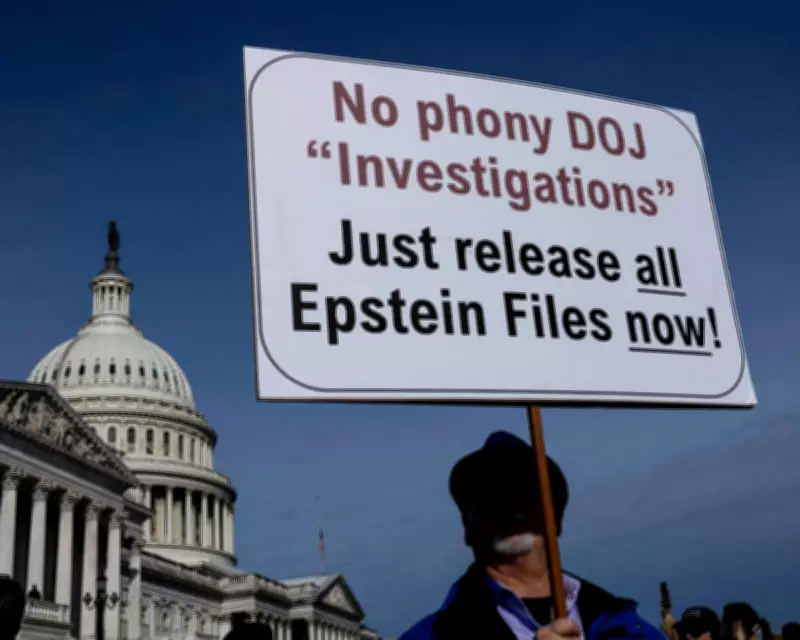
Epstein Files Transparency Act Sparks Controversy Over Survivor Exposure
Survivors of Jeffrey Epstein's extensive sex trafficking operation and their legal representatives have expressed profound outrage following the release of millions of government-held documents. The latest tranche, potentially the final batch, has been criticised for what attorneys describe as "ham-fisted redactions" and the unwarranted exposure of survivors' identities, while allegedly shielding powerful figures implicated in the scheme.
Legal Condemnation of Document Handling
Sigrid McCawley, a partner at Boies Schiller Flexner representing multiple survivors, emphasised that Epstein and his convicted associate Ghislaine Maxwell operated a sophisticated network designed to provide young women and girls to wealthy and influential individuals. "This practice granted them control and power over those implicated in the sex trafficking," McCawley stated. She anticipated that individuals named in the newly released information would attempt to distance themselves, but maintained that the documents confirm the operation's mechanics.
The Trump administration's Justice Department released approximately three million files related to the late financier on Friday, 18 November 2025. While some documents reference prominent figures like Elon Musk and Commerce Secretary Howard Lutnick—neither accused of wrongdoing—the focus has shifted to procedural failures. Deputy Attorney General Todd Blanche acknowledged withholding certain categories, including victims' personal information and medical files. However, victims' attorney Brad Edwards revealed to ABC News that "thousands of mistakes" had led to the public identification of survivors who had never previously come forward.

Survivors' Voices and Political Repercussions
Jennifer Freeman, another attorney for the victims, lambasted the Justice Department's approach as "a mess from the start," accusing officials of exposing survivors while protecting perpetrators. She highlighted that the release missed a congressional deadline set for December, asserting that survivors and advocates would not allow the government to "dump a couple million documents and wash their hands of one of the largest law enforcement failures in US history."
In a powerful collective statement, a group of twenty Epstein survivors condemned the document release for prioritising the shielding of powerful enablers over protecting those harmed. "As survivors, we should never be the ones named, scrutinised, and re-traumatised while Epstein's enablers continue to benefit from secrecy," they declared. This sentiment awkwardly aligns with Ghislaine Maxwell's recent court filings, which claim that twenty-five alleged accomplices made "secret settlements" with accusers, none of whom have been prosecuted or identified to Maxwell.
Congressional Oversight and Departmental Response
The political dimension intensified as bipartisan sponsors of the Epstein Files Transparency Act—California Democrat Ro Khanna and Kentucky Republican Thomas Massie—demanded access to unredacted files to fulfil congressional oversight duties. "Congress cannot properly assess the department's handling of the Epstein and Maxwell cases without access to the complete record," they wrote in a formal letter to Deputy Attorney General Blanche.
Senate Minority Leader Chuck Schumer accused Attorney General Pam Bondi of failing to comply with the law, noting unanimous Senate support for full disclosure. Similarly, Bronx Representative Alexandria Ocasio-Cortez emphasised on social media that the released files represent only "a minority" of the total, with the Justice Department still withholding the majority in violation of legal requirements.
In response, the Justice Department issued a statement to ABC News affirming coordination with victims and their lawyers to ensure necessary redactions. The department established a dedicated email inbox (EFTA@usdoj.gov) for victims to report redaction errors, pledging to "immediately correct any redaction errors that our team may have made."

Before the release, Deputy Attorney General Blanche acknowledged public thirst for information but cautioned that the documents might not satisfy it. Epstein, who died in federal custody in 2019, leaves behind a legacy of unresolved questions and ongoing demands for accountability, as survivors and lawmakers continue to push for complete transparency and justice.