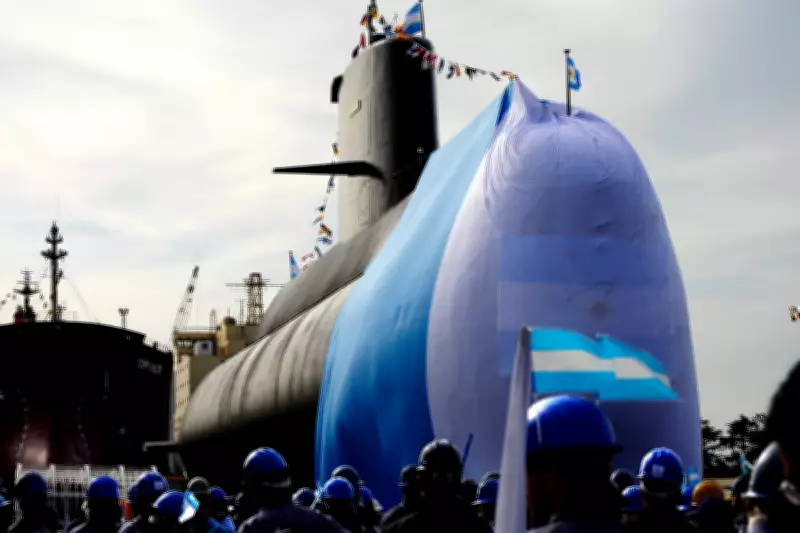
A landmark trial has commenced in Argentina, where four former high-ranking navy officers face serious charges over the catastrophic sinking of the ARA San Juan submarine in 2017, an incident that claimed the lives of all 44 crew members on board.
The Charges and the Court Proceedings
The trial, being presided over by a court in the southern province of Santa Cruz, sees the defendants accused of dereliction of duty, breach of official obligations, and aggravated negligent destruction. Each of these charges carries the potential for significant prison sentences. Throughout the proceedings, all four former officers have maintained their plea of innocence.
Absence of Political Accountability
Notably, while these military figures stand trial, no high-level political officials from the time of the disaster have been prosecuted. This includes the then-president, Mauricio Macri, and members of his cabinet, despite calls from victims' families for a broader investigation into political leadership and responsibility.

The Fateful Voyage of the ARA San Juan
The German-built submarine disappeared on November 15, 2017, while navigating the South Atlantic. It was en route from Ushuaia, in Argentina's far south, to its home base in Mar del Plata, following a routine training exercise. Earlier that day, the vessel had reported a technical malfunction involving water ingress into the battery compartment via the snorkel system, though subsequent communications indicated the issue had been resolved.
Tragically, hours later, an explosion was detected in the area where the submarine lost contact. A judicial investigation later revealed that the ARA San Juan had been suffering from multiple operational deficiencies even before its departure from Mar del Plata on October 25, 2017.
Prosecutors Detail Systemic Failures
During the trial, prosecutors presented evidence that the submarine, since undergoing a mid-life overhaul in 2015, had accumulated "numerous technical defects." These issues were reportedly documented by various captains who commanded the vessel over the years, highlighting a pattern of neglect and inadequate maintenance.
The Catastrophic Chain of Events
According to the court's reconstruction of events, water entered the submarine through its ventilation ducts, eventually reaching a battery tank. This triggered a short circuit and a small fire, which caused the vessel to lose control and descend rapidly into the ocean depths. At a depth exceeding 600 meters, the hull could no longer withstand the immense pressure, leading to a catastrophic implosion that sealed the fate of the crew.
Families' Quest for Justice
Relatives of the deceased crew members, represented by attorney Luis Tagliapietra, have expressed profound dissatisfaction with the scope of the current trial. They argue that it fails to deliver true justice, criticizing Judge Marta Isabel Yañez for not ordering essential expert analyses and for neglecting to investigate the political leadership of the time, specifically the administration of President Mauricio Macri.
In a related development, Argentina's Supreme Court ruled in October to dismiss claims of illegal espionage against the families of the 44 crew members. This decision effectively concluded all legal proceedings against former President Macri in connection with the submarine disaster.
The trial continues as a somber reminder of one of Argentina's worst naval tragedies, with the nation watching closely for accountability and closure for the families affected by this profound loss.