Federal Reserve Investigation Implodes as Prosecutor Concedes Lack of Criminal Evidence
Newly unsealed court documents have revealed a stunning admission from federal prosecutors: the Justice Department's high-profile investigation into a massive $2.5 billion renovation project at the Federal Reserve uncovered no evidence of criminal activity before a judge terminated the probe. The revelation comes from transcripts of a sealed hearing that show prosecutors struggling to justify their investigation under skeptical judicial scrutiny.
Judge Quashes Subpoenas After Prosecutors Fail to Produce Evidence
According to the recently released transcripts, Assistant U.S. Attorney Andrew Massucco privately conceded during a March 3 hearing that investigators had found no evidence of crime related to the Federal Reserve's extensive building renovations. The hearing was closed to the public, but the transcript shows Chief Judge James Boasberg pressing prosecutors to specify any evidence of fraud or criminal misconduct.
"So what false statements did (Powell) make before Congress?" Judge Boasberg asked Massucco, according to the transcript. Massucco, who serves as chief of the criminal division for U.S. Attorney Jeanine Pirro's Washington office, responded: "Well, we don't know is my first answer. However, there are certain areas that he addressed that caused concern."

When the judge pressed further about evidence of fraud related to the renovations themselves, Massucco admitted: "Again, we do not know at this time. However, there are 1.2 billion reasons for us to look into it," referring to the project's substantial cost overruns.
Judicial Rebuke and Political Implications
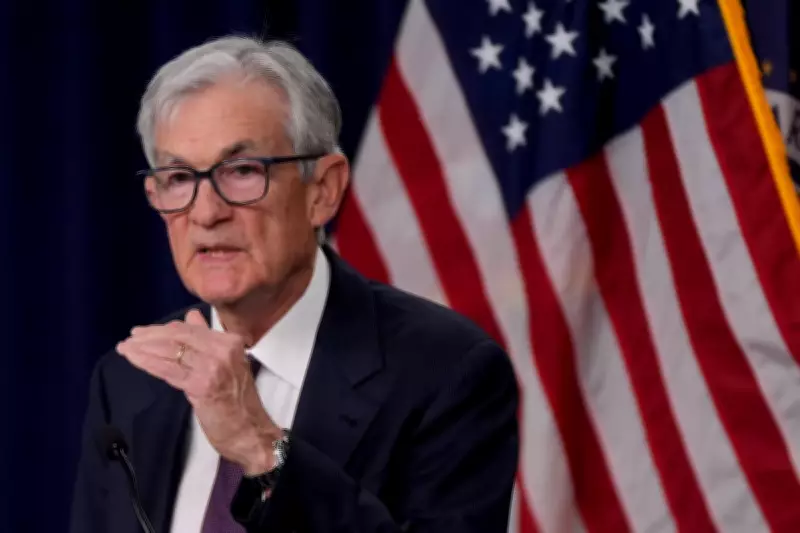
Eight days after the March 3 hearing, Judge Boasberg delivered a decisive blow to the investigation by quashing government subpoenas issued to the Federal Reserve. In his March 11 ruling, the judge declared that the government had produced "essentially zero evidence" to suspect Federal Reserve Chair Jerome Powell of any crime.
Boasberg, who was nominated to the bench by former Democratic President Barack Obama, described prosecutors' justification for the subpoenas as "thin and unsubstantiated." He went further in his written opinion, stating: "A mountain of evidence suggests that the Government served these subpoenas on the Board to pressure its Chair into voting for lower interest rates or resigning."
The investigation has created significant political ripples, delaying Senate consideration of Kevin Warsh, President Donald Trump's nominee to replace Powell when his term ends on May 15. Powell can remain as chair beyond that date if no replacement has been confirmed by the Senate.
Political Motivations and Legal Battles
During the sealed hearing, Robert Hur, an attorney representing the Federal Reserve board of governors, argued that the subpoenas represented part of a pressure campaign to support President Trump's push for lower interest rates. "He clearly has very strong political motives to try to get lower interest rates," Hur told the judge, "but because of the safeguards that have been erected by Congress around the Federal Reserve's independence when it comes to setting monetary policy, he can't get it."
Massucco countered during the hearing that there was no evidence prosecutors' motives for the grand jury subpoenas "is anything other than trying to find the truth of the matter," adding, "And we have a right to do that."
U.S. Attorney Jeanine Pirro, a former Fox News host appointed by President Trump to lead the nation's largest U.S. Attorney's office, has vowed to appeal the judge's decision. She derided Boasberg as an "activist judge" and claimed he had "neutered the grand jury's ability to investigate crime." At a recent news conference, Pirro declared: "This is wrong and it is without legal authority."
Investigation Origins and Cost Concerns
The investigation by Pirro's office centered on brief testimony from June of last year, when Powell appeared before the Senate Banking Committee and was questioned about cost overruns on the Federal Reserve's extensive building renovations. The project's estimated costs have risen significantly, with current projections reaching approximately $2.5 billion—about $600 million higher than the 2022 estimate of $1.9 billion.

In his ruling, Judge Boasberg noted that the Justice Department had rejected his offer to allow prosecutors to submit further evidence against Powell directly to him, which would have prevented them from tipping their hand to the Federal Reserve or Powell himself. The judge concluded: "The Court is thus left with no credible reason to think that the Government is investigating suspicious facts as opposed to targeting a disfavored official."
A Federal Reserve spokesperson declined to comment on the matter when approached earlier this week. The released transcripts provide unprecedented insight into a high-stakes investigation that has now effectively collapsed due to lack of evidence, raising questions about political motivations behind the probe and the independence of the nation's central banking system.