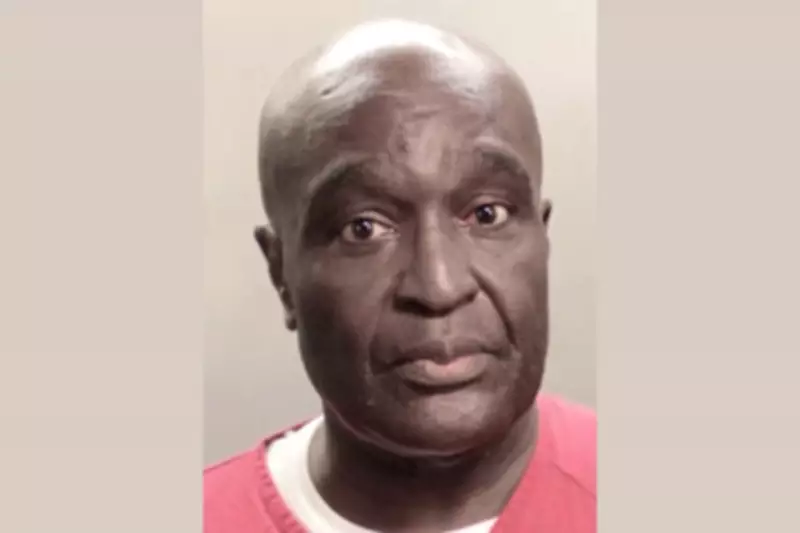
A Miami-Dade jury has decided against imposing the death penalty on a 76-year-old man convicted of a horrific crime that shocked Florida nearly three decades ago. Harrel Braddy will instead spend the rest of his life in prison for the 1998 kidnapping and murder of five-year-old Quatisha Maycock, whom he abandoned in the Everglades where she was killed by alligators.
Jury Deliberation Leads to Life Sentence
After more than three hours of deliberation, the jury concluded that Braddy should face life imprisonment rather than execution for his crimes. This decision comes nearly thirty years after the brutal incident that took young Quatisha's life and left her mother with unimaginable trauma.
Braddy was originally sentenced to death in 2007 by an 11-1 jury vote, but that sentence was overturned in 2017 due to legal requirements for unanimous verdicts in capital cases. Under Florida's 2023 legal revisions, juries can now impose the death penalty with an 8-4 majority, but this jury opted for the lesser punishment.

Prosecution and Defense Arguments
During closing arguments, prosecutor Abbe Rifkin urged jurors to consider the death penalty, emphasising that Braddy showed "no decency" and that Quatisha suffered terribly in her final moments. The prosecution detailed how the child was fully aware as she was left in an alligator-infested canal, where her body was later discovered with severe injuries.
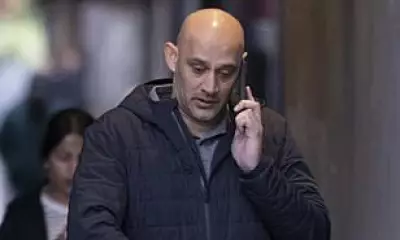
Defense attorney Khurrum Wahid presented a different perspective, asking jurors to consider Braddy's entire life beyond this crime. The defense highlighted his reputation among family, neighbours, and church members as a generous family man, his status as a "model prisoner" during decades of incarceration, and his serious health issues including throat cancer and neurological damage.
The Horrific 1998 Crime
The tragedy unfolded on a November night in 1998 when Braddy, who knew Quatisha's mother Shandelle Maycock through a church acquaintance, offered to drive her home from work. He later agreed to take her to collect her daughter from a family friend's house.
Upon returning to Shandelle's apartment, she asked Braddy to leave, but he refused and violently attacked her. He choked her until she lost consciousness multiple times before placing her in the trunk of his car and abandoning her on a deserted stretch of U.S. 27 near the Broward-Palm Beach county line.
Miraculously, Shandelle survived this ordeal and later testified about the attack during Braddy's trial. Prosecutors revealed that Braddy committed these crimes after Shandelle repeatedly rejected his romantic advances.
The Fate of Quatisha Maycock
Fearing that the five-year-old could identify him, Braddy drove to Alligator Alley and abandoned Quatisha in the dangerous Everglades environment. Days later, fishermen discovered her body in a canal, still dressed in her Polly Pocket pyjamas, with her left arm severed and bite marks on her head and stomach.
Miami-Dade State Attorney Katherine Fernandez Rundle acknowledged the difficulty of the case in a statement, noting that "no one can adequately describe the pain that Quatisha's mother, Shandelle Maycock, had to go through reliving the details of her daughter's murder."
Criminal History and Personal Circumstances
Braddy's criminal record extends beyond this horrific crime. He has previous convictions for robbery, kidnapping, and attempting to kill a corrections officer by choking him. In September 1984, he escaped custody three times, overpowering multiple law enforcement officers.
Despite this violent history, the defense emphasised Braddy's personal relationships, including his marriage since the 1970s to his wife Cyteria and their five children. Wahid argued that executing Braddy would devastate his family, adding another layer of tragedy to an already heartbreaking case.
Shandelle Maycock was not present for the verdict, according to reports, sparing her from having to witness the conclusion of this painful chapter in her life. The jury's decision brings a measure of closure to a case that has spanned nearly three decades, though it cannot undo the suffering caused by Braddy's actions.