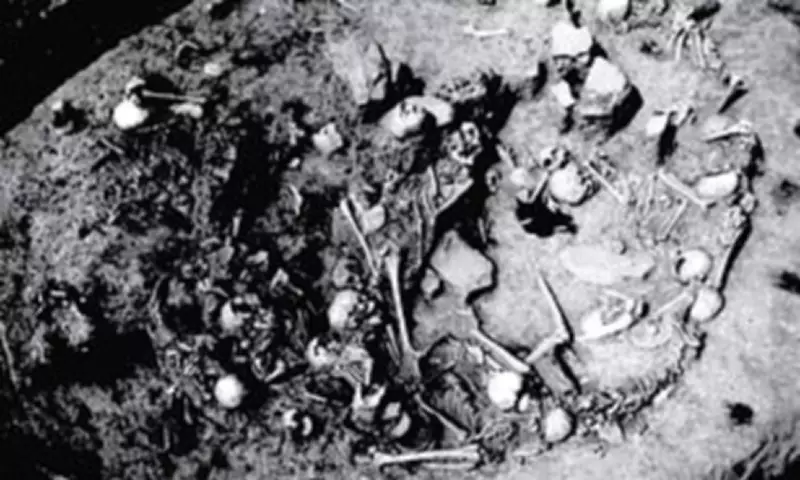
Ancient Massacre Reveals Systematic Killing of Women and Children
Archaeologists have uncovered chilling evidence of a brutal massacre that occurred approximately 2,800 years ago in what is now modern-day Serbia. Excavations at the Gomolava site have revealed a mass grave containing the remains of at least 77 individuals, with the overwhelming majority being women and children who suffered violent deaths through bludgeoning and stabbing.
Evidence of Intentional and Lethal Violence
The research, published in the prestigious journal Nature Human Behaviour, presents compelling forensic evidence of deliberate and efficient killing. Analysis of the skeletal remains shows extensive trauma concentrated primarily on the victims' heads, indicating close-contact attacks with blunt weapons such as maces, war hammers, or possibly projectiles like sling shots.
Dr. Linda Fibiger, who co-led the international research team, stated: 'The brutal killings and subsequent commemorating of the event can both be read as a powerful bid to balance power relations and assert dominance over land and resources.'

Demographic Analysis Reveals Targeted Victims
The demographic breakdown of the victims provides crucial insights into the nature of this ancient conflict:
- 40 children aged between one and twelve years
- 12 adolescents
- 24 adults, with 87% being female
- One infant male
Genetic analysis revealed that few victims were related to each other, and they had different dietary patterns, suggesting they originated from various geographical areas. This indicates the massacre involved individuals from multiple communities rather than a single settlement.
Burial Practices Suggest Ritual Significance
Unlike other mass graves from the same period, the Gomolava site shows evidence of careful preparation and ritual significance. The victims were buried with personal items including jewellery, and the grave contained bronze ornaments, ceramic drinking vessels, and the remains of approximately 100 animals.
Some animals were specifically slaughtered for the burial event, including a calf whose skeletal remains were found at the bottom of the grave pit. Researchers also discovered broken quern stones and concentrations of burnt seeds placed on top of the grave, suggesting ceremonial practices.
Historical Context and Implications
The massacre occurred during a turbulent period when Iron Age communities were transitioning from mobile lifestyles to establishing permanent, enclosed settlements. The research team suggests this event represents early collective violence resulting from targeted killing as part of systemic, large-scale conflicts that engulfed multiple settlements.
Dr. Barry Molloy, Principal Investigator of the research, explained: 'By drawing together a suite of cutting-edge analyses not available when this grave was excavated, we are now able to tell the story not simply of their violent deaths, but also the circumstances leading up to that event.'
New Understanding of Prehistoric Conflict
The study provides unprecedented insights into gender and age-selective killings as methods of enacting mass violence and asserting power in prehistoric Europe. The researchers argue that the demographics of those killed at Gomolava indicate a 'purposeful, calculated act' designed to have wide-ranging impact on surrounding communities.
The paper concludes: 'The killing presents striking evidence for an episode of cross-regional conflict and an underlying aggressive shift in power, violence and gender relations in the region.'
This discovery sheds new light on the evolution of violent behavior in human societies and demonstrates how archaeological evidence can reveal complex social dynamics from prehistoric periods that continue to resonate with contemporary understandings of conflict and power.