Israeli Judge Closes Case of Palestinian Teen's Death in Prison Despite Evidence of Starvation
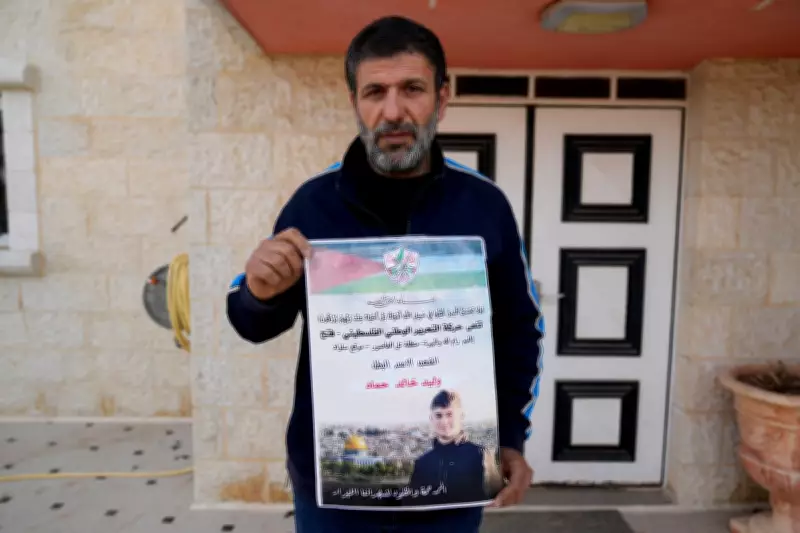
A newly unsealed sentence from a court ruling has revealed that an Israeli judge acknowledged a Palestinian teenager was starved in an Israeli prison but ordered an investigation into his death to be halted. The decision provides stark insight into Israel's handling of the high-profile case of 17-year-old Walid Ahmad, who Palestinian officials say was the first Palestinian under 18 to die in Israeli detention.
Judge Acknowledges Starvation but Halts Probe
The investigation into the death of Walid Ahmad in an Israeli prison has been formally closed by an Israeli judge, who stated that while it is clear the boy was starved, the exact cause of death remains undeterminable. This conclusion comes from a recently unsealed court decision, first published by the Israeli daily newspaper Haaretz.
In the ruling, Judge Ehud Kaplan, who was supervising the investigation, ordered the probe to be stopped in December despite autopsy findings. "The fact that he was apparently starved cannot be hidden and should not be hidden," Judge Kaplan wrote, according to the ruling shared with The Associated Press by Haaretz. "But I cannot determine based on the findings of the expert report that there is a causal connection between his poor physical condition and his death, and therefore I cannot determine that the death was caused by a crime."

He added, "Given this state of affairs, the investigation into his death is exhausted." In Israel, judges can be requested to oversee investigations into deaths of detainees in custody, reviewing evidence to determine cause and probe for wrongdoing.
Details of the Case and Autopsy Findings
Walid Ahmad, described by his family as a healthy teenager, spent six months in Israel's Megiddo prison before collapsing in March 2025. His autopsy did not establish a single, definitive cause of death, but an Israeli doctor who observed the procedure reported that starvation was likely the leading cause.
Dr. Daniel Solomon, the Israeli doctor who observed the autopsy, wrote in his report that Ahmad suffered from extreme malnutrition and also showed signs of inflammation of the colon and scabies. Solomon noted that Ahmad likely suffered from colitis, a condition that can cause frequent diarrhea and in some cases contribute to death. The report also highlighted that Ahmad had been complaining to the prison about inadequate food for months, citing records from the prison medical clinic.
Background and Broader Context
Ahmad was arrested at his home in the occupied West Bank town of Silwad during a pre-dawn raid in September 2024 for allegedly throwing stones at soldiers, according to his family. His lawyer at the time, Firas al-Jabrini, said Israeli authorities denied his requests to visit his client in prison before his death. Ahmad was expecting another legal hearing when he died, as reported by his father, Khalid Ahmad.
The case has shed light on Israel's treatment of Palestinian detainees, particularly teens and children, in its prisons. Rights groups have documented widespread abuse, including inadequate food and water rations, in Israeli detention centers and prisons since the start of the Israel-Hamas war on October 7, 2023. Former detainees have described dire conditions, including beatings, severe overcrowding, insufficient medical care, scabies outbreaks, and poor sanitary conditions.
At the end of last September, Israel's Prison Service reported holding 350 Palestinian minors in detention or prison on "security" grounds, according to Israeli rights group B'Tselem, citing official figures. An additional 110 Palestinian teenagers and children were held for being in Israel illegally.
Family's Struggle and Official Responses
Ahmad's father told The Associated Press that his son's body is still being held by Israeli authorities, and the family is petitioning Israeli courts to get it back. "What is happening in Israeli prisons is a real tragedy, as there is no value for life," he said in April 2025.

Israel's prison service and police did not respond to requests for comment on this case. The prison service has stated in the past that it operates according to the law and that all prisoners are given basic rights. Haaretz published the ruling after successfully filing to lift a gag order on the case, though apart from the sentence, the rest of the decision remains sealed.
This ruling underscores ongoing tensions and human rights concerns in the region, highlighting the challenges faced by Palestinian families seeking justice and accountability in such cases.