The Lindbergh Baby Case: A 94-Year-Old Mystery Faces Modern DNA Testing
The kidnapping and murder of Charles Lindbergh's infant son in 1932 remains one of America's most infamous crimes, sparking what historians have dubbed 'the crime of the century.' For nearly a century, fierce debate has raged over whether Bruno Richard Hauptmann, executed for the crime in 1936, was truly guilty. Now, a groundbreaking lawsuit seeks to apply modern forensic science to evidence that has remained untouched for decades.
The Legal Battle for Historical Evidence
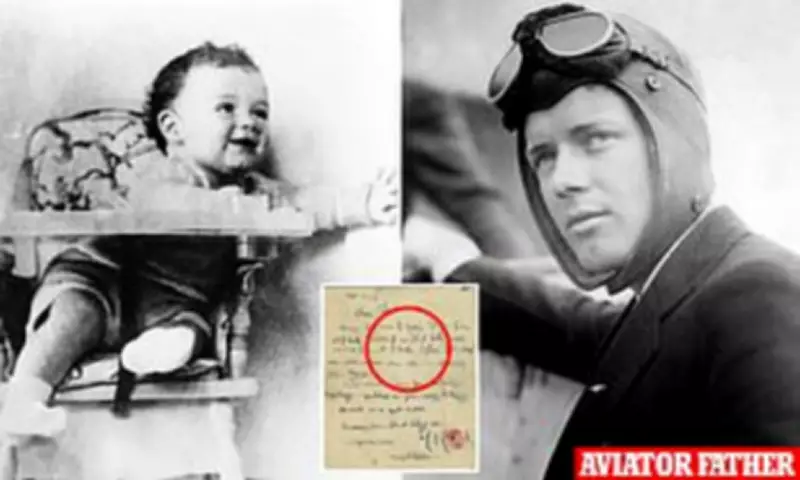
Attorney Kurt Perhach, who grew up near the Lindbergh estate in New Jersey, has filed a lawsuit against the New Jersey State Police, demanding access to thirteen ransom envelopes sent after 20-month-old Charles Augustus Lindbergh Jr vanished from his crib in March 1932. The state has until Friday to respond to the legal challenge.
Perhach's objective is clear: he wants to test the envelope flaps and stamps for DNA evidence that could definitively determine whether Hauptmann sent the ransom letters. The envelopes, along with over 250,000 other pieces of evidence including documents and photographs, are currently preserved at the New Jersey State Police Museum in Trenton.

"If they have nothing to hide, then release it all," says Cezanne Love, Hauptmann's great-great niece, who believes her relative was "100 percent innocent." Love, 60, has provided DNA samples to support the testing effort, noting that Hauptmann's limited English skills raise questions about his ability to have written the ransom notes.
Doubts About the Original Conviction
The case against Hauptmann has faced increasing scrutiny over the decades. Retired California judge Lise Pearlman, who wrote a best-selling book on the case in 2020, has highlighted significant problems with the original prosecution. Pearlman revealed that the state withheld 90,000 pages of evidence from the defense during the 1935 trial and failed to turn over testimony from three witnesses whose accounts conflicted with the state's theory.
Perhach's legal argument centers on a 1981 executive order from New Jersey Governor Brendan Byrne, which mandated that investigative files relating to the Lindbergh kidnapping be made available to the public. The attorney believes this order should extend to DNA testing, stating: "If forensic DNA testing existed in October of 1981, there is no doubt in my mind that Governor Byrne would have issued that because that's what he meant by issuing the executive order."
Evidence That Has Never Been Tested
Remarkably, authorities have never tested the saliva on the ransom envelopes because the case has been considered closed since Hauptmann's execution. The evidence has been classified as archival material, despite advances in forensic technology that could potentially resolve decades of uncertainty.
Perhach, who served as a US Army JAG officer for over twenty years, initially filed a lawsuit in 2023 that was dismissed due to procedural errors. He revived the case in April 2025 with a more robust legal argument, emphasizing that non-destructive DNA testing methods now exist that could preserve the historical artifacts while extracting crucial evidence.
The Night of the Kidnapping and Its Aftermath
On March 1, 1932, Charles Lindbergh and his wife Anne Morrow were downstairs in their Hopewell, New Jersey mansion when their son was taken from his upstairs nursery. The family's nanny, Betty Gow, discovered the missing child around 10 PM and found the first ransom note demanding $50,000.
Over the following weeks, the Lindberghs received thirteen ransom letters through various intermediaries, including Dr. John F. Condon, a retired public school teacher who volunteered to negotiate with the kidnappers. The final note promised the baby would be found on a boat named 'Nellie' near Martha's Vineyard, but searches proved fruitless.
Tragically, on May 12, 1932, the decomposing body of Charles Lindbergh Jr was discovered about four and a half miles from the family home. Medical examination determined the child had died from a blow to the head, likely on the night of the kidnapping.

The Case Against Hauptmann
Bruno Richard Hauptmann's connection to the crime emerged in September 1934 when a gas station attendant in Manhattan received a $10 gold certificate that matched the serial numbers of bills Lindbergh had paid as ransom. The attendant recorded Hauptmann's license plate number, leading investigators to his Bronx residence.
A search of Hauptmann's home revealed $14,600 of the ransom money hidden in his garage, wood in his attic that prosecutors claimed matched the kidnapping ladder, and the phone number of ransom intermediary John Condon written on a note. Despite this evidence, Hauptmann maintained his innocence, claiming the money belonged to a former business partner who had returned to Germany.
Notably, Hauptmann's fingerprints were never found at the Lindbergh home, and Condon testified that the man he met during ransom negotiations was not Hauptmann. These discrepancies have fueled doubts about the conviction for nearly a century.
A Family's Legacy and the Search for Truth
Cezanne Love describes the stigma her family has carried for generations: "Back in the day, it was such an outrageous situation... that it was like being related to Charles Manson. If you brought that up, you were the devil." She hopes DNA testing might finally clear her ancestor's name, stating: "I don't know what they could do this late in the game to clear his name, but that would be what I hope for."
Perhach remains optimistic about the lawsuit's prospects: "I do believe we're going to win, and I do believe that we're going to find out some definitive DNA. There are existing DNA records of every single potential suspect that my team has been examining."
As the legal battle unfolds, this century-old case continues to captivate historians, legal experts, and the public alike. The potential for DNA evidence to either confirm Hauptmann's guilt or reveal new suspects represents a remarkable intersection of historical mystery and modern forensic science.