Comedian's £4 Million Property Fortune Finally Awarded to Homelessness Charity After Lengthy Legal Battle
A High Court judge has concluded that the late comedian Sean Hughes intended to bequeath his entire £4 million property portfolio to the homelessness charity Shelter, bringing to an end a legal dispute that has lasted nearly a decade. The British-born Irish comic, who died in 2017 at the age of 51, drafted his will himself using an online platform without legal assistance, leading to ambiguous wording that required judicial interpretation.
The Ambiguous Will That Sparked a Decade of Uncertainty
Sean Hughes, a passionate supporter of Shelter's work, left what he believed to be his three houses to the charity in his homemade will. This included his £1.8 million north London home on Glasslyn Road in Crouch End, plus two additional properties on nearby Edison Avenue and Elder Avenue, valued at £1.5 million and £650,000 respectively. However, the document's imprecise language created a significant legal complication.
The central issue arose because Hughes technically owned only one of the properties outright. The other two homes were held in the name of a company of which he was the sole shareholder. While his family agreed that the shares in this company—and therefore the properties—should pass to Shelter, the case had to be referred to the High Court for a definitive ruling on the will's construction.

Judicial Resolution and Family Agreement
After a short hearing conducted via videolink, Master Iain Pester ruled that the "correct construction of the will" was that the company shares should indeed pass to Shelter. Had the judge decided otherwise, the two properties held by the company would have become part of Hughes's residuary estate, to be held on trust for his wider family.
Barrister Aidan Briggs, representing the will's executor, and Alexander Learmonth KC, acting for Shelter, both confirmed that Hughes's family and the charity were in agreement that Shelter was the intended beneficiary. This consensus helped facilitate the judicial process, though the legal formalities still required court intervention due to the will's vagueness.
Shelter's Response and the Importance of Legacy Giving
Andy Harris, Shelter's director of income generation, expressed profound gratitude for Hughes's generous bequest. "Sean Hughes was a passionate supporter of Shelter's work, and we are enormously grateful for the generous gift left in his will," Harris stated. "We have worked closely with Sean's family to ensure his wishes are honoured."
Harris emphasized the critical role that gifts in wills play for the charity, noting: "Gifts left in wills are a vital source of income for Shelter. This donation will enable us to continue to deliver expert support and advice to people impacted by the housing emergency and to campaign for everyone's right to a safe and secure home."
The Life and Career of Sean Hughes
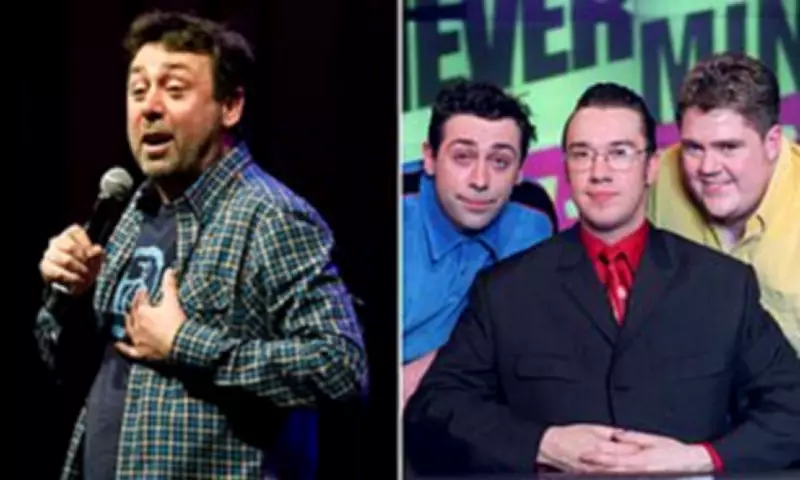
Born in Archway, north London, to Irish parents, Hughes spent much of his youth at his paternal grandmother's house in Dublin. He emerged as a pioneering figure in the alternative stand-up scene of the 1980s, first appearing at London's Comedy Store in 1987. His groundbreaking show, 'A One-Night Stand with Sean Hughes', earned him the prestigious Perrier Comedy Award in 1990 when he was just 24 years old.
Former promoter Richard Bucknall described Hughes as "a pioneering, groundbreaking comedian who changed comedy with that live show." Unlike many contemporaries, his performance featured a narrative arc rather than simple jokes, setting him apart in the crowded landscape of British comedy.
Hughes successfully transitioned to television, fronting his own award-winning Channel 4 series, Sean's Show, from 1992, which developed a cult following. He later became a beloved team captain on the BBC music quiz Never Mind the Buzzcocks, appearing opposite Phill Jupitus from 1996 to 2002 and featuring in 91 episodes across ten series.
Beyond television and stand-up, Hughes enjoyed a notable writing career, publishing several novels and poetry collections. From 2002, he also ventured into radio, presenting the Sunday morning programme on the newly founded BBC 6 Music.

Personal Struggles and Tragic Passing
Throughout his career, Hughes openly confessed to heavy drinking. Although he quit alcohol in 2012, he had resumed drinking before his death, once remarking, "Apparently I'm tedious when sober." He tragically died in October 2017 after suffering a cardiac arrest, with post-mortem examinations revealing he had been suffering from late-stage liver disease.
The resolution of his estate ensures that his final wishes are now fulfilled, with his substantial property assets directed toward supporting Shelter's mission to combat homelessness—a cause he deeply cared about during his lifetime.