Spanish Euthanasia Case: Paraplegic Gang-Rape Victim's Death Proceeds
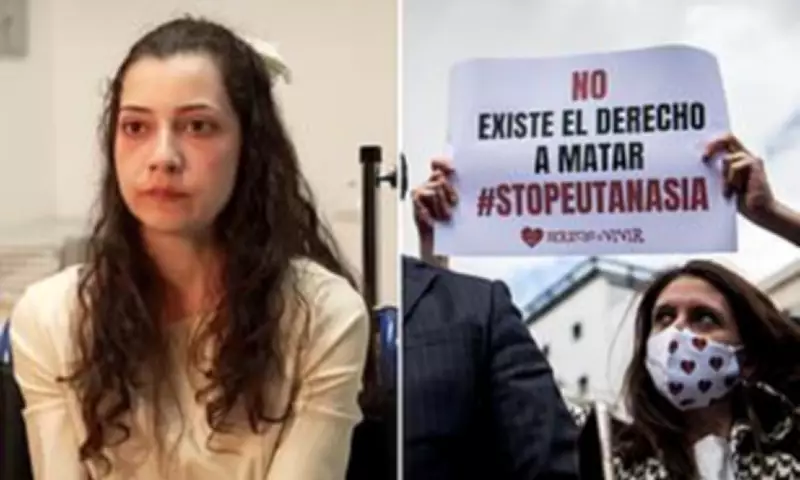
Noelia Castillo, a 25-year-old woman from Barcelona who was left paraplegic after a suicide attempt following a gang rape, is set to die by euthanasia today. This decision comes after Spanish courts overruled her father's extensive legal efforts to halt the procedure, bringing an end to a protracted legal dispute that has spanned more than a year and a half.
Legal Battles and Final Approval
Castillo will undergo the euthanasia procedure on Thursday at the Sant Pere de Ribes assisted living facility where she resides. Her request for euthanasia was initially approved by the Catalan government in July 2024, but it faced significant delays when her father, backed by the ultraconservative Catholic group Advocats Cristians, launched a series of legal challenges.
These appeals were systematically rejected at multiple levels of the Spanish legal system, including the Constitutional Court and the Supreme Court, which ultimately cleared the way for the euthanasia to proceed. A last-minute attempt to stop it at the European Court of Human Rights was also rejected this week, although the court will continue to examine the case. This rejection means there is no legal requirement to delay the procedure further.

Castillo's Personal Struggle and Decision
Castillo, who has been confined to a wheelchair since 2022, has spoken openly about her decision and the profound suffering that led her to it. In interviews, she expressed a clear and resolute desire to end her pain. 'I want to go now and stop suffering, period. None of my family is in favor of euthanasia. But what about all the pain I've suffered during all these years?' she said.
She detailed her daily struggles, stating, 'I don't feel like doing anything: not going out, not eating. Sleeping is very difficult for me, and I have back and leg pain.' Castillo described how she wants to spend her final moments, emphasizing her wish to die with dignity. 'I've told them how I want it to be. I want to die looking beautiful. I've always thought I want to die looking good. I'll wear my prettiest dress and put on makeup; it will be something simple,' she explained in an interview broadcast on the Spanish Antena 3 programme Y Ahora Sonsoles.
She has invited her family to say goodbye beforehand but insists on being alone when the injection is administered.
Background and Family Conflict
Castillo's life has been marked by significant trauma. She spent much of her childhood in care due to her parents' addiction and mental health problems. A gang rape in 2022 was a pivotal turning point. Later that year, after using cocaine, she jumped from the fifth floor of a building, resulting in paraplegia. 'My father saw me fall and couldn't do anything,' she recalled, adding, 'But after everything he's done, I don't feel sorry for him anymore.'
Her father sought to block her euthanasia through the courts, arguing against her right to die and claiming she suffered from mental disorders that could impair her decision-making ability as required by law. He also contended there were indications she had changed her mind and that her condition did not involve unbearable suffering. However, Castillo accused him of failing to respect her wishes. 'He hasn't respected my decision and he never will,' she said in her final interview. 'I understand. He's a father and he doesn't want to lose a daughter, but he doesn't listen to me. He never calls me, he never writes to me. The only thing he does is bring me food. Why does he want me alive? To keep me in a hospital?'

Legal Context and Ongoing Proceedings
Spain is one of the few countries to legalize euthanasia, following a 2021 law that imposes strict requirements. The law stipulates that anyone of sound mind suffering from a 'serious and incurable illness' or a 'chronic and disabling' condition can request assistance to die. Despite the intense legal fight, Castillo herself contacted Antena 3 after learning the date of her euthanasia to leave a final message. 'I've finally done it. Let's see if I can finally rest because I can't take this family anymore, the pain, everything that torments me from what I've been through,' she said. 'I don't want to be an example for anyone, it's simply my life, and that's all.'
Her mother, who also appeared in the interview, expressed her sorrow, saying she wished she had a 'magic wand' to change her daughter's mind. Although the euthanasia is now set to proceed, legal action surrounding the case will continue. Advocats Cristians has launched further complaints against medical professionals and members of Catalonia's Guarantee and Evaluation Commission, as well as the former regional health minister, alleging misconduct.
The European Court of Human Rights is also expected to rule at a later date on whether there has been any violation of rights, meaning the wider legal questions raised by Castillo's case will remain unresolved even after her death.