Ground Shakes in Tehran as Israeli Strikes Trigger Gas Pipe Explosion
The streets of Tehran were violently shaken by a huge gas pipe explosion, a direct consequence of Israeli strikes targeting oil depots in the Iranian capital. This marks the first attack on Iran's fuel infrastructure in nine days, as Israel launched a fresh wave of devastating assaults.
Shockwaves and a River of Fire
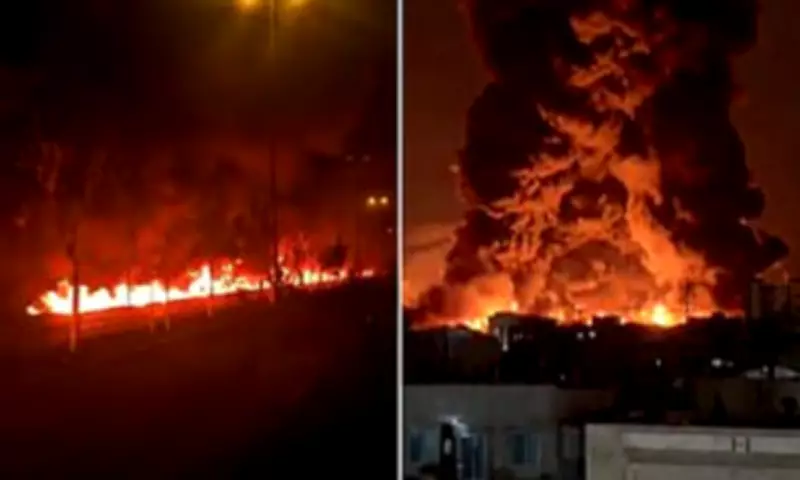
Video footage captured the moment a gas pipe on the busy Shahran Boulevard in central Tehran erupted, sending powerful shockwaves through nearby buildings. The explosion caused structures to tremble violently, forcing panicked residents to flee for their lives as a blinding flash of light swept across the street.
The aftermath was described as a 'river of fire' flowing through the city's thoroughfares. Burning oil from the damaged depots leaked onto pavements and roads, even seeping into the sewage system, creating a hazardous inferno. The skies above Tehran turned a deep red, filled with acrid smoke as fireballs erupted from the targeted facilities.

Strategic Targets and Casualties
The blast occurred after Israeli strikes hit the nearby Shahran oil depot in western Tehran, one of four depots targeted in the capital. Iran's oil distribution company reported that four of its employees were killed in these strikes. One Tehran resident recounted that the intense orange flames from the overnight infernos made it appear as if "night had turned into day."
The Israel Defense Forces (IDF) confirmed the operation, stating they had struck "several fuel storage complexes" in Tehran as part of a "significant strike" against the regime. They justified the targeting by noting that Iranian forces make "direct and frequent use" of these oil and fuel depots to operate military infrastructure.
Political Reactions and Escalating Rhetoric
US President Donald Trump commented on the conflict, suggesting the war might only end when Iran no longer has a functioning military or leadership. Speaking aboard Air Force One, he remarked, "At some point, I don't think there will be anybody left maybe to say 'We surrender'." He also criticized British Prime Minister Sir Keir Starmer for lacking support, asserting he doesn't need Britain to send aircraft to the Middle East.
Israeli Prime Minister Benjamin Netanyahu echoed this hardline stance, vowing to continue the war "with all our force." In a televised address, he outlined a "systematic plan to eradicate the Iranian regime" and claimed Israel, alongside the US, had gained near-total control of Tehran's skies after a week of strikes. He promised "many surprises" in the next phase of the war and appealed to the Iranian people, saying Israel seeks to liberate them from "the yoke of tyranny."
Broader Military Campaign and Iranian Response
The IDF reported that over the past week, hundreds of Israeli Air Force fighter jets struck Iranian production industries involved in missile and weapon development. They detailed around 3,400 strikes on Iran during the first week of the war, with approximately 7,500 munitions dropped. Additional targets included two compounds in Parchin and Shahrud used for researching, designing, and producing ballistic missiles.
Despite these assaults, Iran's Deputy Defence Minister defiantly insisted that reserves of bombs, drones, and missiles "are fully ready and intact," and the country will "confront any threat" over the long term. An IRGC spokesperson warned of retaliation if attacks on energy infrastructure continue, threatening, "If you can tolerate oil at more than $200 per barrel, continue this game."
Iran has continued its own attacks, launching drones and missiles at Qatar, Saudi Arabia, and Dubai. In Dubai, one man was killed by falling shrapnel from an aerial interception, and two skyscrapers were damaged, highlighting the regional escalation of the conflict.