Unsolved Adam Murder Case Could Still Be Cracked, Says Retired Detective
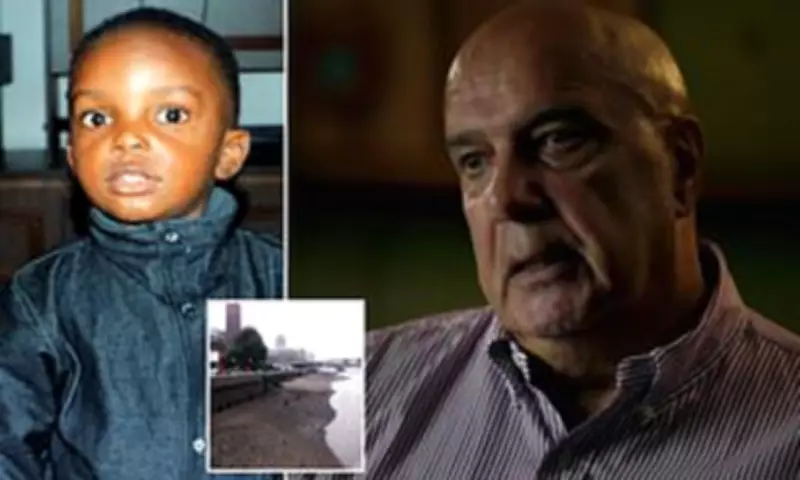
A retired detective has declared that the longest unsolved child murder case in modern UK history could still be answered, insisting that 'someone out there knows what happened'. The case revolves around 'Adam', a name given by Scotland Yard to a young boy whose dismembered body was discovered floating in the River Thames in London on September 21, 2001.
Mystery Endures After 25 Years
Twenty-five years later, the child's identity remains unknown, with no one ever charged despite an extensive investigation that took police to South Africa, Holland, Germany, and Nigeria. Adam, believed to have been a Nigerian boy aged five or six, is thought to have been trafficked to the UK via Germany and then murdered in a ritualistic killing. His body, with head and limbs severed, was found near the Globe Theatre, sparking numerous high-profile appeals, including by then President of South Africa Nelson Mandela.
Now, a new Channel 5 documentary titled 'The Body in The River', airing next Thursday, has re-examined this heartbreaking and disturbing story. Despite a series of arrests, no charges have ever been brought over his murder, but police still believe the crucial evidence lies somewhere in London.

Detective's Appeal for Information
Andy Baker, a former Metropolitan Police commander who worked on the investigation, has told the programme that the case could still be solved. He said: 'When you think what that child went through, someone out there knows what happened. Whether that's the murderer himself or those involved in the murder. There must be a crime scene somewhere. And it's in London.'
Baker added: 'There must be a place where Adam was laid upside down, tilted, head down, and then brutally dismembered and had his throat cut in such a violent way. There will still be traces of blood at that premises, so even now I'd appeal to anyone who knows anything. If they know where it is, we can go and get that forensic evidence. And then it starts again.'
Discovery and Initial Investigation
The boy's body was discovered by a passing businessman named Aidan Minter, who spotted it while walking across Tower Bridge just ten days after the 9/11 attacks. Initially mistaking it for a tailor's mannequin, he realised it was a child's dismembered and decapitated torso, prompting police to retrieve it from the water.
Investigations revealed the black boy could have been in the water for up to ten days after having his throat slit, with his arms, legs, and head all amputated. Police had few clues on his identity, other than a pair of orange shorts he was wearing, but appealed to the public for help, including on Crimewatch. Some 60 people called the BBC show in an attempt to assist, and detectives offered a reward of £50,000 for information leading to a murder conviction.
Ritualistic Killing Theories
Police took specialist pathologist advice from as far afield as Africa and carried out groundbreaking work on DNA and pollen samples inside the body. Officers established that the boy had been drugged with a 'black magic' potion and sacrificed in a voodoo-style ritual killing before being thrown into the Thames. They used pioneering techniques to trace radioactive isotopes in his bones to his native Nigeria and even asked Nelson Mandela to appeal for information, which he did.
Detailed analysis of a substance in the boy's stomach was identified as a potion containing tiny clay pellets with small particles of pure gold. This indicated Adam had suffered a Muti ritual killing, where a victim's body parts are removed and used by witchdoctors as 'medicine', based on a belief that children's body parts are sacred, often disposed of in flowing water. Another theory suggested he was a human sacrifice linked to Yoruban beliefs in Nigeria, as an offering to the goddess Oshun, typically associated with water and fertility.

Key Suspects and Leads
In July 2002, police had a breakthrough when social workers in Glasgow alerted them to the safety of two girls living with their African mother, Joyce Osagiede. She had ritualistic objects in her home and spoke about cults, killings, and sacrifices during a family court hearing, leading to a search of her property. Detectives found clothes with the 'Kids & Company' label – the same as on Adam's shorts – in matching sizes. Osagiede was arrested but never charged.
By December that year, police determined his birthplace to a strip of land around Benin City in Nigeria, Osagiede's home city. German police discovered she had lived in Hamburg until late 2001, where the orange shorts were believed purchased. Osagiede was eventually deported after her asylum application was rejected but disappeared after arriving in Lagos on a chartered private jet.
Officers found she had a contact for a man named Mousa Kamara, with evidence of Nigerian rituals known as Juju at his London home. Kamara, whose real name was Kingsley Ojo, was arrested but released on bail due to no direct evidence linking him to Adam's murder. However, he was charged with people smuggling and using fake documents, pleading guilty and being jailed for four years.
Ongoing Investigations and Setbacks
While in prison, Ojo contacted police, offering to help track down the killer and feeding them information for two years after his release. But officers eventually determined they could not rely on him, and he was deported back to Nigeria in 2008. In 2011, another lead emerged when police searched Osagiede's belongings left with a friend in Germany and found a photo of a boy aged about five taken in 2001.
ITV News tracked down Osagiede in Nigeria, and she claimed Adam was the boy in the photo, with the real name Ikpomwosa, saying she looked after him then gave him to a man called Bawa. Detectives could not positively identify the boy. One year later, Osagiede's brother Victor contacted BBC News, stating the boy in the photo was not Adam or 'Ikpomwosa'. A reporter travelled to Benin City and found Osagiede, but she appeared confused, giving two other names for Adam and identifying someone in a photo as 'Bawa' – which was actually a picture of Ojo.
The BBC then tracked down Ojo in Nigeria, but he continued to deny involvement, with no evidence ever linking him to the crime. Since 2013, the investigation has become a 'cold case' with no significant new lines of enquiry, and Victor confirmed in 2020 that Osagiede had died in Nigeria.
Recent Appeals and Hope for Resolution
Police launched an appeal on the 20th anniversary, with Detective Chief Inspector Kate Kieran saying the case remaining unsolved was 'incredibly sad and frustrating'. Speaking in 2021, she added: 'We recognise people may not have wanted to speak up at the time and may have felt loyal to the person or people involved in this. However, over the past 20 years, allegiances and relationships may have changed and some people may now feel more comfortable talking to us.'
The case has remained unsolved since then, but Scotland Yard will be hoping that the documentary could change this. 'The Body In The Thames' will air on Channel 5 on Thursday at 10pm.