US Navy Personnel Stationed at Scottish Nuclear Base Accused of Historic Child Abuse
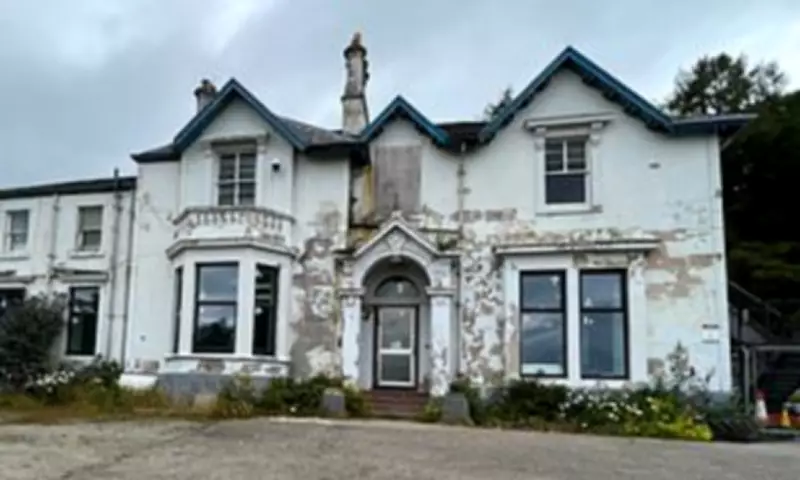
American sailors working at a nuclear submarine base in Scotland have faced serious allegations of historical sexual abuse against children at a nearby care facility. Former residents of the Dunclutha children's home in Dunoon, Argyll, have provided courageous testimony to the Scottish Child Abuse inquiry, detailing the suffering they endured during the 1960s and 1970s.
Survivors Describe 'Public Relations Exercise' with Sailors
Abuse survivors have recounted how children in care were taken out by US Navy sailors in what they described as 'a public relations exercise'. One survivor compared the experience to 'being at a market', with youngsters made to line up wearing their Sunday best clothing for the American servicemen. 'If they liked you, they picked you to go home with them', the survivor explained.
Up to 1,400 American military personnel were stationed at Holy Loch, near Dunoon, beginning in 1961. The strategic site on the Cowal Peninsula served as a crucial base for the US Navy's nuclear submarines and ballistic missiles until 1992, following the collapse of the Soviet Union.

Contradictory Experiences of American Presence
Some former Dunclutha residents described the American sailors as the only positive aspect of their time at the home, providing entertainment, treats, and temporary relief from the cruelty of depraved staff members. However, others detailed being abused by military men who they said had unrestricted access to approximately fifty children at the facility.
One man, who testified using the pseudonym Peter, revealed he was 'groomed' by the seamen and subjected to serious sexual assault when he was just seven or eight years old. Born in 1960, Peter was taken into Glasgow City Corporation's care as an infant and resided at Dunclutha from ages six to nine.
Detailed Testimony of Systematic Abuse
Peter described how sailors would visit every weekend, arriving in a naval minibus. 'They just had carte blanche to pick us up and do what they wanted', he told the inquiry. The survivor recalled experiencing 'all the American razzmatazz' at the base, including ten-pin bowling and what they called McDonald's.
'On several occasions, I was taken on a ship called USS Simon Lake', Peter testified. 'I got to know them and they got to know me. Then they got to groom me.' The sailors would initially give him 'all sorts of goodie bags' during their outings before the abuse began. 'Then they started touching me', he added.
The abuse continued for 'some considerable time', Peter explained, with sailors eventually being entrusted to take children away on short breaks. 'That was when I encountered my downfall', he stated.
Graphic Account of Sexual Assault
Around Christmas of 1967 or 1968, Peter was taken out by a married officer he had previously accompanied for drives in a 'big American car'. The officer lived in a substantial sandstone villa overlooking the naval base. 'I trusted him. I didn't know what grooming was then', Peter recalled.
After a trip to a nearby beach and forest, they returned to the man's home where Peter had dinner and a bath. Following the bath, he was assaulted in the presence of another man. 'The man had stripped himself down to his underwear. He stood over me and proceeded to perform a sexual act', Peter testified.
Peter then described a serious sexual assault in graphic detail, stating he was 'screaming with pain' during the incident. Afterwards, he was 'put into bed' with both men. 'The deeds were done and it was hell for me. They cleaned me up and bought me toys', he revealed. 'They were acts of depravity beyond one's comprehension.'
Multiple Survivors Come Forward
Other testimonies mention interactions with American personnel, including one woman who spent just six months at Dunclutha yet faced three separate sexual assaults during that period by staff members. Using the name Carol, she described being groped by a handyman who worked at the home.

Carol also recounted how older girls 'orchestrated' an incident where she was assaulted. 'The girls said I would get sweets. I went in and I was made to sit on his knee', she testified. 'The same thing was happening to [the others]. I witnessed them sitting on [the man]'s knee, and his hand going up their skirts. He gave them sweets too.'
Regarding the American sailors, Carol added: 'Some of the older girls would get taken down to the submarines. I would hide so I didn't have to go. They would come back with sweets.'
Historical Context and Parliamentary Concerns
Newspaper articles from the 1960s document several instances of US sailors interacting with Dunclutha children. In 1965, they organized a substantial birthday party for a girl named Ann. Another article from 1964 reveals growing local concern about the sailors' presence in Dunoon, with MP Emrys Hughes challenging Prime Minister Sir Alec Douglas-Home in Parliament to 'disguise himself as an American sailor on a Saturday night' and witness the 'vice' in the town.
A third story from 1962 details how a fifteen-year-old Dunoon girl planned to fly to the United States to visit her American sailor boyfriend whom she intended to marry.
Broader Pattern of Institutional Abuse
Six individuals provided testimony to the inquiry about their experiences at Dunclutha, with all describing cruelty, violence, and neglect by staff members. One detailed extreme abuse by US Navy personnel specifically.
Other children described suffering brutal and humiliating punishments from staff, including having their faces rubbed in soiled bedding if they wet the bed at night, being beaten with belts and brushes, and being force-fed against their will.
A US Navy spokesman declined to comment on the allegations when approached for response. The Scottish Child Abuse inquiry continues to investigate these historical cases as part of its broader examination of institutional care failures throughout Scotland.