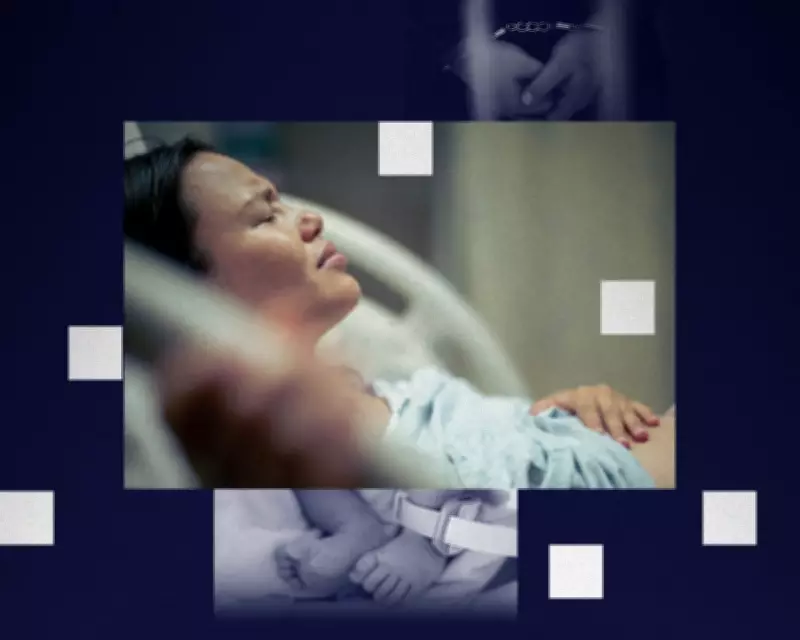
Prisoners Handcuffed During Childbirth: Calls for End to 'Barbaric' Practice
Information regarding the number of prisoners handcuffed during childbirth is not routinely collected by officials, raising serious concerns about transparency and accountability in the prison system. This lack of data obscures the full extent of a practice described by legal experts as "barbaric" and "appalling mistreatment."
'I Was So Shocked When the Restraints Weren't Removed'
The scandal of women being handcuffed while in labour has come to light through harrowing personal accounts. Joanna, a model prisoner convicted for a non-violent drugs offence, experienced this dehumanising treatment firsthand during the birth of her first child in December 2022.
"I was so shocked when the cuffs weren't removed," Joanna recalls. "When I told the prison guards about what the Birth Companions booklet said, they replied: 'We don't know what that book is, we're not going to abide by it.' I felt so scared. It was my first baby, I didn't know what to expect from birth and I wasn't a risk to anyone."

Joanna remained handcuffed and chained to a prison officer for 36 hours during a difficult labour, despite having prepared for a calm hypnobirthing experience. She was subjected to intimate vaginal examinations while restrained, with male officers present at the foot of her hospital bed.
Investigation Announced Amid Legal Challenges
Following Joanna's anonymous interview with Channel 4 News in 2025, prisons minister Lord Timpson announced an independent investigation last June. The investigation, to be carried out by the prisons and probation ombudsman (PPO), will examine the practice of handcuffing pregnant prisoners during:
- Antenatal appointments
- Intimate examinations
- Labour and childbirth
Timpson described reports of pregnant women being handcuffed during labour as "deeply concerning." However, the investigation's terms of reference have yet to be finalised, and the PPO has not been formally commissioned to begin the inquiry.
Legal Action and Human Rights Concerns
Jane Ryan, a partner at solicitors Bhatt Murphy, is representing six female prisoners who were handcuffed in similar circumstances. She estimates that from 2021 to 2025, approximately 500 pregnant women were imprisoned, with about half potentially giving birth while incarcerated.
"This barbaric practice should never have happened on one occasion, let alone across multiple prisons," Ryan states. "Restraints took place during the extreme physical pain of labour, including during contractions and the most intimate vaginal examinations."
The firm has sent a pre-action letter to Justice Secretary David Lammy, arguing that the investigation must:
- Be truly independent
- Allow oral evidence and legal representation
- Include scrutiny of systemic policy failures
- Examine individual misconduct
Ryan expresses concern that the Ministry of Justice might "water down the investigation into a tick-box exercise" and emphasizes that "an investigation that does not listen to the women who were shackled is not an investigation – it is a whitewash."
Multiple Victims Speak Out
Laura, another prisoner convicted for a non-violent drugs offence, experienced similar treatment during her labour in February 2023. She was handcuffed for well over 48 hours, including during extremely painful contractions after being induced.
"Giving birth is such a delicate moment – I was so vulnerable and it really messed with my head," Laura says. "The indifference and lack of empathy from the guards made my labour and my stay in hospital very stressful and traumatic."
Both women suffered postpartum haemorrhages classified as "critical incidents," with Joanna experiencing bruising and soreness to her wrist from prolonged restraint. Both are now bringing legal actions for assault, battery, and human rights breaches.
Systemic Failures and Calls for Change
Naomi Delap, CEO of Birth Companions, describes the practice as "a symptom of a broken system, unable to provide safe and decent care, unable to acknowledge medical risk, and unable to show basic compassion."

The Royal College of Midwives and the Royal College of Obstetricians and Gynaecologists have joined calls for an investigation into the use of restraints on pregnant prisoners. Meanwhile, the Prison Service has conducted a "deep dive" that identified the need for greater clarity about what constitutes "exceptional circumstances" for restraining pregnant women.
Joanna, who has now left prison, continues to fight for systemic change: "The Prison Service needs to be held accountable. Even though we are prisoners, we are human. I just want to stop what happened to me from happening to other women."
Laura, who has returned to her home country, adds: "I decided to get involved in this legal action because this treatment of pregnant women prisoners needs to end. It is inhumane, and dangerous for mothers and babies."