Alleged terrorist Naveed Akram is expected to remain incarcerated within the formidable walls of Goulburn's Supermax prison for the entirety of his life, should he be found guilty of the murder of fifteen innocent individuals at Bondi Beach. The 24-year-old's only conceivable route out of the High Risk Management Correctional Centre would be the construction of an even more secure facility by the state.
Life Inside Australia's Most Secure Prison
Located on the NSW Southern Tablelands, approximately 200 kilometres south-west of Sydney, the Supermax facility forms part of the Goulburn Correctional Complex and currently accommodates around one hundred inmates. Akram was transferred to this institution from Long Bay Hospital on January 5, where he had been under constant surveillance while receiving treatment for gunshot wounds sustained during the December 14 atrocity.
Extreme Surveillance and Restricted Contact
Since the Bondi attack, Akram's sole visitor has been Muslim chaplain Ahmed Kilani, a private contractor for Corrective Services NSW with over a decade of experience ministering in state prisons. The Daily Mail can reveal that their brief ten to fifteen minute conversation at the hospital was recorded via a body-worn camera operated by a Corrective Services officer, under the direction of the prison hospital's security manager. This recording will be provided to NSW Police and other intelligence agencies.

Mr Kilani describes himself on professional networks as a highly experienced Countering Violent Extremism expert who has worked extensively with convicted terrorists. Akram has also been granted his request for a copy of the Koran.
It is understood that Akram has not seen his mother or any other family member since his transfer to Supermax. Visitors to the facility undergo extreme vetting, including full criminal background checks. Inmates do not have access to the electronic tablets available in other jails for contacting loved ones.
Unprecedented Security Classifications
The mass shooting, being treated as a terrorist attack inspired by Islamic State and the worst in Australia since the 1996 Port Arthur massacre, has resulted in Akram already receiving the highest AA security classification. He may be considered for an additional Extreme High Risk Restricted or National Security Interest designation.
Akram's father, 50-year-old Sajid Akram, was shot dead by police after he and his son allegedly opened fire on Jewish people celebrating the first night of Hanukkah.
The Architecture of Absolute Security
Supermax is divided into two sections: Area 1, housing approximately sixty prisoners, and Area 2, a 'step-down' unit opened in May 2020 for about forty offenders who have demonstrated commitment to disengaging from radical behaviour. Akram is being held in Area 1, the original section opened in September 2001, which has housed the state's most dangerous felons for over two decades.
Daily Existence Under Maximum Security
Inmates cannot leave their cells without being handcuffed, with hatches in cell doors allowing this procedure while they remain locked inside. Prisoners are moved to a new cell every twenty-eight days, accompanied by three staff members at all times during relocation.
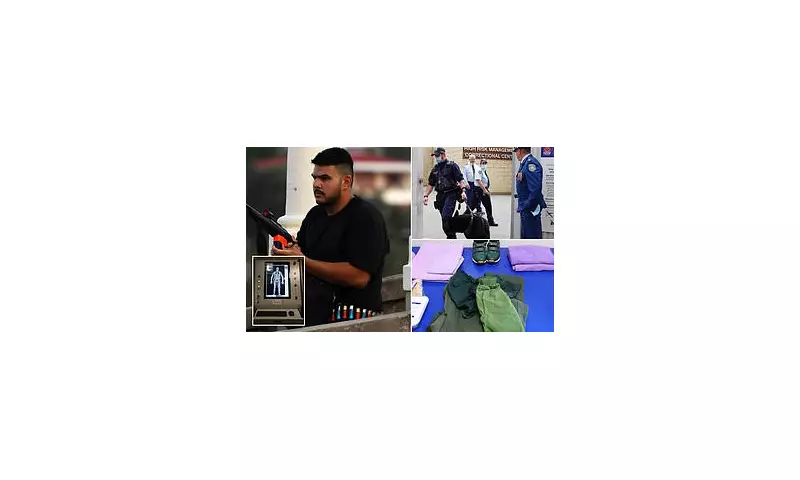
Each cell contains a concrete bed with a foam mattress, a small desk, one chair, a seatless stainless steel toilet, and a sink with a shower nozzle above. A tiny television sits behind perspex on a shelf, and inmates are locked in their cells for up to eighteen hours daily.
The facility features eight exercise yards where inmates can gather two at a time, each protected by a steel mesh canopy to prevent items being thrown over the wall or delivered by drone. Prisoners using the yards may take a bottle of water, two religious items, a handball, a radio, and a towel.
Comprehensive Monitoring Systems
When permitted to make external calls, Akram will be escorted to a telephone inside a cage, with all conversations monitored except legal consultations. Officers meticulously scrutinise all incoming and outgoing mail.
The Supermax security system incorporates comprehensive CCTV coverage, monitored telephone and audio communications, walk-through metal detectors, and X-ray scanners. No inmate has ever escaped from the facility since its establishment.

Official Stance on High-Risk Offender Management
Corrective Services NSW declined to comment on Akram's specific circumstances but indicated he would receive treatment almost identical to any other AA classified inmate. A spokeswoman stated: 'Community safety remains our top priority, and Corrective Services NSW takes its responsibility to appropriately manage serious offenders incredibly seriously.'
'The highest security classification in NSW, Category AA, exists for the secure management of offenders who represent a special risk to national security. This includes offenders who enter custody charged with, or convicted of, terrorism offences.'
The spokeswoman added that the Corrective Services NSW Commissioner may designate an inmate Extreme High Risk Restricted or National Security Interest, with these designations reserved for individuals posing high risks to correctional centre security or community safety, accompanied by strict management protocols.
Extensive Charges Facing the Accused
Akram faces fifty-nine charges, including fifteen counts of murder and forty counts of wounding with intent to murder. Additional charges include discharging a firearm in public, causing a public display of a prohibited terrorist symbol, and placing an explosive in or near a building with intent to cause harm.
The Evolution of Supermax's Inmate Profile
Unlike the main Goulburn prison within the same complex, built in the nineteenth century, Supermax presents a sterile, clinical environment with no crowded yards, tiered wings, or clanging gates. The facility is spotlessly clean, with no prisoner work programs, communal games, or social activities.
Since opening in 2001, the profile of Supermax inmates has shifted significantly. Where once figures like backpacker killer Ivan Milat dominated public perception, the facility now houses younger jihadis and terrorism-related offenders who cannot be integrated into the wider NSW prison system.
For inmates, overwhelming isolation and profound boredom represent constant challenges in an environment designed explicitly to prevent escape and manage those deemed the highest risk to national security.