Iranian Religious Decree Demands Vengeance for Slain Supreme Leader
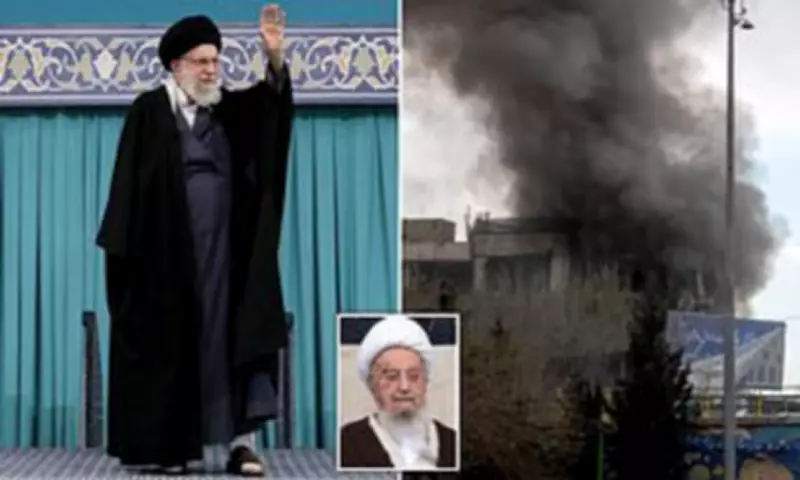
A prominent Iranian cleric has issued a formal fatwa calling upon Muslims worldwide to avenge the death of Ayatollah Ali Khamenei, the country's Supreme Leader who was killed on Saturday. The religious ruling, delivered by Grand Ayatollah Nasser Makarem Shirazi, declares that all followers of Islam are religiously obligated to seek retribution for what he termed the 'blood of the martyr.'
Shirazi explicitly identified the United States and Israel as the 'main perpetrators of this crime,' escalating tensions in an already volatile region. A fatwa represents a binding Islamic legal opinion issued by a qualified religious authority, carrying significant weight among adherents who consider compliance a religious duty.
Heightened Global Security Threats
Counter-terrorism experts have issued stark warnings that this extreme proclamation substantially increases the likelihood of Iranian-backed terror attacks across the globe. Potential targets include embassies, restaurants, shops, and other soft targets with connections to Israel or Jewish communities.

Ghaffar Hussain, a counter-terrorism specialist, told the Daily Mail: 'Iran possesses a long and documented history of exporting terrorism internationally, with a particular track record of targeting dissidents and journalists within the United Kingdom. This fatwa represents a very real and heightened threat that security services must monitor with extreme vigilance, especially following recent regional conflicts.'
History of Iranian-Linked Attacks
In recent years, Iranian agents have been repeatedly accused of orchestrating bomb plots and assassination attempts against opposition figures and Israeli interests:
- In 2018, French authorities uncovered an alleged bomb plot targeting a Paris rally attended by 100,000 Iranian opposition supporters and hundreds of international dignitaries.
- That same year, Denmark accused Iranian intelligence of attempting to assassinate an opposition figure on Danish soil.
- In 2012, Indian police concluded that Iranian agents were responsible for a bombing attack against an Israeli diplomat in New Delhi that wounded at least four people.
European Sleeper Cells and Lone Wolves
British intelligence agencies are currently intensifying surveillance of Iranian sleeper cells amid fears of retaliation for recent US-Israeli military actions. Heinko Heinisch, a leading German terror expert, revealed: 'We know the Iranian Revolutionary Guards maintain operational networks throughout Europe, primarily utilizing embassies, consulates, and regime-controlled mosques as bases of operation.'
Heinisch emphasized that Shirazi's fatwa carries particular authority: 'As a respected legal scholar who helped draft Iran's first constitution, his religious decrees must be taken seriously. A fatwa issued by a Grand Ayatollah like Shirazi functions as a direct instruction to followers.'
Last year, MI5 disclosed that Iran had been behind approximately twenty potentially lethal plots on British soil within a twelve-month period, including targeting the Israeli embassy in London.
The Lone Actor Threat
Some security analysts believe the greater danger may come from individuals with minimal direct ties to the Iranian regime. Avner Vilan, a former senior Israeli security official, explained: 'What concerns me more are smaller-scale actions inspired by the fatwa. These could involve regime supporters in Europe interpreting it as a religious order and acting independently. Even one motivated individual believing they are following divine instruction can create significant havoc.'
Dr. Shmuel Bar, a former senior Israeli intelligence official, noted that while organized sleeper cell operations require substantial coordination, the fatwa could inspire immediate individual actions. He added: 'Western intelligence maintains high awareness of this threat, though Iran's current internet restrictions may complicate direct command structures.'

Historical Precedent and Current Vulnerabilities
Heinisch pointed to the notorious 1989 fatwa against author Salman Rushdie as evidence of such decrees' long-term lethal consequences. Rushdie and associates involved with 'The Satanic Verses' faced decades of attacks from religious extremists, culminating in the author being blinded during a 2022 assault in New York.
The German expert warned: 'Security agencies have increased protection for Jewish, Israeli, and American institutions across Europe. However, the fundamental challenge involves sleeper cells and lone perpetrators who have not yet attracted attention. Potential attackers exist within groups sympathetic to the Iranian regime and within radical anti-Israeli circles.'
Heinisch concluded with a sober assessment: 'The current situation presents dual problems: too many potential perpetrators to monitor comprehensively and too many potential targets to protect adequately. While obvious targets like embassies and synagogues receive enhanced surveillance, countless soft targets remain vulnerable. Since October 2023, we have observed that for anti-Israel elements—including supporters of Iran's regime, Hezbollah, and Hamas—virtually any identifiable Jewish individual or business represents a potential target.'