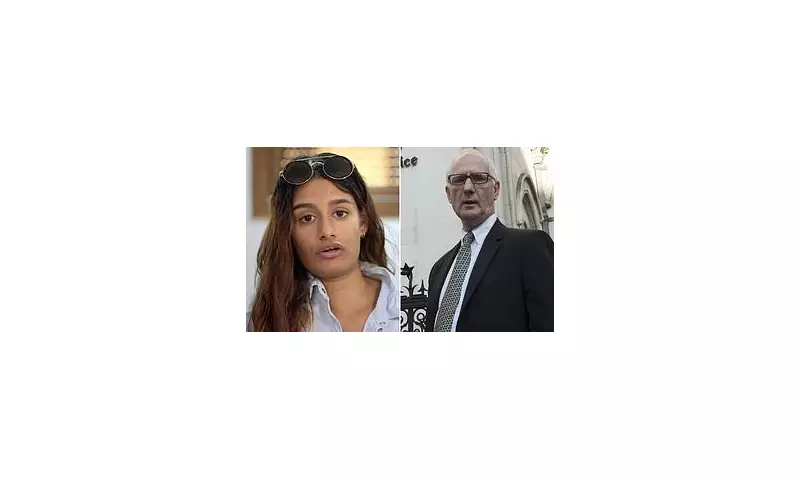
The father of a victim of the 7/7 London bombings has issued a stark warning that Shamima Begum must never be permitted to return to Britain under any circumstances. This urgent plea comes amid growing fears that the 26-year-old former ISIS bride could exploit the escalating chaos at her Syrian detention camp to stage a dramatic escape.
Chaos in Syrian Camps Sparks Security Fears
Ms Begum, who was stripped of her British citizenship in 2019 after leaving London to join the Islamic State terror group in 2015, is currently detained at the al-Roj camp in north-eastern Syria. This facility, described as filthy and violent, is controlled by the Kurdish-led Syrian Democratic Forces (SDF).
However, the security situation has deteriorated rapidly. The SDF has now lost almost all of its territory in the region to forces loyal to Syrian President Ahmed al-Sharaa. This instability has already triggered a major incident at the nearby al-Hol camp, where SDF soldiers fled advancing forces as residents – predominantly women married to ISIS fighters – began rioting and breaking out.

Social Media Footage Shows Mass Breakout
Disturbing video shared on social media platforms showed dozens of women, all clad in black burqas, emerging from the al-Hol camp after they successfully knocked down perimeter fencing. Given that the SDF also controls al-Roj, there are now serious concerns that Ms Begum could exploit similar vulnerabilities to leave detention.
Graham Foulkes, who lost his 22-year-old son David in the 2005 London bombings, said he felt compelled to speak out following these "concerning" developments. He has urged the British Government to maintain its firm stance against allowing Begum's return.
"We Know the Pain Terrorism Causes"
"I am very concerned and completely against her being allowed to come back into the UK," Mr Foulkes told the Daily Mail. "This matters to us because we know the pain that terrorism causes. We wouldn't want anyone to go through that if she returns and carries out an attack."
Mr Foulkes insisted that the original decision to revoke Begum's citizenship was correct, arguing that security-cleared lawyers would have examined intelligence indicating sufficient evidence for the action.
A Profile of Deception and Danger
He painted a picture of Begum as a dangerous individual, highlighting her "clever, complicated plan" to leave the UK for Syria and her success in convincing friends to accompany her. "She spent quite some time as part of ISIS – showing she wasn't disillusioned at all," he stated.
"It was only when ISIS fell and she realised she was in trouble that she began posing as this naive, vulnerable woman. Throughout it all, she demonstrated sophisticated planning and an ability to persuade and deceive people."
Mr Foulkes also pointed to Begum's own admission of witnessing beheadings without being phased, suggesting "extreme violence doesn't bother her." He concluded, "When you take all that together, it suggests she is a very dangerous person. Why would we want someone like that in our country?"
Parallels with 7/7 Attack Coordinator
Drawing chilling comparisons, Mr Foulkes suggested there were "parallels" between Begum and Mohammad Sidique Khan, the terrorist who coordinated the 7/7 attacks. "Like her, he was brought up and educated in this country but deceived everyone at home – family, friends, his mosque – then went to train with terrorists," he explained. "So he has a similar profile [to Ms Begum]. The last thing on earth I want is any other family having someone close to them killed by someone with that profile."
The 2005 London bombings saw three suicide bombers detonate devices on the London Underground before a fourth struck a bus in Tavistock Square, killing 52 people and injuring over 770 others. David Foulkes, a media sales manager at the Guardian, was killed after boarding a Tube train at Edgware Road.
Legal Battles and European Court Intervention
Ms Begum's lengthy legal challenge against the revocation of her citizenship has seen multiple setbacks in UK courts, including losses at the Special Immigration Appeals Commission, the Court of Appeal, and a denied chance to appeal to the Supreme Court.

However, her lawyers later took the case to the European Court of Human Rights (ECHR). Earlier this month, the ECHR formally requested that the Home Office clarify whether it breached human rights and anti-trafficking laws when stripping Begum of her UK citizenship. The Home Office has now been instructed to answer four specific questions regarding the case.
Political Backlash and Government Resolve
This latest European intervention has sparked a significant political backlash. Home Secretary Shabana Mahmood has vowed to defend the Government's original decision. Conservative MP and Shadow Home Secretary Chris Philp said he would seek guarantees in the House of Commons that Begum will not be allowed back, urging Ms Mahmood to fight the case "tooth and nail."
Mr Philp condemned ISIS as a "violent terrorist regime that brutally murdered their opponents and raped thousands of women and girls."
Wider Unrest and Prison Breaks
The unrest in north-east Syria continues to escalate. A new truce was announced between the national army and the SDF after Kurdish-led troops were forced to abandon the al-Hol camp. The two sides have been clashing for two weeks amid failed negotiations over a merger of their forces.
In a further alarming development, at least 1,500 ISIS detainees reportedly escaped from the Shaddadi prison camp on Monday, which was also under SDF control. Syria's interior ministry has accused the SDF of allowing the release of "a number of detainees" from ISIS, along with their families.
The SDF confirmed its guards had withdrawn from al-Hol but did not confirm any escapes, instead blaming "international indifference" toward the ISIS issue. The Syrian defence ministry stated it is prepared to take over al-Hol and the prisons, accusing the SDF of using them as "bargaining chips."
As the situation remains volatile, the calls to prevent Shamima Begum's return to British soil grow ever more urgent from those who have suffered terrorism's gravest consequences.