Global Sketching Challenge: Artists Draw 100 People in a Week
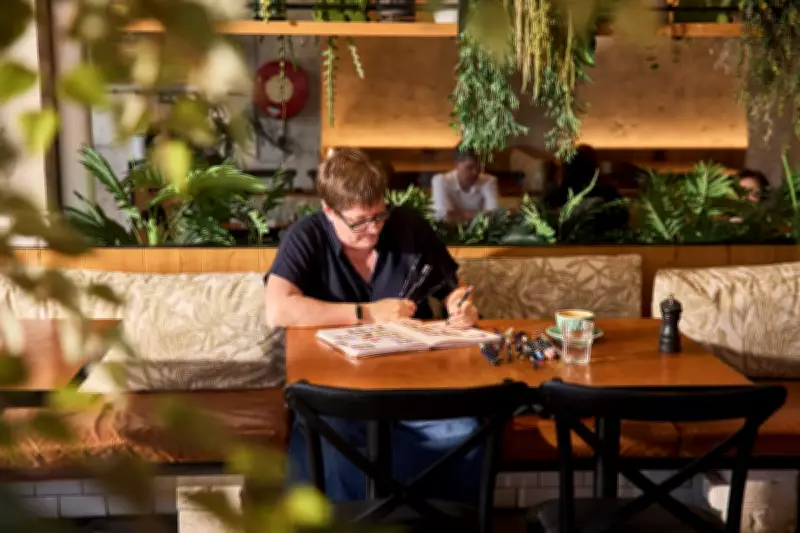
In a sun-dappled cafe in Lindfield, Sydney, Liz Steel, a self-described 'obsessive sketcher', is intently drawing people as part of her week-long challenge to sketch 100 individuals. Half a world away, Marc Taro Holmes navigates the thawing streets of Montreal, sketchbook in hand, emerging like a bear from hibernation. These two artists, connected across continents, are the co-founders of the #OneWeek100People challenge, an informal global initiative that encourages artists to sketch 100 people in just seven days.
A Decade of Creative Connection
Now in its 10th year, the challenge took place this week, but Steel and Holmes emphasize that it is entirely for enjoyment and can be taken up by anyone at any time, with participants sharing their work using the hashtag. The duo first met at the International Urban Sketchers Symposium in Lisbon in 2011, and they started the challenge as a way to stay connected. Since then, it has blossomed into a phenomenon within the Urban Sketchers community, attracting hundreds of participants worldwide.
"Liz and I started the challenge as an excuse to keep drawing together," Holmes explains. "Speaking selfishly, this event is my free pass to spend an entire week drawing." Steel, an architect by trade who now works as an art educator alongside Holmes, notes that sketching people wasn't always her strength, but she credits the practice with transforming her life and career.

The Philosophy Behind the Challenge
The goal of sketching 100 people is intentionally ambitious, designed to encourage drawing without self-criticism. "Quantity is the only goal, not quality," Holmes states. "Secretly, that's the best way to improve your drawing." Steel adds that there's a "special type of magic" in the momentum, emphasizing that it's about practice rather than perfection.
Quincy Nadel, a participant from Chicago, finds the challenge to be "exposure therapy" for her perfectionism. After teaching herself to sketch in her 30s, she says, "I was digitally burnt out. Sketching is my 'permission slip' to sit and watch the world without the pressure of productivity." She documents her journey on Instagram but views the art as a byproduct of a deeper goal: recalibrating her brain to notice the people who usually move through her peripheral vision.
The Impact on Perspective and Empathy
Holmes highlights that drawing uses the brain differently than taking a photo, forcing artists to really look and engage creatively. "Drawing is a terrific way to engage with the world. I go places and do things I wouldn't normally get to. My sketchbook is my motivation to live a good life," he says. Steel agrees, noting that sketching creates a tactile relationship with the environment, allowing her to see things she wouldn't normally notice and encode sounds and conversations into her pages.
Nadel reflects on how the practice has increased her empathy. "When you spend your time looking up, watching and truly seeing people ... it's impossible not to feel a sense of gratitude for the 'ordinary'," she shares. She hopes the challenge inspires others to put down their phones and observe the world at eye level.
Accessibility and Practical Tips
Holmes stresses that the challenge is designed to be accessible, with no expensive tools required and success defined simply by trying. "We don't want people turning a game into hard labour," he says. "We wanted an activity that you can't fail. You can actually draw 100 sketches in a single day if you approach it as a game." Steel advises simplifying sketches, working small, and using limited materials. She often alternates between sketching from photos and going out on location to find a rhythm, noting that by day five, she's in the flow and it becomes addictive.

This year, Steel uses water-soluble pencils and markers, which allow her to soften edges if she makes a mistake mid-sketch. She recommends busy spots where subjects are seated or performing repetitive motions. While sketching isn't a skill to pick up overnight, both founders believe anyone can learn by committing time to retrain their eyes and hand. "Anyone can take up a sketchbook practice," Holmes concludes. "It's forgiving, and it's accessible. It's never boring looking at people and imagining their lives."