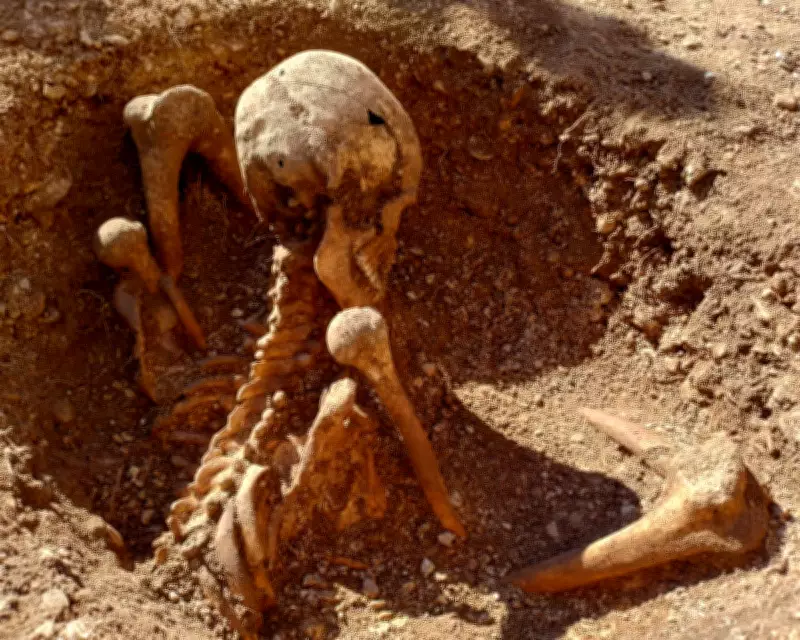
In a remarkable discovery that continues to baffle experts, archaeologists have uncovered yet another ancient skeleton buried in a seated position in the city of Dijon, central-eastern France. This latest find, unearthed next to the Josephine Baker primary school, adds to a growing collection of Gaulish tombs that defy conventional burial practices and raise profound questions about this little-understood Celtic culture.
A Peculiar Burial Site Emerges
The skeleton was discovered in a circular pit approximately one metre wide, remarkably well-preserved with its hands resting in its lap. Like four other similar burials found nearby earlier this month, the body was positioned upright with its back against the eastern wall of the pit, gazing westward. This peculiar orientation has become a hallmark of these Gaulish tombs, sparking intense scientific curiosity about their significance.
Historical Context and Previous Discoveries
This discovery is part of a much larger archaeological pattern in Dijon. Last year, 13 other skeletons were found about 20 metres away at the same construction site, all believed to date from approximately 300BC to 200BC. Including earlier discoveries from 1992, about 20 tombs featuring seated Gauls have now been identified in a relatively small area of Dijon's city centre.

Remarkably, this represents more than a quarter of the 75 such tombs identified worldwide, with other examples found in France, Switzerland, and the United Kingdom. The concentration in Dijon suggests the city was once a significant settlement for the Gauls, a Celtic people who first emerged around the fifth century BC and spread across modern-day France, Belgium, Switzerland, and beyond.
The Mystery Deepens: Questions Without Answers
Archaeologists face numerous puzzling questions about these burials. Were these individuals buried alive as part of some ritual? Was this seated position a punishment for wrongdoing or perhaps an honor reserved for the powerful? The discovery of five bodies showing signs of violence, including one with a fatal skull wound, only adds to the mystery.
Adding to the intrigue is the near-complete absence of personal belongings or ornaments among the Dijon bodies. Only a single armband has been found, which helped date the settlement to the Gallic period. All the individuals were men measuring between 1.62 and 1.82 metres tall, except for one child discovered in 1992.
Scientific Analysis Reveals Clues
Detailed examination of the remains has provided some insights into these ancient people. Their teeth were exceptionally well-preserved, likely because they had no exposure to sugar, according to Inrap archaeo-anthropologist Annamaria Latron. The bones show clear signs of osteoarthritis, particularly in the legs, suggesting these individuals engaged in intense physical activity during their lives.
"We do not have a preferred hypothesis," Latron admitted regarding the burial practice. "We're missing the surface layer, which was above the tombs. Being an archaeologist can be a very frustrating profession when faced with such mysteries."
Cultural Significance and Research Challenges
The Gauls remain poorly understood because most historical records about them come from biased sources, particularly the writings of Roman emperor Julius Caesar who conquered them in 50BC. These archaeological discoveries therefore represent crucial primary evidence about their culture and practices.
Regis Labeaune, a researcher at the French archaeological institute Inrap, described the latest bodies as "particularly impressive discoveries." He emphasized that "given the number and quality of these discoveries, we can say there was a significant Gallic settlement in Dijon."
As excavations continue and more sophisticated analysis techniques become available, archaeologists hope to unravel the secrets behind these unusual burials. Each new discovery adds another piece to the puzzle of understanding the Gauls, their beliefs about death and the afterlife, and why Dijon became such an important site for their distinctive burial practices.