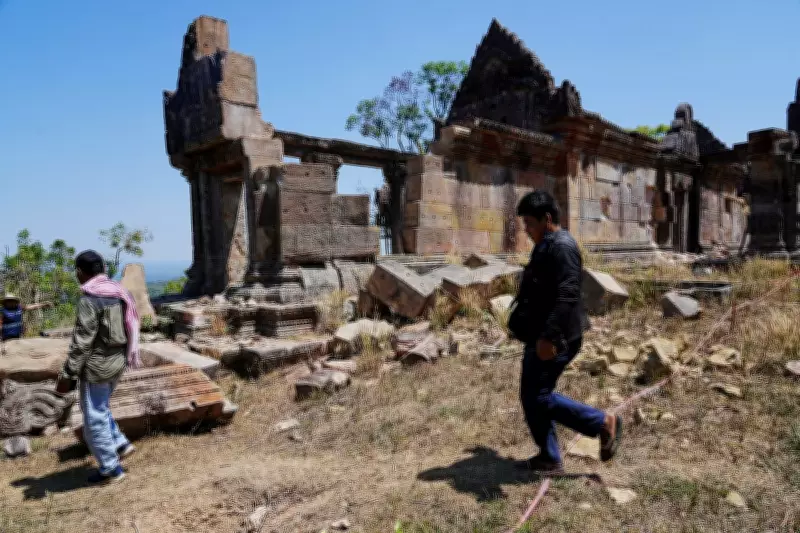
Ancient Cambodian Temple Severely Damaged in Border Clashes with Thailand
A 1,000-year-old temple, the Preah Vihear, lies battered and scarred following intense border clashes between Cambodia and Thailand. Despite a ceasefire three months ago, the remnants of combat are deeply etched into this 11th-century structure, perched atop a 525-meter cliff in the Dangrek Mountain range.
Decades of Conflict Endanger Cultural Heritage
The neighboring Southeast Asian nations have engaged in sporadic fighting over the temple for decades, placing this ancient holy site in grave peril. Constructed by the Khmer Empire, which also built Angkor Wat 160 kilometers to the southwest, Preah Vihear was designated a UNESCO World Heritage site in 2008 and is revered as a vital cultural relic by Cambodians.
However, after two major rounds of combat last year, significant portions of the temple have been damaged, with Cambodian officials warning that some areas may be on the verge of collapse.

Tourism Halted Amid Wreckage and Hazards
Where tourists once marveled at the temple's intricate carvings and stunning views over the Cambodian plains, there is now only stone debris, artillery craters, and the ashes of burnt vegetation. Hem Sinath, an archaeologist and deputy director-general of the National Authority for Preah Vihear, described the scene as sorrowful, noting the temple's quiet and tragic appearance.
The site has been closed to visitors due to unstable walls and the threat of unexploded ordnance. Roped-off areas and land mine warnings dot the landscape, a grim reminder of Cambodia's past civil wars. Conservation staff, groundskeepers, and troops remain stationed at the temple, with Thai soldiers visible just across the border.
Extensive Damage Documented
According to a January damage assessment by Cambodia's Culture Ministry, all five of the temple's notable gateway pavilions were damaged, with three nearly unrecognizable. An ancient northern staircase, previously restored through a U.S.-funded project, suffered severe hits from repeated bombardment.
A recent statement from the ministry revealed that the temple endured damage at 142 locations during July's fighting and at 420 more during heavier combat in December. Experts predict that during the upcoming rainy season, structures on the brink of collapse could finally give way.
Accusations and Denials Over Deliberate Attacks
Cambodia's Information Minister, Neth Pheaktra, has accused the Thai military of using false information to justify incursions and deliberately damaging the temple, emphasizing that Preah Vihear belongs to all humankind. International law prohibits attacks on significant historical sites, but Thailand argues that Cambodia militarized the temple by installing weapons and surveillance equipment, thus voiding its wartime protection.
Thai Army spokesperson Maj. Gen. Winthai Suvaree maintains that Thai forces targeted only military objectives, while Cambodia denies any military use of the temple, stating it is under civilian control for heritage protection.
Long-Standing Dispute and Restoration Challenges
The temple, known as Phra Viharn to Thais, has been at the heart of a boundary dispute since the 1950s, with the International Court of Justice ruling in 1962 and reaffirming in 2013 that it belongs to Cambodia. UNESCO's 2008 designation as a Cambodian site exacerbated tensions, fueling nationalism and sporadic armed conflicts in 2008 and 2011.
Restoration efforts face major hurdles, as Hem Sinath fears weakened structures could collapse during the rainy season. Previous renovation projects involving India, China, and the United States are on hold due to the fighting. Urgent repairs are hindered by safety concerns and the fragile ceasefire, with plans dependent on the border situation.
Cambodia reports that over 640,000 people were displaced during the clashes, with nearly 37,000 yet to return home, underscoring the human toll of this ongoing conflict.