Chinese Researcher Dies After US 'Hostile Questioning', Sparks Diplomatic Row
A Chinese researcher at the University of Michigan tragically took his own life after being subjected to what has been described as 'hostile questioning' by federal agents, according to official statements. The incident has ignited a diplomatic dispute between China and the United States, raising serious concerns about the treatment of Chinese academics on American campuses.
Details of the Tragic Incident
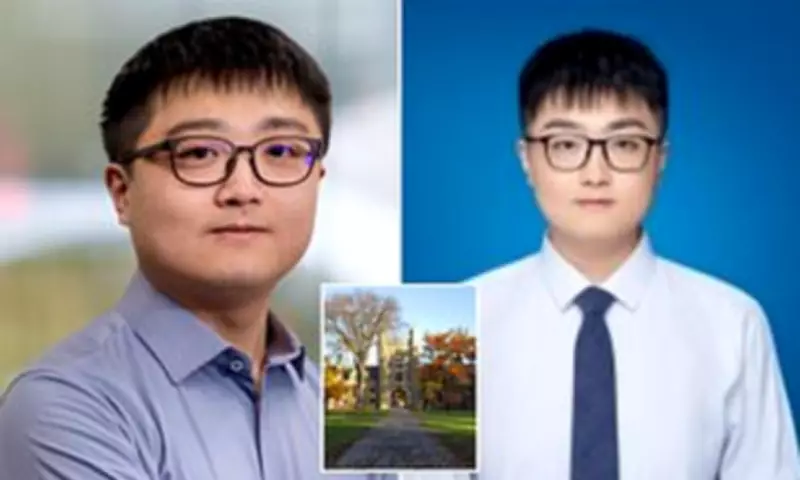
Danhao Wang, an assistant research scientist in the university's College of Engineering, died on March 20 inside the institution after falling to his death. Police are investigating his death as a 'possible act of self-harm', with the China Ministry of Foreign Affairs explicitly claiming he took his own life following 'hostile questioning' by U.S. law enforcement officials.
A formal statement from Chinese authorities, which did not name Wang directly, asserted that the postdoctoral scholar ended his life 'after being subjected to hostile questioning by U.S. law enforcement'. The statement further emphasized that this incident 'calls into question once again the impact and legitimacy of unwarranted U.S. interrogation and harassment targeting Chinese researchers and students'.

University Response and Investigation
Police reported that an individual was discovered inside the atrium of the UM George G. Brown Building in Ann Arbor on March 19, and he was subsequently pronounced dead. Karen Thole, the College of Engineering Dean, later identified the deceased researcher as Wang in an email circulated to the entire college community.
In her communication, Dean Thole described Dr. Wang as 'a promising and brilliant young mind, whose research into wide bandgap III-nitride semiconductor materials and devices published in Nature stands as a landmark, uncovering for the first time the switching and charge compensation mechanisms of emerging ferroelectric nitrides'. She expressed that his loss is deeply felt not only by those who knew him at the University but also by everyone who recognized his potential to contribute to scientific breakthroughs with global positive impact.
The university has emphasized that this remains an active police investigation, with no further information available regarding the circumstances surrounding his death. In the age of AI and misinformation, the institution has urged restraint from speculation until investigators complete their work and facts are properly established.
Diplomatic Fallout and Demands
Following Wang's death, the China Ministry of Foreign Affairs has called on the United States to conduct a 'full investigation' and provide Chinese authorities and Wang's family with a 'responsible explanation'. The Consulate General of China in Chicago reinforced this demand in a social media post, stating: 'The incident occurred at a U.S. university within our consular jurisdiction, and we are deeply saddened by the heartbreaking death.'
The consulate's statement continued: 'China solemnly calls on the U.S. to carry out a full investigation, give the family of the victim and the Chinese side a responsible explanation, stop any discriminatory law enforcement targeting Chinese students and scholars in the U.S., and stop imposing wrongful convictions.'
Broader Context and University Actions
Wang's death occurred just days after University of Michigan's interim President Domenico Grasso appeared before a House Committee on Education and Workforce to address concerns about potential Chinese espionage activities within American universities. During his testimony, Grasso acknowledged the crucial role of foreign students to the institution while advocating for continued international partnerships.
In a separate statement, Grasso affirmed: 'We stand committed to protecting the interests and security of the United States. This commitment is illustrated by our decision to end a relationship with a university in China that is seen as a potential threat to America’s interests. We made this decision after discussions with this Committee and the House Select Committee on the CCP.'

Aftermath and Precautions
In response to this tragic event, a university workers' union has advised all its members to refrain from speaking with federal authorities without proper representation or guidance. According to Wang's research profile, he previously worked for the University of Science and Technology of China in Hefei, Anhui province, highlighting his established academic background before joining the University of Michigan.
This incident underscores the growing tensions between academic freedom, national security concerns, and the treatment of international scholars within American higher education institutions. As investigations continue, both diplomatic and academic communities await further developments and clarifications regarding the circumstances that led to this profound loss.