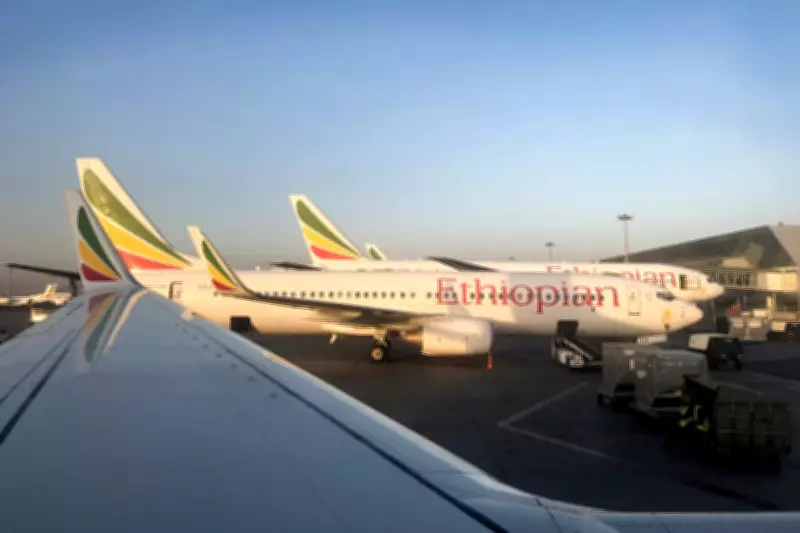
Ethiopian Airlines Cancels Tigray Flights Amid Escalating Tensions
Ethiopia's national carrier, Ethiopian Airlines, has abruptly cancelled all flights to and from the northern Tigray region, sparking widespread concerns about a potential resurgence of armed conflict. The suspension, which entered its second day on Friday, was communicated to customers via messages citing "unplanned circumstances," with no official public statement issued by the airline or Ethiopian authorities.
Security Concerns and Military Movements
A high-ranking official in the Ethiopian security service, speaking anonymously to The Associated Press, revealed that the flight cancellations are directly "linked to a new conflict between federal troops and the regional forces." The official described drones hovering in the sky and significant military movements observed in western and southern Tigray, heightening fears of imminent hostilities.
With air travel halted, some residents have begun fleeing Tigray by road. Solomon Tadesse, in the regional capital Mekele, reported arriving early Friday to purchase a bus ticket to Addis Ababa, only to find bookings at full capacity until Tuesday. "I don’t want to face the hardships I went through in the past war," he said, reflecting the anxiety gripping the region.

Background of Rising Tensions
Tensions have been simmering in Tigray three years after the federal government signed a peace deal to end a devastating two-year war that claimed hundreds of thousands of lives. The 2022 agreement is now under strain, with Tigray's rulers accusing the federal government of "openly breaching" it following a drone strike last year. Meanwhile, Ethiopia's government alleges that Eritrea is mobilising and funding armed groups in Tigray, which shares a border with Eritrea.
In Mekele, residents lined up for hours to withdraw cash from ATMs or purchase essential goods, fearing a return to conflict. Bereket Ghessese shared, "I have been waiting the whole day to withdraw cash from the bank, but halfway I was told the bank has run out of banknotes." Similarly, Genet Berhane in Adigrat reported arriving at 5:30 AM to withdraw cash, only to find ATMs depleted.
Broader Political and Economic Context
Ethiopian Prime Minister Abiy Ahmed has adopted a forceful stance in recent months as the landlocked nation seeks greater access to the sea through Eritrea. Abiy has described Ethiopia's loss of Red Sea access after Eritrea's 1993 secession as a "mistake" that "will be corrected," rhetoric viewed as provocative. Currently, most of Ethiopia's trade passes through Djibouti, incurring high port fees.
Eritrea and Ethiopia initially made peace after Abiy came to power in 2018, earning him a Nobel Peace Prize. However, Abiy later allied with Eritrea in the war against the Tigray People's Liberation Front (TPLF), which administers Tigray. Now, there are indications that Eritrea might align with the TPLF against Ethiopian federal troops. In May, Ethiopian authorities deregistered the TPLF for failing to hold a general assembly, a move the TPLF called a violation of the 2022 deal.
Expert Analysis and Future Prospects
Kjetil Tronvoll, a professor of peace and conflict studies at the University of Oslo, noted that a political and security alliance between the TPLF and Eritrean President Isaias Afwerki appears to be "in the making." He explained, "The potential war theater is thus radically changed from what we saw in the 2020-2022 war, when Tigray was effectively surrounded by enemy forces. This time, they will potentially have an open supply line and a support base provided by Eritrea, in addition to likely troops reinforcements."
In Addis Ababa, resident Gizachew Belay expressed hope for peace, stating, "This time Ethiopia deserves peace. No one will benefit from war." As fears mount, the suspension of flights serves as a stark reminder of the fragile situation in the region, with many bracing for potential escalation.