Iran School Bombing: A Grave Atrocity Demanding Global Action
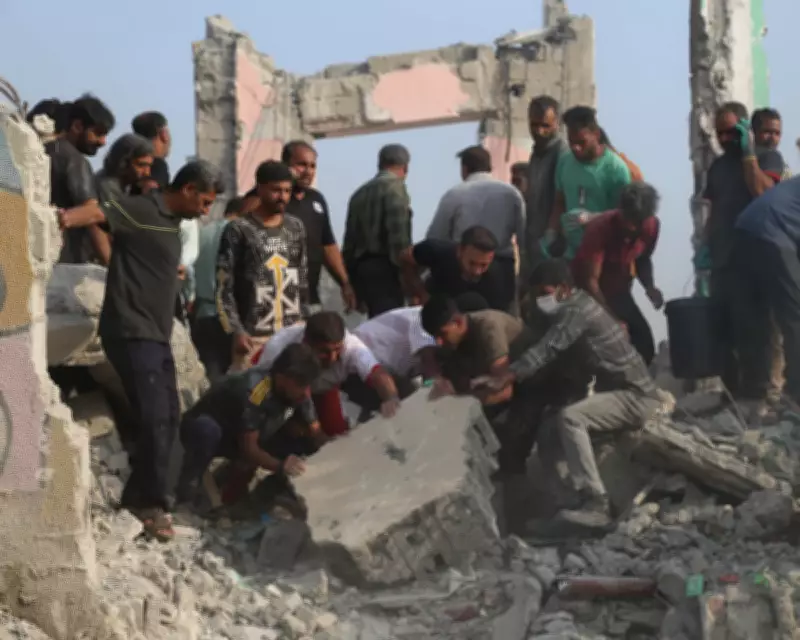
The devastating bombing of the Shajareh Tayyebeh school in Minab, Iran, on 28 February 2026, has left the world in shock and mourning. Rescue workers and local residents have been tirelessly searching through the rubble, where a reported 168 people, primarily young schoolgirls, lost their lives. This horrific attack, which occurred during school hours, transformed classrooms into mass graves, shattering families and communities.
Eyewitness Accounts and International Response
One grieving mother, whose daughter Zeinab had memorised the Quran and was preparing for a national recitation contest, expressed her anguish: "My dream died with her." In response, a United Nations human rights panel has urgently called for an independent and effective investigation to ensure accountability for any violations. The incident has ignited a fierce debate over responsibility, with former US President Donald Trump denying American involvement, while a BBC investigation suggests evidence of multiple US Tomahawk missiles striking near the school.
The Broader Context of Attacks on Education
This tragedy is not an isolated event. On the same day, another school in Tehran's Narmak district was bombed, resulting in two student deaths. Globally, conflicts have increasingly targeted educational institutions, with over 10,000 students and educators harmed in attacks on education in 2022 and 2023 alone. In Gaza, 90% of schools have been damaged or destroyed, and Unicef reports at least 83 children killed in Lebanon since early March. These statistics underscore a disturbing trend where schools, meant to be safe havens, are becoming battlegrounds.

Legal Frameworks and the Need for Accountability
International humanitarian law, including the Geneva Conventions and the Convention on the Rights of the Child, explicitly prohibits assaults on children and schools. Attacks on educational buildings are classified as war crimes under the Rome Statute of the International Criminal Court (ICC). Despite this, perpetrators often evade justice by claiming attacks were unintentional or that schools were used for military purposes. Gordon Brown, the UN's special envoy for global education, argues that such waivers must be challenged to uphold the principle that no child should die for trying to learn.
Proposals for Strengthening Child Protection
To address these failures, there is a growing call for enhanced mechanisms, such as implementing UN Security Council Resolution 1612, which monitors children in armed conflict, and considering the establishment of a dedicated international criminal court for crimes against children. This body would focus specifically on atrocities like school bombings and abductions, complementing existing judicial systems. Additionally, the Safe Schools Declaration and Lucens guidelines emphasise keeping military forces away from education facilities, but stronger enforcement is needed.
The Symbolic Power of Schools in Conflict Zones
Keeping schools open during war represents more than just education; it symbolises hope and resilience for communities. When a school reopens after an attack, it becomes a defiant act against despair, offering stability to children and reassurance to parents. As Brown emphasises, protecting schools is crucial to maintaining humanity in the darkest hours of conflict.
Ultimately, the international community must send a clear message: leaders who permit attacks on children will face unwavering accountability. This atrocity in Iran serves as a stark reminder that the rules of war must be honoured in both practice and spirit to safeguard innocent lives.