Iran School Bombing: Parents' Harrowing Accounts of the Minab Tragedy
Hours before the world learned that a US missile had struck Shajareh Tayyebeh primary school in Minab, Iran, parents were already frantically searching the rubble for their sons and daughters. In this exclusive report, four families recount the catastrophic events of 28 February, a day that claimed at least 160 young lives and left a community shattered.
Zahra's Family: A Mother's Desperate Search
When Marzieh heard the first thunderous crash, her initial thought was that her youngest son, Mohammad, was playing on the balcony. But as a second explosion shook their home, she knew something was terribly wrong. Just minutes earlier, she had received a brief call from her eight-year-old daughter Zahra's teacher, Mrs Mohammadian, saying the school was closing early. Marzieh's husband sent his brother to pick up Zahra and her cousin.
Stepping outside, Marzieh was met with acrid smoke and chaos. People shouted that war had started. She rushed to the school, where thick smoke filled the air. Making call after call, she tried to reach her brother-in-law, her husband, and every school contact she had, but no one answered. Her brother called with a rumour: a bomb had hit the school. Where was Zahra?

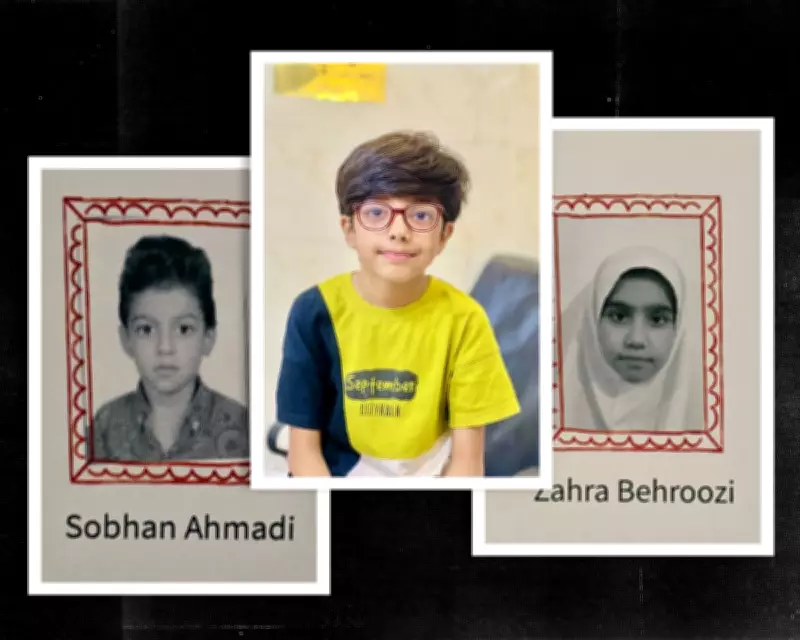
Marzieh's husband, Hossein, arrived first at the scene. The girls' section of the school was levelled into a grey mass of dust and rubble. He joined other men digging desperately, hoping to find Zahra alive. Marzieh soon followed, begging a neighbour for a ride. As she watched children being pulled from the debris, she thought of Zahra's joyfulness, her love of paper crafts, and her precocious nature. Hossein later identified Zahra at the morgue; her head was broken, ribs caved in, but her body intact. She was eight years old.
Sobhan and Hanieh's Family: A Father's Heartbreak
That morning, Mohammadreza Ahmadi had dropped off his children—Sobhan, 10, and Hanieh, seven—at school, watching them hug before disappearing inside. Sobhan, a non-verbal toddler who learned to speak at four after intensive therapy, was devoted to his father. Hanieh was the family clown, imitating her mother's housework. A few hours later, Ahmadi got a call to pick them up early due to an attack.
Driving through gridlock, Ahmadi walked to the school to find his daughter's classroom flattened. At the morgue, he identified Hanieh with a fractured skull but intact face, and Sobhan with broken legs, a missing eye, and half his face gone. Later, a mother told Ahmadi's wife, Marzieh Ashena, that Sobhan had run back into the school to find Hanieh after the first explosion. Both children perished.
Arya's Family: A Mother's Agony
Marzieh Mansouri, a stay-at-home mum, received a call from her son Arya's teacher at 11.05 am, saying the school was closing after an attack on Tehran. Arya, nine, was a studious boy who loved baking with his mother. As she tried to contact her brother to pick him up, she heard distant bangs. Her husband called from work, saying a plane had hit something in Minab.
In the chaos, Mansouri heard the school might be hit. She screamed in panic, eventually being driven to the scene where traffic was choked. Seeing a dust-covered school staff member who wouldn't answer her questions, she grew more frantic. Her husband, Morteza Bahadori, ran to the school, finding Arya's classroom completely destroyed. After hours of searching, relatives identified Arya at the morgue; his parents were too distraught to do so themselves.
The Aftermath: A Community's Grief and Demand for Justice
One month later, no one has been held accountable for the strike that killed up to 168 people, mostly children and teachers. The US military says it is investigating, while President Donald Trump denies responsibility. Zahra's father, Hossein, returned to the school after identifying his daughter, digging alongside other men to rescue more children. "It didn't matter whose child I rescued. They were all like my own daughters," he says.

He urges the UN and international courts to visit Minab, see the rubble, and recognise the crimes committed. Sobhan and Hanieh's parents have little hope for justice, noting the international community is already witnessing the tragedy. Arya's toddler brother, Arsalan, still asks for his brother each afternoon, unaware of the loss. The families' stories highlight the human cost of conflict, with parents left to mourn in a search for answers that may never come.