Through Iranian Eyes: Defiance and Death in Tehran's Streets
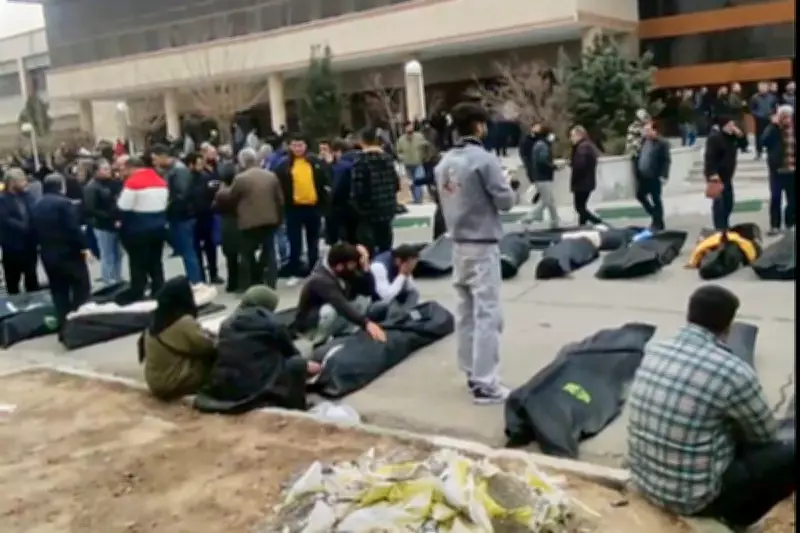
Six Iranian citizens have provided rare, first-hand accounts of the recent wave of protests that swept their nation, painting a vivid picture of both unprecedented state violence and a fragile, defiant hope that continues to flicker amidst the chaos. Speaking anonymously to The Associated Press through secure channels, these individuals described scenes of disorder, disarray, and death during what has become the bloodiest crackdown on dissent since the Islamic Republic's founding in 1979.
A Different Kind of Protest
For a 25-year-old fashion designer from Tehran, this protest movement felt fundamentally different from the mass demonstrations nearly four years prior. While previous efforts for civil rights yielded little tangible change, the economic spark of rampant inflation and the plummeting Iranian rial ignited a larger, more diverse crowd. "The momentum felt unprecedented," she explained, noting the participation of not just the younger generation, but older residents, affluent families, and even some children. This broad-based discontent soon saw chants targeting the country's theocratic leadership, drawing an equally unprecedented and brutal response from security forces.
The Scale of the Crackdown
Activists now estimate that over 6,000 people, predominantly protesters, have been killed. The six witnesses interviewed confirmed witnessing extreme state violence, with four risking their safety to circumvent government internet shutdowns using devices like Starlink satellite dishes to share their stories. All expressed horror at the crackdown's sheer scale, even as they expected an aggressive state response. The fashion designer articulated the driving force behind the defiance: "When we went out, I couldn't say I wasn't stressed, but there was no way I could stay at home. I felt that if I stayed home—if anyone stayed home—out of fear, nothing would move forward."

Glimpses of Violence and Resistance
The accounts detail specific, harrowing incidents. The designer described the events of January 8th in Tehran, where a call to protest transformed a still city into a sea of thousands by evening. "Everyone was afraid," she recalled, "but they kept saying, 'No, don't leave. This time, we can't.'" The protest escalated with graffiti and anti-government chants, some calling for the death of Supreme Leader Ayatollah Ali Khamenei—an act punishable by death itself.
The response was swift and violent. Anti-riot police and members of the paramilitary Basij force arrived, blocking roads and deploying tear gas and pellet guns. Protesters, including veterans wearing masks for protection, threw rocks and momentarily caused some security forces to retreat. However, a renewed charge forced the designer and her friends into alleys, where she was struck by pellets and a paintball while attempting to kick away a tear gas canister.
A Medical Perspective on the Carnage
A doctor from Mashhad, Iran's second-largest city, provided a chilling view from the medical frontlines. While not surprised protests reached her city, the scale of violence was shocking. "This had never happened before at this scale," she stated. After attending protests where she heard distant gunfire and felt tear gas, she returned to her hospital night shift to find security forces had escalated their response dramatically.
She described a takeover of the emergency room by security agents as ambulances and protesters delivered bodies. Colleagues reported 150 bodies brought in that single night. When doctors protested the situation, they were ordered to remain silent. "I was not afraid for myself," the doctor said. "I was afraid for others."
Context: A Nation Under Pressure
These personal narratives unfold against a backdrop of intense national pressure. Iran remains under the grip of Western-led sanctions, compounding long-standing economic problems. The population cites government mismanagement and interference in personal lives as key grievances, with demands centering on basic rights and dignity. The conflict's context was further intensified by a 12-day war with Israeli and U.S. jets in June, which battered the nation.

Supreme Leader Ayatollah Ali Khamenei has made a rare admission that several thousand have been killed, indicating the movement's scale. State media, however, consistently labels demonstrators as "terrorists," showcasing images of damaged state property. Iran's U.N. mission did not respond to AP's questions regarding these witness accounts, though Ambassador Amir Saeid Iravani has previously asserted that security forces "firmly and responsibly" confronted what he termed "violent separatists."
A Fading Momentum and a Plea to the World
As the crackdowns continued, the initial momentum of the protests has ebbed, leaving Iran increasingly isolated. For witnesses like the Mashhad doctor, rage and grief persist. Her greatest fear is global indifference. "What I fear is that these events will be treated as something ordinary by the world, that people will simply move on," she said, pleading for international attention. "No matter how many times I explain, I truly can't really convey the extent of the horrible situation. No one would believe that a government of a country can so easily kill its own people."
While these six accounts cannot represent the entire diverse population of over 85 million, they offer a crucial, ground-level glimpse into a pivotal and violent chapter in Iran's modern history, defined by both profound despair and a tenacious, if battered, hope.