Iranians Observe Nowruz with Caution as War Enters Fourth Week
Iranians in Tehran and across the nation marked the Persian New Year, Nowruz, with cautious observance this week despite the ongoing military conflict entering its fourth consecutive week. The traditional spring equinox celebration, which signifies renewal and hope, unfolded against a backdrop of escalating violence and economic strain.
Military Strikes and Political Statements
Heavy strikes reverberated across Tehran during one of Iran's most significant holidays, as Tel Aviv confirmed it had "acted alone" in targeting Iran's South Pars gasfield. This aggressive move further intensified the already volatile regional conflict. Meanwhile, former U.S. President Donald Trump announced on Friday that he was considering "winding down" military operations, stating on social media, "We are getting very close to meeting our objectives."
In contrast, Israeli Defence Minister Israel Katz declared that strikes would "intensify" in the coming week, promising a "significant" rise in attacks. This conflicting rhetoric has created an atmosphere of uncertainty and fear among civilians attempting to maintain normalcy.

Cultural Resilience Amid Conflict
Nowruz, celebrated not only in Iran but across Central Asia, parts of the Caucasus, and among Kurdish communities throughout the Middle East, traditionally represents a time of renewal and fresh beginnings. Despite the war, many Iranians demonstrated remarkable determination to preserve their cultural heritage.
"We must preserve our traditions, especially in times like these," emphasized Darya, a 48-year-old painter from central Tehran. "It's an important part of our culture." She celebrated with her husband Mohammad, 50, and their daughter Masiha, 25, carefully arranging the traditional Haft Seen table with seven symbolic items representing wishes for renewal and prosperity in the coming year.
Economic Devastation and Personal Loss
For others, the holiday arrived with profound loss and devastation. An airstrike on the Tehran Province Electricity Distribution Company in Shohada Square completely destroyed Erfan's pastry shop, Khooshe, a family business established by his grandfather over six decades ago. On Nowruz day, the shop stood with blown-out windows, destroyed shelves and ovens, and cables hanging from a collapsed ceiling.
"Business had already been bad since the anti-government protests in January," explained Erfan, 28. "Now it's Nowruz, and all I'm doing is rebuilding my shop." He paused before adding, "We have always celebrated, but this year, I feel a lack of energy and motivation."
Standing amid the wreckage, Erfan expressed that change in Iran was necessary but should not come through violence and war. "If the U.S. wanted to, they could bring positive change," he suggested. "Right now, what matters most is that our government accelerates policy reforms."
Contrasting Celebrations: Past and Present
The atmosphere contrasted sharply with previous years' celebrations. Last spring, Tehran illuminated with fireworks during Chaharshanbe Suri, the fire festival held on the last Wednesday before Nowruz. Crowds gathered on hills overlooking the city as music filled streets, people set off firecrackers, released lanterns into the sky, and jumped over small bonfires—a ritual meant to symbolically cast off misfortune before welcoming the new year.
This year, however, streets remained largely empty, with only a handful of people throughout the capital lighting fires. The festive energy that typically characterizes the holiday was noticeably absent.
Economic Challenges for Local Businesses
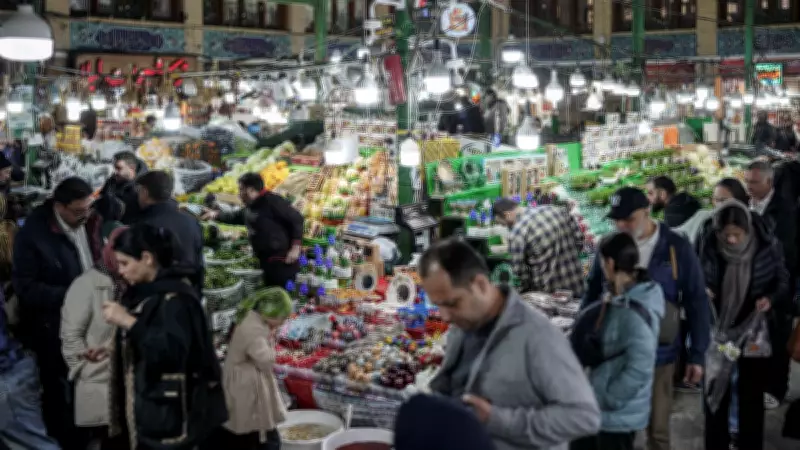
Local businesses faced severe economic challenges during what is normally their peak sales period. Since February 28th, when the war began, most vendors in Tajrish Bazaar—one of Tehran's liveliest covered markets—had shuttered their shops. However, in the days leading up to Nowruz, some of the market's usual energy returned, according to Ali, a 20-year-old vegetable seller. People arrived to purchase flowers, fresh greens, food, and traditional Nowruz symbols like decorated eggs and goldfish.

Hassan, 56, who operates a flower shop in northern Tehran with his daughter Sajedeh, 26, described the difficulties his business encountered. "At the start of the war, leading up to Nowruz, we bought stocks of flowers. 90% of them went bad and had to be thrown out," he revealed. "Usually, this is our peak sales period, but right now we're selling only about 5% of what we usually do. Our regular customers aren't buying. People aren't feeling well, so our business suffers too."
In previous years, Hassan celebrated his birthday—which falls on the first day of the new year—at his shop. "It was so busy that I'd bring cake for my father and we'd celebrate right outside. It's a happy memory," Sajedeh recalled with a smile. She added, "Even during war, even if we don't make sales, we have to keep the shop open. We decided to do so, even on Nowruz. When people pass by and see the flowers, see the open shop, and the signs of life around them, it gives them hope."
Despite the violence and economic hardship, many Iranian families continue striving to maintain a sense of normality and cultural continuity. The determination to observe Nowruz traditions—whether through elaborate Haft Seen displays or simply keeping businesses open—reflects a profound resilience amid challenging circumstances.