The Enduring Mystery of John Frum: Vanuatu's Cargo Cult Messiah
Deep within the remote islands of the South Pacific, a mysterious figure continues to captivate followers despite the complete absence of historical evidence for his existence. John Frum, who is not documented as a conventional historical figure, remains the central spiritual focus of one of the world's most extraordinary religious movements on the island of Tanna in Vanuatu.
A Promise of American Riches
Described by devotees as a white American soldier from the World War II era, believers maintain that John Frum will eventually return bearing immense wealth and modern goods. On the holy day of February 15, known as John Frum Day, followers from across Tanna gather in the village of Lamakara to honor this ghostly messiah.
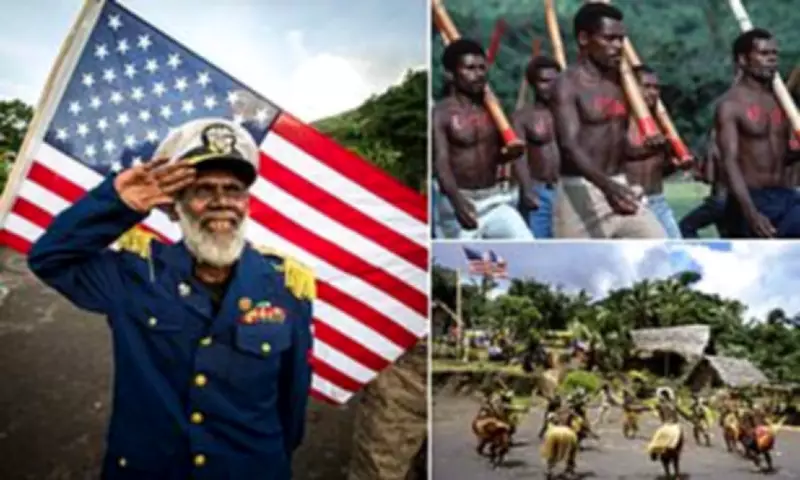
'John promised he'll bring planeloads and shiploads of cargo to us from America if we pray to him,' explained a village elder to Smithsonian magazine while saluting the American flag. He detailed that this bounty would include 'radios, TVs, trucks, boats, watches, iceboxes, medicine, Coca-Cola, and many other wonderful things.'

More Than Material Wealth
This phenomenon represents far more than simple material desire. For many adherents, John Frum symbolizes a profound rejection of Western colonial rule and a passionate yearning to preserve indigenous identity. As one devoted follower articulated when questioned about apparent contradictions: 'John is a spirit. He knows everything. He's even more powerful than Jesus.'
The movement gained significant prominence during the mid-twentieth century amidst global conflict, emerging as part of a broader phenomenon known as 'cargo cults.' These belief systems developed around the expectation that ships and aircraft would deliver valuable goods to isolated communities.
Historical Origins and Colonial Context
The roots of the John Frum narrative extend back to the 1930s when the islands, then called the New Hebrides, remained under colonial influence. The territory retained this name until achieving independence from joint British and French colonial rule in 1980, when it was renamed Vanuatu.
According to local accounts, the legend originated during a traditional ceremony involving kava, a mildly intoxicating beverage central to indigenous customs. During this ritual, village elders claimed to have witnessed a white man emerge from darkness who urged them to reject foreign influence and return to their ancestral way of life, known locally as kastom—a system emphasizing tradition, unity, and harmony.
Word of this vision spread rapidly across Tanna, and the mysterious figure became known as John Frum. At a time when European missionaries were expanding their presence, this message resonated powerfully. Entire Christian villages were reportedly abandoned as followers returned to traditional practices, with some even rejecting Western currency by casting money into the sea as a symbolic act of defiance.
Non-Violent Cultural Revival
Despite its rebellious nature, the movement remained predominantly non-violent. As documented by anthropologist Jean Guiart, John Frum's teachings focused instead on community life and cultural revival. 'He was content to promote the dancing and kava drinking, to encourage communal work in the gardens, to denounce the idle, and to give advice on matters concerning collective action,' Guiart wrote.
World War II and Apparent Confirmation
The arrival of World War II provided what many believers interpreted as confirmation of John Frum's promises. As American forces moved into the Pacific to counter Japanese expansion, troops arrived on nearby islands bearing abundant supplies including food, clothing, machinery, and other goods.
For local communities with minimal exposure to industrialized society, this spectacle proved astonishing. Planes descended from skies loaded with cargo, ships arrived heavily laden with goods, and generosity flowed freely. Many islanders viewed this as no coincidence but rather as John Frum delivering on his pledge.

When the war concluded and troops departed, the sudden disappearance of this bounty only deepened the mystery. In response, some followers constructed makeshift airstrips, control towers, and imitation radios in hopes of summoning the cargo once more, while others turned to prayer, blending traditional rituals with their belief in the elusive figure.
Scholarly Debates and Theories
Academic perspectives on John Frum's origins remain divided:
- Some scholars argue he was merely a vision induced by kava consumption
- Others suggest a more grounded explanation—that islanders may have encountered an actual U.S. serviceman who introduced himself as 'John from America,' a phrase that could have evolved over time
- Another theory posits that during colonial upheaval, the people of Tanna wanted, and perhaps needed, to believe in a powerful ally
Contemporary Celebrations and Legacy
Whatever the truth, the movement has endured through decades. At its peak in the late twentieth century, John Frum's following numbered approximately 5,000 adherents. By 2022, this figure had diminished to roughly 500, reflecting both the unfulfilled promise of his return and the growing influence of Christianity and modern development.
Yet the story continues annually on February 15 when Tanna comes alive with John Frum Day celebrations. Men don military-style attire, paint 'USA' across their chests, and march with bamboo sticks fashioned as rifles. American flags wave proudly—a striking sight thousands of miles from the United States—demonstrating that hope for John Frum's return still burns brightly in this remote corner of the Pacific.