Lebanon Searches for Survivors After Deadliest Day in Renewed Israel-Hezbollah War
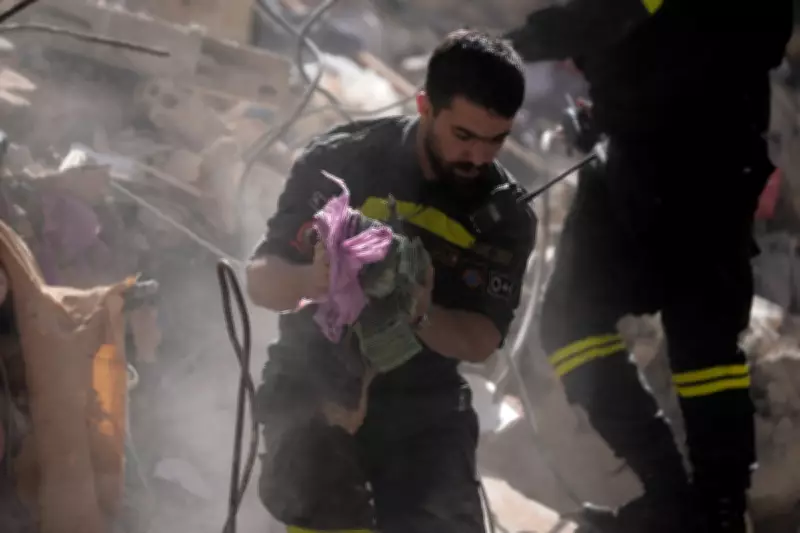
Lebanon is reeling from its deadliest day in over five weeks of renewed war between Israel and Hezbollah, as rescue workers in Beirut and other areas frantically search for survivors and bodies amidst widespread destruction. The intense conflict has prompted Israel to issue warnings of further escalation, while Lebanese authorities condemn the attacks as barbaric violations of international law.
Casualties and Civilian Impact
Israeli strikes on Wednesday resulted in at least 203 fatalities and more than 1,000 injuries, according to Lebanon's health ministry. Israel's military stated it targeted sites associated with the Iranian-backed Hezbollah militant group. However, multiple strikes hit densely packed commercial and residential zones without warning during rush hour, leading to significant civilian casualties. Lebanese President Joseph Aoun denounced the attacks as "barbaric," emphasizing the humanitarian toll.
Rescue operations have been ongoing, with Lebanese Civil Defense spokesperson Elie Khairallah reporting that a wounded woman was found alive under rubble overnight in the Ain Mreisseh neighborhood of Beirut. Additionally, a man was rescued alive from his collapsed apartment building in Beirut's southern suburbs. For many families, the wait is agonizing; Mohammad Chehab, a Syrian man from Deir el-Zour, revealed that six of his ten family members were found dead in a destroyed building, with rescue teams continuing to search for the remaining individuals.

Hospital Scenes and Psychological Toll
Hospitals in Beirut have been overwhelmed by the influx of casualties. Dr. Wael Jarrosh from Makassed hospital described receiving around 70 injured patients within just ten minutes of the blasts. Two people died at the facility, with five others hospitalized, including three in intensive care. Survivors like Rabee Koshok recounted harrowing experiences, such as being in the Corniche al Mazraa commercial district when a strike hit a nearby building, causing chaos and fatalities. Dr. Jarrosh added that the psychological impact on medical staff and civilians is devastating, forcing them to remain prepared for further emergencies.
Military and Political Developments
Israel confirmed that its strikes killed Ali Yusuf Harshi, an aide and nephew of Hezbollah leader Naim Kassem, though Hezbollah has not immediately commented. Israeli Prime Minister Benjamin Netanyahu vowed to continue strikes "with force, precision, and determination." Israel's military has accused Hezbollah of moving members out of their traditional strongholds in southern Lebanon and Beirut's Dahiyeh suburbs, blending into civilian areas to evade detection.
In response, Lebanese Prime Minister Nawaf Salam announced that Lebanon will file an urgent complaint with the U.N. Security Council, calling the attacks a "blatant violation" of international and humanitarian law. The Lebanese cabinet has ordered security forces to tighten control over Beirut by enhancing state authority and restricting arms to legitimate forces, a move that echoes pre-war efforts to disarm Hezbollah.
Displacement and Border Issues
The conflict has displaced more than a million people, many from southern Lebanon and Dahiyeh, following Israeli military warnings to evacuate these areas ahead of heavy bombardment. Israel has also launched a ground invasion in the border region, intensifying the humanitarian crisis. Meanwhile, the main border crossing between Lebanon and Syria resumed operations on Thursday, five days after Israeli warnings of potential strikes over alleged Hezbollah smuggling activities—a claim denied by Lebanese and Syrian authorities. Since the war resumed, over 200,000 people have fled Lebanon into Syria, highlighting the regional impact of the violence.