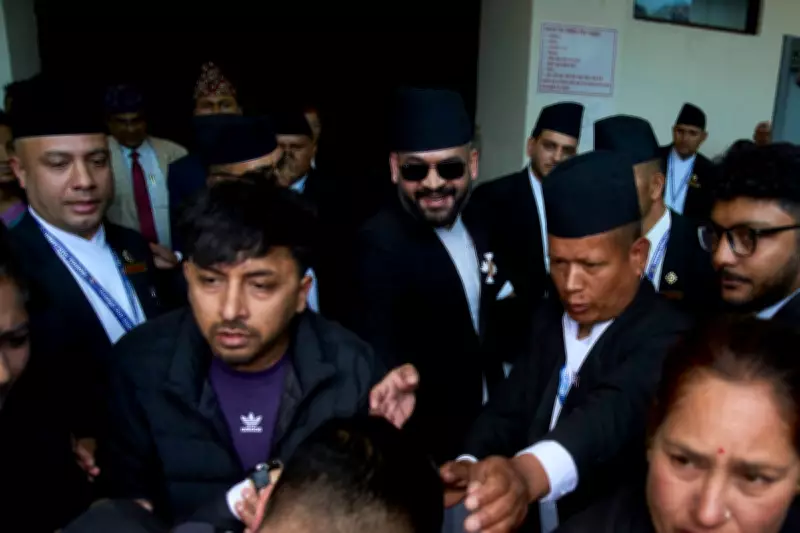
Nepal's youngest prime minister, Balendra Shah, has taken his oath of office in a ceremony meticulously timed according to astrological and numerological principles. The historic event, held on Friday, March 27, 2026, was shaped as much by ancient traditions as by modern politics.
A Numerologically Significant Inauguration
Shah was sworn in precisely at 12:34 p.m., a time specifically chosen by Hindu priests as the most auspicious moment on that day. This timing coincides with the celebration of Ram Navami, a major Hindu festival marking the birth of the deity Rama. The numerical sequence "1-2-3-4" is considered particularly favorable in Hindu numerology.
Furthermore, the new prime minister is scheduled to enter his official office at 14:15 p.m., another time selected for its "14-15" pattern, which priests also deem auspicious. These decisions highlight the profound influence of religion and astrology in Nepal, where over 80% of the population practices Hinduism and major life events are often scheduled according to favorable astrological calculations.

An Elaborate Ceremony Blending Tradition and Politics
The oath-taking ceremony occurred before President Ramchandra Paudel and featured elaborate Hindu rituals. These included the traditional "shankhnaad," or blowing of conch shells, and religious chanting performed by both Hindu priests and Buddhist lamas, reflecting Nepal's diverse spiritual landscape.
Shah, who plans to take the oath alongside his newly appointed Cabinet, was born in Kathmandu but hails from the Hindu-dominated Terai region near the Indian border. The event was attended by government officials and foreign diplomats, underscoring its national and international significance.
From Rap Artist to Prime Minister
Balendra Shah, a 35-year-old structural engineer who first gained fame as a rap artist before becoming Kathmandu's mayor, leads the Rastriya Swatantra Party. His party achieved a landslide victory in the recent elections, securing approximately two-thirds of the 275 seats in the powerful lower House of Representatives.
Widely known as Balen, Shah is a political outsider who now faces the formidable task of addressing deep public frustration with Nepal's established political parties. Voters have widely blamed these traditional parties for widespread corruption and chronic political instability that has plagued the nation.
A Voice for Change Amidst Unrest
Shah emerged as a prominent figure during the bloody youth-led uprising in September that toppled the previous government. This wave of unrest, which left dozens dead in the nation of 30 million people, was largely driven by Generation Z demonstrators.
Although Shah did not directly participate in the protests, he publicly expressed strong support for the movement and its young leaders. His rise to power represents a significant shift in Nepal's political landscape, as citizens seek new leadership to navigate the country's complex challenges.