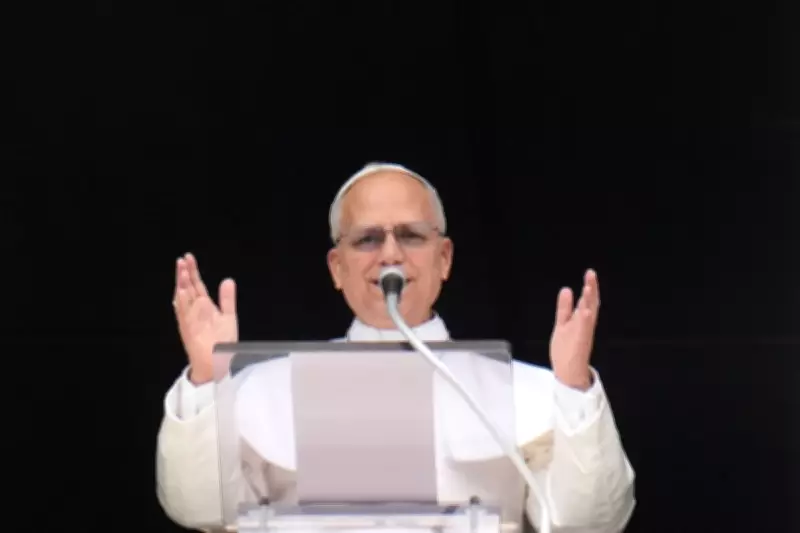
Pope Leo XIV embarked on Monday on the first-ever papal trip to Algeria, marking a historic moment aimed at fostering Christian-Muslim coexistence amidst global conflicts and paying tribute to the locally born inspiration of his religious spirituality, St. Augustine. This two-day stop in Algeria launches an intensive 11-day tour across four African nations—Algeria, Cameroon, Angola, and Equatorial Guinea—bringing the first U.S.-born pope deep into the rapidly growing heart of the Catholic Church.
Arrival and Initial Engagements
Upon his arrival at Algiers' international airport, Pope Leo XIV was greeted by Algerian President Abdelmadjid Tebboune, with a formal meeting scheduled at the El Mouradia presidential palace. Later on Monday, the Pope addressed Algerian authorities and visited the city's Great Mosque, concluding the day with a gathering at the Our Lady of Africa basilica and prayers at a nearby monument dedicated to migrants who perished in shipwrecks while attempting to reach Europe.
Interfaith Dialogue and Community Dynamics
The gathering at the basilica, a Roman-Byzantine structure constructed in the late 1800s during French colonial rule, featured testimonies from a Catholic nun, a Pentecostal believer, and a Muslim, alongside remarks by the Pope. The official motto for the Algeria trip is Leo's opening line, "Peace be with you," with the Vatican emphasising that a general message of peace and Christian-Muslim coexistence will be the central theme.

In Algeria, a small Catholic community of approximately 9,000 people, predominantly foreigners, coexists with a Sunni Muslim majority of about 47 million, according to Vatican statistics. French Cardinal Jean-Paul Vesco, the Archbishop of Algiers, noted that on any given day, nine out of ten visitors to the basilica are Muslim. "It's wonderful to be able to show that we can be brothers and sisters together, building a society despite our different religions," Vesco told The Associated Press on the eve of Leo's arrival. "And that is what our church has been doing since this country gained independence."
Challenges and Concerns
Despite this, the United States has placed Algeria on its special watch list for "having engaged in or tolerated severe violations of religious freedom." While the Algerian constitution recognises "religions other than Islam" and permits individuals to practice their faith if they respect public order, proselytising to Muslims by non-Muslims is a criminal offence. Some Christian denominations have faced persecution from Algerian authorities, resulting in church closures.
Selma Dénane, a student from Annaba, expressed cautious optimism: "I imagine it's a good thing that a pope is visiting Algeria. But what will it change afterward? Will Christians be able to say, 'I am a Christian' without fear or stigmatisation?"
Honouring Martyrs and a Violent Past
Algeria's history includes a brutal civil war in the 1990s, known locally as the "black decade," where around 250,000 people were killed as the army fought an Islamist insurgency. Among the victims were 19 Catholics, including seven Trappist monks from the Tibhirine monastery south of Algiers, who were kidnapped and killed in 1996 by Islamic fighters, along with two nuns from Leo's Augustinian religious family.
On his first day in Algeria, Pope Leo XIV paid homage to these 19 martyrs and visited the remaining Augustinian nuns who operate a social services project from the Algiers basilica, assisting people of all faiths. Sister Lourdes Miguelez reflected, "They gave their lives for God, for Jesus, for the church, for the Algerian people because they didn't want to leave the country, even in the difficult moments." All 19 were beatified in 2018 as martyrs for the faith, marking the first such ceremony in the Muslim world.
Personal Connections and Themes of Peace
Archbishop Vesco highlighted that Pope Leo XIV was elected on May 8, the Catholic feast day of the 19 martyrs, and was invited to visit immediately after his election. The Pope also shares a connection with the Trappist monks through a mantra from the martyred prior, Christian de Chergé, who spoke of an "unarmed and disarming peace." Leo has cited this line since the night of his election, with Vesco noting, "Obviously he will speak a lot about peace, it's urgent and current."

A Personal and Pastoral Journey
For Pope Leo XIV, the visit to Algeria is both pastoral and deeply personal. His Augustinian religious order draws inspiration from St. Augustine of Hippo, a 5th-century theological and philosophical titan of the early Christian church, born in what is now Algeria and who spent nearly his entire life there. On Tuesday, Leo visited Annaba, the modern-day Hippo where St. Augustine served as bishop for three decades, literally walking in the saint's footsteps.
From his first public words as pope, Leo proclaimed himself a "son of St. Augustine," a theme he has reinforced throughout his first year by frequently citing the church father in speeches and homilies. Paul Camacho, associate director of the Augustinian Institute at Villanova University, Leo's Augustinian-run alma mater outside Philadelphia, observed, "I don't know if I have seen a statement, a homily, an apostolic letter or exhortation that doesn't reference Augustine. The shadow that he casts on Western thought, not just the Roman Catholic Church but on Western thought more broadly, is very, very long indeed."