Russian Strike on Ukrainian Plant Triggers Water Crisis in Moldova
Tens of thousands of Moldovans have been left without access to clean water after a Russian military strike on a Ukrainian hydroelectric facility resulted in significant oil pollution of the Dniester River. The attack on the Novodnistrovsk hydropower plant on March 7th has contaminated a vital water source that flows through both nations, directly impacting Moldova's water supply infrastructure.
Moldovan President Blames Russia for Environmental Disaster
Moldovan President Maia Sandu has unequivocally blamed Russia for the pollution crisis, stating it poses a severe threat to Moldova's water security. In a social media post, Sandu declared that "Russia bears full responsibility" for an incident that aligns with Moscow's pattern of targeting civilian infrastructure in Ukraine since the 2022 invasion. The affected Ukrainian facility sits just 15 kilometres upstream from Moldova's northern border and normally supplies approximately 80 percent of Moldova's 2.5 million residents with water.
Environmental State of Alert Declared for 15 Days
Moldova's environment ministry has declared a formal environmental state of alert lasting 15 days, providing legal authority for enhanced technical interventions and temporary water supply restrictions. The ministry explained this decision aims "to prevent any risk to the population's health" due to "continuous wave of pollution with oil products" and exceeding contaminant levels in the northern Dniester River region.

Widespread Water Supply Disruptions Across Northern Moldova
The pollution crisis has forced authorities to cut water supplies to multiple districts, including Moldova's second-largest city Balti with approximately 90,000 residents. Elderly residents like 84-year-old Liuba Istrati describe the hardship of carrying water buckets to fifth-floor apartments, while teacher Irina Mutluc notes the daily struggle to obtain sufficient water for basic needs. The situation has become so severe that some schools have closed physical premises and shifted to online learning.
Emergency Response and International Assistance Mobilised
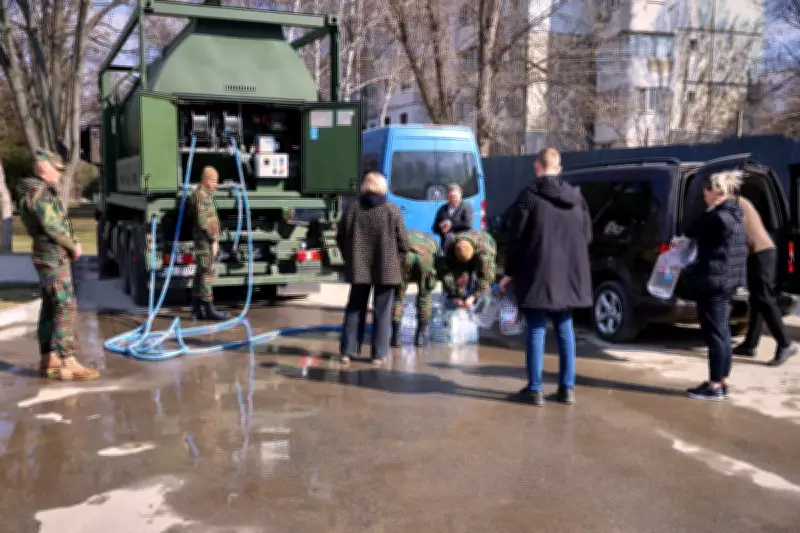
Moldova's military has deployed to distribute drinking water from 10-tonne tankers in affected northern regions, while neighbouring Romania has provided humanitarian aid and technical support. Romanian teams have supplied absorbent materials for dam filtration systems as part of collaborative cleanup efforts. Environment Minister Gheorghe Hajder reported that three critical monitoring points have recently shown pollution levels at "admissible limits," suggesting mitigation measures may be having effect.
Ongoing Investigation and Diplomatic Tensions Escalate
Moldova's General Prosecutor's Office has announced it will open a criminal investigation into the pollution incident, while the foreign ministry summoned Russian Ambassador Oleg Ozerov and presented him with a bottle of contaminated brownish water as symbolic protest. The Russian embassy has countered these allegations, claiming Moldovan authorities have presented no credible evidence of Russian complicity beyond "a container with an unknown murky liquid" and noting conflicting theories about the pollution's exact nature and source.
Environmental Experts Warn of Uncertain Ecological Consequences
Biologist Ilya Trombitsky of Eco-TIRAS, an environmental NGO network, warns that while immediate social damage is evident with multiple cities lacking water, the long-term ecological consequences remain uncertain. "We still do not know either the source or the substance of pollution," Trombitsky noted, adding that the spill has already killed invertebrates and poses risks to wetland birds and aquatic ecosystems. He emphasised that "Moldova does not have experience in such spills," complicating response efforts.

Authorities Race to Restore Water Supplies Safely
The Ministry of Environment reports that recent water samples show improving indicators, confirming the effectiveness of filtration barriers in capturing pollutants. However, officials stress that water supply restoration will only occur after "at least two consecutive sets of analyses, taken on two different days" confirm safety, with citizen health protection remaining the "absolute priority." The Dniester River, spanning over 1,300 kilometres from Ukraine through Moldova to the Black Sea, continues to receive pollution in waves, making accurate predictions difficult despite temporary improvements at some monitoring points.