As war spreads across Lebanon, millions are being forcibly displaced, a crisis that UNHCR goodwill ambassador Theo James warns is not distant but a stark reminder of how fragile safety truly is. On the ground, with bombs falling and Israeli troops advancing, the conflict shows no signs of abating, leaving thousands in a relentless search for refuge.
The Rapid Collapse of Normalcy
I keep reflecting on how swiftly life can unravel—the thin line between possessing a home and security, and losing everything in an instant. Observing the conflict in Lebanon escalate, I've witnessed families fleeing Israeli bombardments, clutching minimal belongings as they seek safety. They arrive in new neighbourhoods, hoping for protection, only to be forced to run again as strikes widen indiscriminately.
Earlier this year, I was in Beirut, engaging with young people in cafés and restaurants about their aspirations and future plans. Tragically, everything changed irrevocably in a blink. I watch, hope, and believe that a shift might occur, yet nothing materialises to halt the suffering.

Mounting Humanitarian Catastrophe
Almost daily, more individuals are compelled to flee as safe havens diminish. The toll of casualties, injuries, and displacements escalates, amplifying the scale of human misery. Families relocate repeatedly, with some finding temporary shelter in schools, where classrooms are lined with thin mattresses and people sleep side by side. Spaces intended for education and play have transformed into makeshift refuges, while many others resort to sleeping on streets, in cars, or on beaches.
Lebanon, a small nation, is enduring immense devastation. Since 2 March, following intense strikes and widespread evacuation orders, over a million people have been forcibly displaced—a staggering figure in a country already under immense economic and social pressure.
Irreversible Damage and Global Neglect
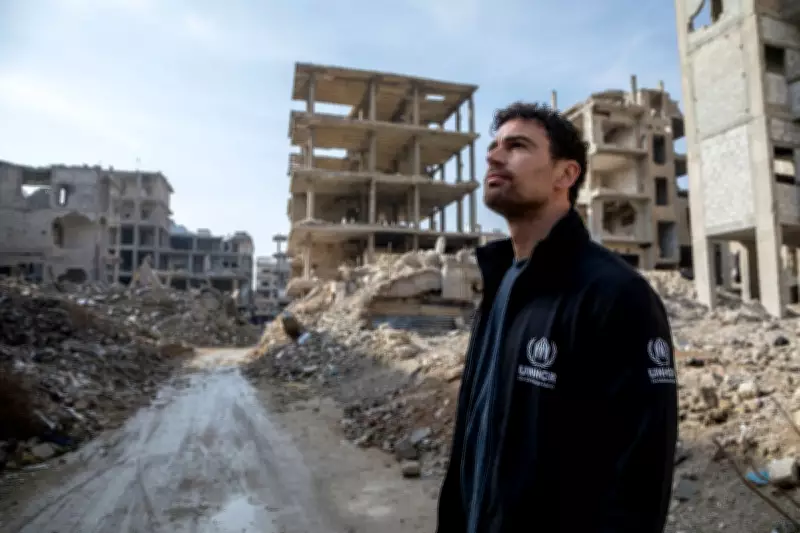
Entire neighbourhoods have been emptied; towns and villages lie in ruins. People are losing not just their homes but their communities and the essential infrastructure of daily life—roads, hospitals, schools, water, and electricity. This is not a temporary disruption; lives are being dismantled with no end in sight, unfolding while the world largely looks away and too little is done to curb a war that risks expanding further.
From Gaza to Lebanon, Ukraine, Sudan, and beyond, civilians bear the highest costs of conflicts, often left to endure the fallout in isolation. This reality is not abstract to me personally. My grandfather was a refugee who fled Greece when the Nazis invaded Athens, finding sanctuary in Syria. His story profoundly shaped my understanding of displacement and power dynamics.
Beyond Resilience: The Human Cost
Over the years, through meetings with refugees and internally displaced persons, and recent travels in Lebanon and Syria with UNHCR, this understanding has become impossible to ignore. Those caught in war are frequently labelled as resilient, and while they are, this term can subtly imply an expectation to accept, adapt, and carry on regardless of the toll.
Behind that resilience lies profound loss—of home, family, stability, and the life that preceded the conflict—coupled with the quiet truth that none of this was chosen. As a UNHCR goodwill ambassador, I've dedicated years to listening to and narrating the stories of forcibly displaced people, striving to do them justice. Yet, some elements resist translation: the raw fear, deep grief, and uncertainty about what lies ahead.
A Universal Warning and Call to Action
Too often, we treat these narratives as distant—belonging to other people, regions, or history. They are not. Not long ago, Europeans faced displacement across their continent, a reality my own family experienced. What's unfolding in Lebanon transcends its borders, underscoring a simple, universal truth: anyone can be displaced.
The people of Lebanon are not asking for the unreasonable; they seek safety, peace, and the ability to return home, resume education, and live normal lives. These are not mere aspirations but fundamental human rights. Empathy defines our humanity, but if we allow ourselves to feel only to then avert our gaze, we become complicit in the distance and silence that perpetuate injustice.

Unless we all act with shared responsibility, we must confront a critical question: where do you go when there is no safe place left? Theo James serves as a UNHCR goodwill ambassador. UK for UNHCR is urgently appealing for life-saving support in Lebanon and beyond.