The Unseen Casualties of War: When Visiting Family Becomes Impossible
In the shadow of conflict, death is not the only tragedy. War possesses a sinister ability to rearrange the living, corroding the ordinary and rendering simple human acts—like visiting family—risky, irresponsible, or outright impossible. This is the stark reality facing many with ties to Lebanon, where Israel's ongoing war has created a landscape where daily life is perpetually interrupted.
A Cancelled Celebration and the Weight of Absence
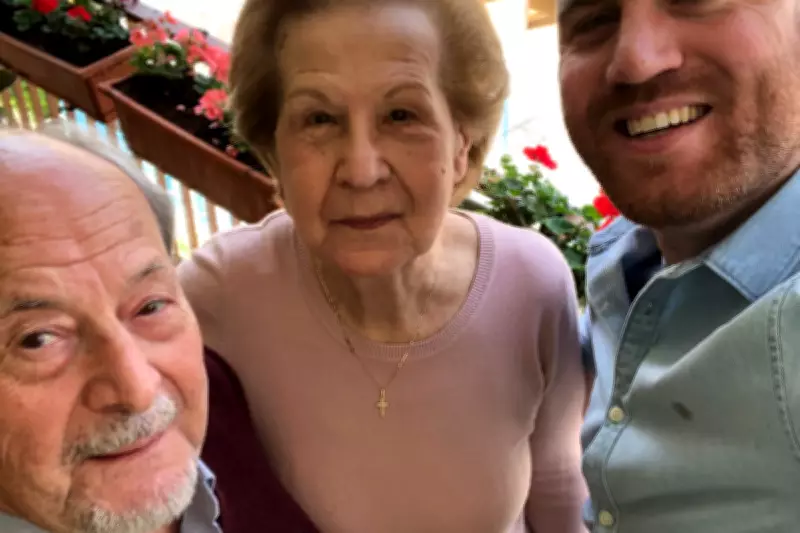
This week, I cancelled a flight with a few taps on my smartphone. It wasn't due to financial constraints or work commitments. I cancelled because the world, once again, dictated I must. The trip was meant to be a surprise visit to Lebanon to celebrate my grandfather's 99th birthday—a milestone that should signify celebration and defiance against time itself.
His life has spanned empires, witnessed the birth of a nation, endured independence struggles, construction, destruction, and repeated reconstruction. It is a life marked by invasions and wars, yet one that now deserves nothing but peace. The absurdity of writing from the safety of London about a cancelled trip, while families are being erased and lives lost, is not lost on me. My personal disappointment is minuscule in comparison, yet it underscores a broader truth.

How War Corrodes the Fabric of Ordinary Life
War does not merely kill; it systematically dismantles the normal. It transforms something as fundamental as family visitation into a complex calculus of risk and responsibility. My existence is privileged, born of an immigrant mother who fled war-torn Beirut with my British father. I was raised in the United Kingdom under exceptional circumstances, my life a direct result of my parents' and grandparents' endurance.
Childhood summer holidays in Lebanon now feel almost mythical: breakfasts of manakish, days splashing in the Mediterranean, minibus trips across the Syrian border to visit extended family—cousins, uncles, aunties. The music, parties, and dancing are not romantic inventions but vivid, real memories. Yet, these memories are perpetually interrupted.
The Predictable Cycle of Disruption in Lebanon
Again and again, something always happens in Lebanon. Armed conflicts lead to cancelled trips; attempted invasions force abandoned reunions; political assassinations leave plans hanging in the air. It is a grim, predictable cycle where ordinary Lebanese life rebuilds, only to be flattened anew by forces labeling themselves as necessary.
Last month, Donald Trump laughed while questioning why people still live in Lebanon, as if staying in one's homeland is irrational or everyone has a foreign passport tucked away. For my Teta (grandmother) and Jeddo (grandfather), life has seemingly moved in reverse. They raised their children in luxury and comfort, which has since given way to bomb shelters, armed checkpoints, car bombs, and tanks on the streets.
The Daily Reality of Fear and Loss
Financially weaker than ever and with less family around them, they now fall asleep to the sounds of gunfire, drones, missiles, and explosions. In their nineties, they should be resting in silence. Recently, Beirut endured its heaviest assault in years, with over 200 killed in hours. The city of my summer memories now feels unpredictable and haphazard, where any location can instantly become a centre of violent chaos.
The balcony I recall from holidays—overlooking Beirut and the Mediterranean—has transformed into a vantage point for witnessing smoke, sirens, and screams. It's a front-row seat to my family's city being destroyed. I was recently told "today is good" not because conditions improved, but because it was quiet—defined as fewer than a hundred airstrikes in ten minutes. This is what passes for relief.
The Impossible Question: "Are Your Family OK?"
Well-meaning messages asking if my family is OK are impossible to answer adequately. What does "OK" mean in this context? They are not dead nor displaced, so I say "Yes" or "They're fine for now," though it feels like a lie. I wanted to sit with them, hug them, and hear their stories to mark a life reaching 99 years. Instead, I'm left grappling with a harder truth: will I ever see them again?

The Deliberate Consequences of Distant Decisions
None of this is accidental. The missed visits, cancelled flights, and severed connections are not unfortunate by-products but entirely predictable consequences of decisions made by those who will never live with them. Observing events unfold, one wonders what's worse: that two men in the Oval Office—one reckless, one calculating—knew the regional impact of attacking Iran on 28 February, or that they didn't care enough to consider it.
That a newly announced ceasefire initially overlooked details regarding Lebanon's situation is telling. The result remains consistent: normal lives are reduced to collateral. Every building houses a family; every explosion carries a scream. These are obvious truths easily forgotten from a distance.
The Anger at Predictability and Sanitised Language
I am angry at the predictability of it all, at the sanitising language of "security," "stability," and "necessary action." Angry that this cycle continues decade after decade as if it's simply how things must be. To see my family, I must consult the Foreign Office website, review travel insurance policies, and conduct risk assessments. I must decipher the Israeli prime minister's definitions of "ceasefire" and "peace talks."
It is not a complicated request but the most basic one imaginable. I am also angry at my own position—that I can opt out, however reluctantly, by cancelling a flight on my smartphone and remaining safe to write about it. War's rearrangement of the living is a quiet, pervasive violence, reminding us that its toll extends far beyond the immediate body count.