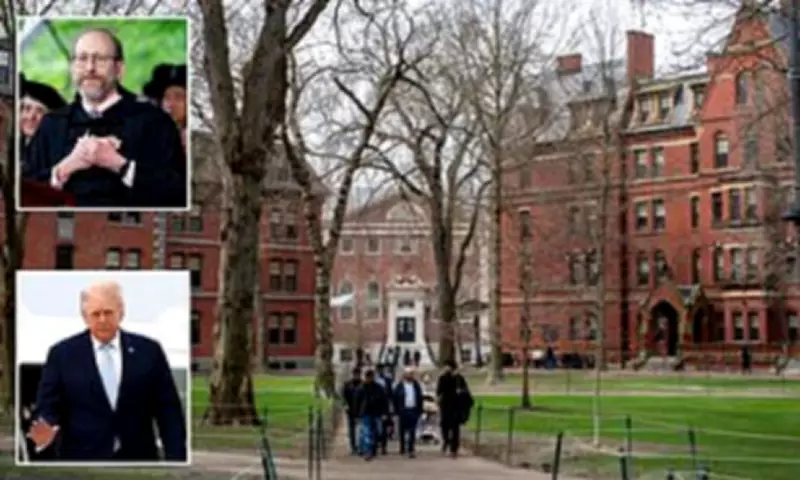
Trump Administration Files Major Lawsuit Against Harvard Over Campus Antisemitism
The Trump Administration has launched a significant new legal challenge against Harvard University, accusing the prestigious Massachusetts institution of systematically failing to protect its Jewish and Israeli students from antisemitic harassment and discrimination. The Justice Department filed this substantial lawsuit in federal court in Massachusetts on Friday, marking another escalation in the prolonged conflict between President Donald Trump's administration and the elite university.
Allegations of Institutional Failure and Financial Consequences
The lawsuit presents serious allegations that Harvard's leadership has been deliberately indifferent to antisemitism on campus, creating what the Justice Department describes as grounds for the federal government to freeze existing grants and seek repayment for grants already disbursed. In strongly worded language, the Justice Department declared: 'The United States cannot and will not tolerate these failures.'
The legal action specifically asks the court to compel Harvard to comply with federal civil rights law and to help the government 'recover billions of dollars of taxpayer subsidies awarded to a discriminatory institution.' The financial stakes are substantial, with Harvard set to receive $2.6 billion in federal grants this year from the Department of Health and Human Services alone. Between October 2023 and February 2026, the university has requested $953 million in grant payments from HHS.

Specific Demands and Campus Climate Concerns
Beyond financial penalties, the lawsuit makes several specific demands. It asks a judge to require Harvard to call police to arrest protesters blocking parts of campus and to appoint an independent monitor, approved by the government, to ensure the university complies with court orders. The Trump Administration has accused Harvard of maintaining a 'do nothing' approach despite reports that Jewish students feel unsafe on campus and sometimes conceal their yarmulkes.
The case centers on allegations of discrimination against Harvard's Jewish and Israeli students during and after pro-Palestinian demonstrations related to the Israel-Hamas war. Officials concluded that Harvard did not adequately address concerns about antisemitism that some students said kept them from attending classes. During war protests, Trump officials allege, Harvard permitted students to demonstrate against Israel's actions in the school library and allowed a pro-Palestinian encampment to remain on campus for 20 days, 'in violation of university policy.'
Harvard's Response and Constitutional Arguments
Harvard University, led by President Alan M. Garber, has strongly disputed the government's claims. In a Friday statement, the university declared: 'Harvard cares deeply about members of our Jewish and Israeli community and remains committed to ensuring they are embraced, respected, and can thrive on our campus. Our actions illustrate this.'
The university maintains it has taken substantive, proactive steps to address the root causes of antisemitism and actively enforces anti-harassment and anti-discrimination rules and policies on campus. Harvard has also argued that the government is violating its First Amendment rights by demanding limitations on campus activism and changes to hiring and enrollment practices.
Broader Context and Previous Negotiations
This lawsuit represents an extraordinarily rare impasse in civil rights enforcement. When colleges are typically found in violation of federal civil rights law, they almost always reach compliance through voluntary agreements. The Justice Department's decision to file this lawsuit indicates a breakdown in negotiations between the two parties.
Despite their bitter dispute, Harvard and the Trump Administration have held some negotiations, and the two sides have reportedly been close to reaching agreements on multiple occasions. Last year, the government and Harvard were reportedly approaching a deal requiring Harvard to pay $500 million to regain access to federal funding and end investigations. Several months later, Trump increased that figure to $1 billion, stating that Harvard had been 'behaving very badly.'

Administration's Broader University Campaign
Since taking office, President Trump has targeted elite universities he believes are overrun by left-wing ideology and antisemitism. His administration has frozen billions of dollars in research grants that colleges have come to rely on for scientific and medical research. Several universities have reached agreements with the White House to restore funding, including Columbia University, which agreed to pay $200 million, and Brown University, which agreed to pay $50 million toward state workforce development groups.
Last June, a federal task force investigation found that Harvard was a 'willful participant' in antisemitic harassment of Jewish students and faculty. The task force threatened to refer the case to the Justice Department for civil rights litigation unless Harvard came into compliance. Harvard President Alan M. Garber has stated that the school formed a task force to combat antisemitism, hired new administrative leadership, and reformed discipline policies to make them 'more consistent, fair and effective.'
The lawsuit represents a significant moment in the ongoing tension between the federal government and higher education institutions regarding campus climate, free speech, and civil rights protections.