University of Victoria Faces Widespread Criticism Over Indigenous Awards Name
The University of Victoria, a progressive institution located in British Columbia, Canada, has found itself at the centre of a heated online debate following the announcement of its latest distinguished alumni awards. The controversy stems from the awards' official name, which incorporates Indigenous language characters that many social media users have declared completely unreadable.
Unreadable Name Sparks Immediate Backlash
The university recently revealed the winners of what it calls the ɬíɬəl ʔa kʷs ƛ̓kʷəxnəq Skʷukʷəlstəŋəƛ̓ | SIÁMĆEȽ awards, which recognise alumni whose contributions have significantly improved outcomes for Indigenous communities. However, the unusual spelling and special characters in the award name quickly drew criticism across social media platforms.
One user on X platform expressed frustration, stating: 'This is stupid. No one can read this, and you know no one can read this. And everyone knows that you know no one can read this.' Another commenter went further, calling the awards 'absolutely ridiculous' and accusing the university of mocking both its students and alumni through this naming choice.

The criticism extended to political commentary, with one user declaring the institution 'a radical leftwing woke institution' that had prioritised political correctness over practical communication. Another commenter suggested that graduates from the university should be 'laughed out of the interview' process by potential employers due to what they perceived as excessive political posturing.
University Provides Translation and Context
In response to the growing controversy, the University of Victoria has clarified that ɬíɬəl ʔa kʷs ƛ̓kʷəxnəq Skʷukʷəlstəŋəƛ̓ translates to 'Gift for the successful student, alum' in the Lekwungen language, while SIÁMĆEȽ means 'highly respected alum and continuing to do respected work' in the Saanich language. Both languages represent North Straits Salish dialects native to British Columbia, with some usage potentially extending into Washington state in the United States.
Despite this linguistic explanation, critics have pointed out that both languages are rarely spoken today, even among Canadians of Indigenous backgrounds. The Lekwungen language suffered a significant loss when Elder Dr Elmer George of the Songhees Nation, considered one of its last fluent speakers, passed away in November at ninety years old. Similarly concerning, Seaside Magazine reported that only seven fluent speakers of the Saanich language remained alive as of 2022.
Critics Question Practicality and Intent
Several online commentators have questioned the practical value of using such obscure linguistic scripts. One user contrasted the situation with more widely understood Indigenous languages: 'Cree or Inuktitut on signs makes sense, because it's usually done in areas where literacy of the language is equal or greater than English. But in this case, UVic is using a script understood almost exclusively by linguists. The number of Indigenous people who can read it is close to the single digits.'
Another critic suggested the university had grown 'bored of creating incomprehensible word salad jargon in English' and had instead turned to equally inaccessible Indigenous language scripts. Several commenters expressed concern that while the university might have good intentions, the actual message would fail to reach most people, potentially creating 'annoyance and resentment among regular folk' without achieving meaningful cultural recognition.
University's Broader Indigenous Initiatives
The controversial award renaming represents just one aspect of the University of Victoria's broader commitment to Indigenous recognition and support. The institution specifically notes that the awards ceremony takes place 'on Lək̓ʷəŋən territory, a land with ongoing significance to both the Lək̓ʷəŋən and W̱SÁNEĆ Peoples.'

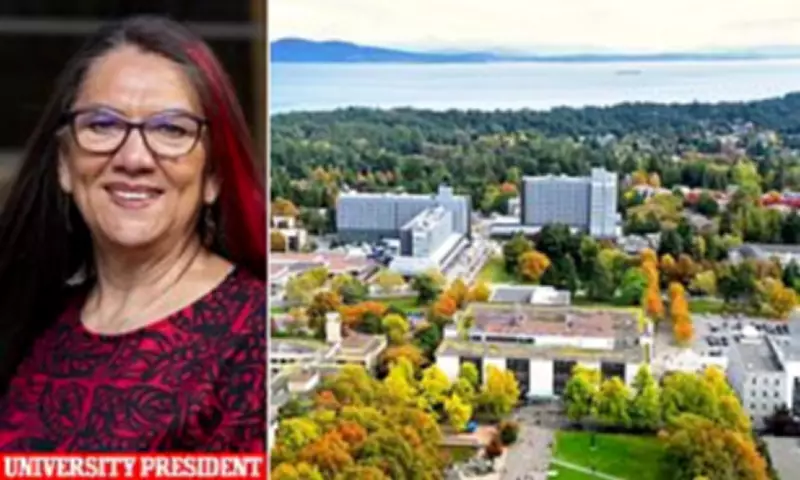
This initiative aligns with the leadership of Dr Robina Thomas, the university's president who has Indigenous heritage and has actively promoted support for Indigenous students and academic programs. Under her guidance, the university has implemented various measures including formal territorial acknowledgements and the naming of new student housing buildings with Indigenous language names like Čeqʷəŋín ʔéʔləŋ and Sŋéqə ʔéʔləŋ.
The university's alumni association actually announced the award renaming back in April, explaining that the new names originated from the Lekwungen language (also spelled Lək̓ʷəŋən) and the Saanich language (also spelled SENĆOŦEN). In statements about this year's award recipients, university officials praised 'the incredible alumni [who] embody the strength, knowledge and leadership rooted in community' and whose work 'continues to create meaningful change and reflect the distinct value of Indigenous education and experience at UVic.'
Despite these explanations and the university's broader commitment to Indigenous recognition, the controversy continues to generate significant discussion online about the balance between cultural preservation and practical communication in academic settings.