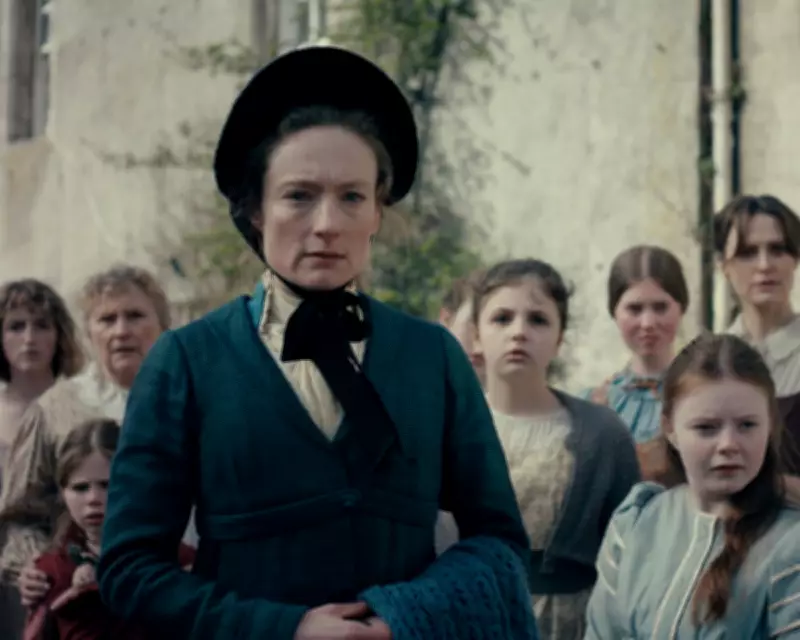
Berlin Film Festival Showcases Bold Historical Drama
Sophie Heldman's new film, The Education of Jane Cumming, premiered at the Berlin Film Festival, delivering an exhilaratingly candid exploration of a real-life 19th-century Scottish scandal. This modestly budgeted drama, inspired by Lillian Faderman's book Scotch Verdict, revitalises the story behind Lillian Hellman's stage play The Children's Hour, famously adapted into a 1961 Hollywood film.
A Story of Accusation and Identity
Set in Edinburgh in 1810, the film follows Marianne Woods, portrayed by Clare Dunne, and Jane Pirie, played by co-screenwriter Flora Nicholson, as they run a private girls' school. Their institution gains prestige when Lady Cumming Gordon, wittily embodied by Fiona Shaw, enrolls her granddaughters. Among them is Jane Cumming, a young woman of colour played by Mia Tharia, who faces bullying from white peers and seeks solace with the teachers.
Jane's complex character—proud yet marginalised—leads her to fabricate a malicious accusation of lesbianism against Woods and Pirie, drawing on dormitory gossip. Lady Cumming Gordon withdraws her pupils, circulates a damning letter, and triggers a libel case that threatens the teachers' reputations and livelihoods.

Innovative Narrative Approach
Unlike traditional courtroom dramas such as Rattigan's The Winslow Boy, Heldman and Nicholson opt for a straightforward chronological narrative, with the trial briefly acknowledged via intertitles. This choice allows the film to delve into the speculative intimacy between Woods and Pirie, suggesting their sexual attraction blossoms only after the scandal erupts. A poignant scene shows Pirie vomiting as their solicitor reads the fabricated details, highlighting the grim irony of the accusation becoming partially true post-scandal.
Themes of Race and Class
The film provocatively examines how racism intersects with homophobia in 19th-century society. Jane Cumming's testimony is dismissed due to her Indian heritage, underscoring the era's prejudices. While alternative interpretations could frame her as a victim of abuse, the film presents an astringent, commonsensical account, weaving together threads of race, class, sexuality, and empire.
With vigour and clarity, The Education of Jane Cumming offers a refreshingly frank portrayal that contrasts with the more reserved The Children's Hour, making it a standout entry in historical filmmaking.