Beyond Stoicism: Embracing Nihilism to Discover Life's True Meaning
In contemporary culture, stoicism has gained popularity as a philosophy for navigating life's challenges with resilience and acceptance. However, an alternative perspective rooted in the works of Friedrich Nietzsche suggests that embracing nihilism might offer a more profound path to discovering what truly matters in life.
The Nihilistic Framework for Questioning Values
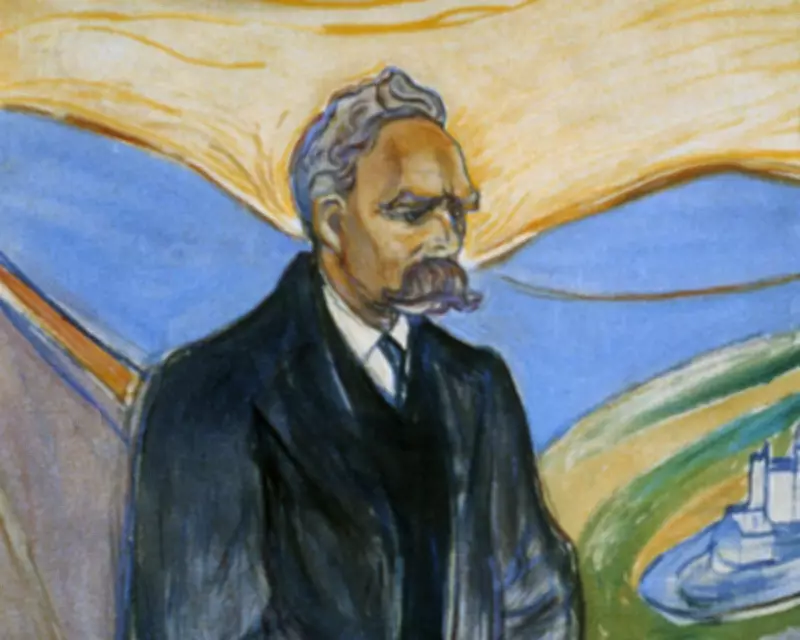
Nietzsche, the 19th-century German philosopher, provides a radical framework for interrogating the very foundations of our beliefs and values. Rather than offering comforting answers or easy solutions, Nietzsche's philosophy encourages us to confront the discomfort of a potentially meaningless existence head-on.
As author Gemma Parker discovered during her journey through motherhood, Nietzsche's ideas become particularly relevant when navigating the tension between profound responsibilities to loved ones and the human desire for freedom and new experiences. Contrary to popular misconceptions that associate nihilism with anarchy or hedonism, Nietzsche presents it as a diagnostic tool for examining societal conditioning.

Nihilism as Diagnosis, Reckoning, and Prompt
Nietzsche's approach to nihilism functions on multiple levels. First, it serves as a diagnosis of our inherited value systems. Second, it demands a personal reckoning with these inherited beliefs. Finally, it acts as a prompt for creating new, authentic values.
What Nietzsche fundamentally offers is a methodology for asking what exactly matters in life – and considering the possibility that what truly matters might be radically different from what we've been taught to value. This philosophical stance doesn't provide easy answers but instead generates more questions, challenging us to step outside our social conditioning to establish our own sense of purpose.
Confronting Discomfort Without Despair
The natural progression from accepting nihilism's premise leads to a crucial question: how do we withstand the discomfort of potentially meaningless existence without collapsing into despair? Nietzsche fiercely condemns organized religion and philosophical systems that claim to have "solved" life's riddles, rejecting easy answers and lazy escapism.
Yet this doesn't necessitate surrendering to cynicism or pessimism. The challenge becomes pursuing joy, connection, love, and purpose while maintaining a skeptical, even nihilistic, perspective. As Parker notes, this means continuing to perform daily responsibilities – making school lunches, caring for family members, engaging with life's ordinary moments – while simultaneously questioning the meaning behind these actions.
Creative Responses to Nihilistic Thinking
Examining artistic responses to nihilism reveals diverse approaches to this philosophical challenge. While Samuel Beckett and Albert Camus grappled with these questions in their literature, even popular culture offers insights. Dolly Parton's story of writing hit songs while feeling isolated in a "lonely-ass room" demonstrates a refusal to surrender to despair, instead choosing creative action.
Engaging with nihilistic thought experiments doesn't require wallowing in existential torment. For many, it means making a daily commitment to courageously question touted meanings, face the discomfort of potential meaninglessness, and persist in showing up and creating despite uncertainty.
The Next Step Beyond Acceptance
Nihilism becomes intellectually stagnant if thinking stops at accepting life's potential meaninglessness. The more interesting philosophical territory lies in what comes next: what we choose to do in the face of this realization, what we create even if nothing ultimately matters, how we live despite existential uncertainty.
This approach transforms nihilism from a philosophy of negation to one of liberation – freeing individuals from inherited value systems to create authentic meaning through action, creativity, and daily commitment to what they choose to value, regardless of ultimate cosmic significance.