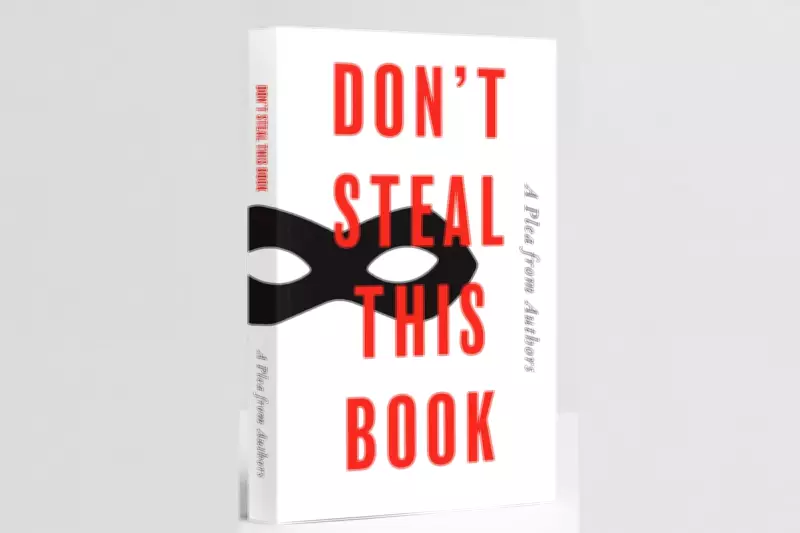
Authors Launch Empty Book Campaign in Protest Against AI Copyright Reforms
In a striking demonstration of creative defiance, over 10,000 British authors have united to publish an entirely empty book as a protest against the unauthorised use of their literary works by artificial intelligence companies. The campaign, titled Don’t Steal This Book, features prominent writers including Richard Osman, Jeanette Winterson, and Kazuo Ishiguro, who are highlighting the severe impact that AI data scraping has on their livelihoods and the broader publishing industry.
Timing and Distribution of the Protest Book
Copies of the blank book, which contains no text beyond the names of the participating authors, will be distributed at the London Book Fair on Tuesday, 10 March 2026. This symbolic act arrives precisely one week before the UK government is scheduled to deliver an economic impact assessment and progress update on proposed reforms to copyright law. The timing underscores the urgency felt by the creative community as ministers consider relaxing regulations to benefit AI development.
Background on AI Use of Copyrighted Material
Generative AI systems, such as chatbots, rely extensively on vast datasets that often include copyrighted books sourced from the open web without authorisation. This practice has sparked numerous lawsuits from authors and publishers in recent years. In a landmark case from 2025, the AI firm Anthropic agreed to settle a £1.1 billion class-action lawsuit brought by book authors who alleged the company used pirated copies of their works to train its Claude chatbot.

Proposed Copyright Law Changes and Industry Backlash
Under the government's proposed reforms, UK copyright law would be amended to allow AI companies to use authors' works for training their models without seeking permission or providing remuneration, unless creators explicitly opt out. This has triggered mounting backlash from creative professionals who fear exploitation. A public consultation held in February 2025 revealed overwhelming opposition, with only 3% of respondents supporting the proposal and 95% advocating for maintaining or strengthening existing copyright protections.
Government Response and Alternative Considerations
Following the consultation, the government is reportedly considering a "commercial research" exception instead, which campaigners argue could still enable AI firms to appropriate works without consent. A government spokesperson stated, "The government wants a copyright regime that values and protects human creativity, can be trusted, and unlocks innovation. We will continue to engage closely with the creative sector on this issue and meet our commitment to update parliament by March 18th."
Voices from the Campaign
Ed Newton-Rex, the composer and campaigner organising Don’t Steal This Book, condemned the AI industry, stating, "This is not a victimless crime. Generative AI competes with the people whose work it is trained on, robbing them of their livelihoods. The government must protect the UK’s creatives and refuse to legalise the theft of creative work by AI companies."
Jeanette Winterson added, "My message to big tech is simple. If you can’t actively support us, then stop stealing our stuff. Your bots can’t do what we do. Accept it and move on." Adam Kay, bestselling author of This Is Going to Hurt, remarked, "It’s bad enough that AI has reduced customer service to incompetent chatbots and turned social media into low-quality slop; let’s not kill the publishing industry while we’re at it. We all pay to read books, and the robots can do the same."
Broader Participation and Industry Concerns
Other notable authors featured in the protest include Marian Keyes, Malorie Blackman, Philippa Gregory, and Mick Herron. Malorie Blackman emphasised, "It is not in any way unreasonable to expect AI companies to pay for the use of authors’ books." The back cover of Don’t Steal This Book carries a clear message: "The UK government must not legalise book theft to benefit AI companies," reflecting the deep-seated concerns within the literary community about the potential erosion of copyright protections in the digital age.